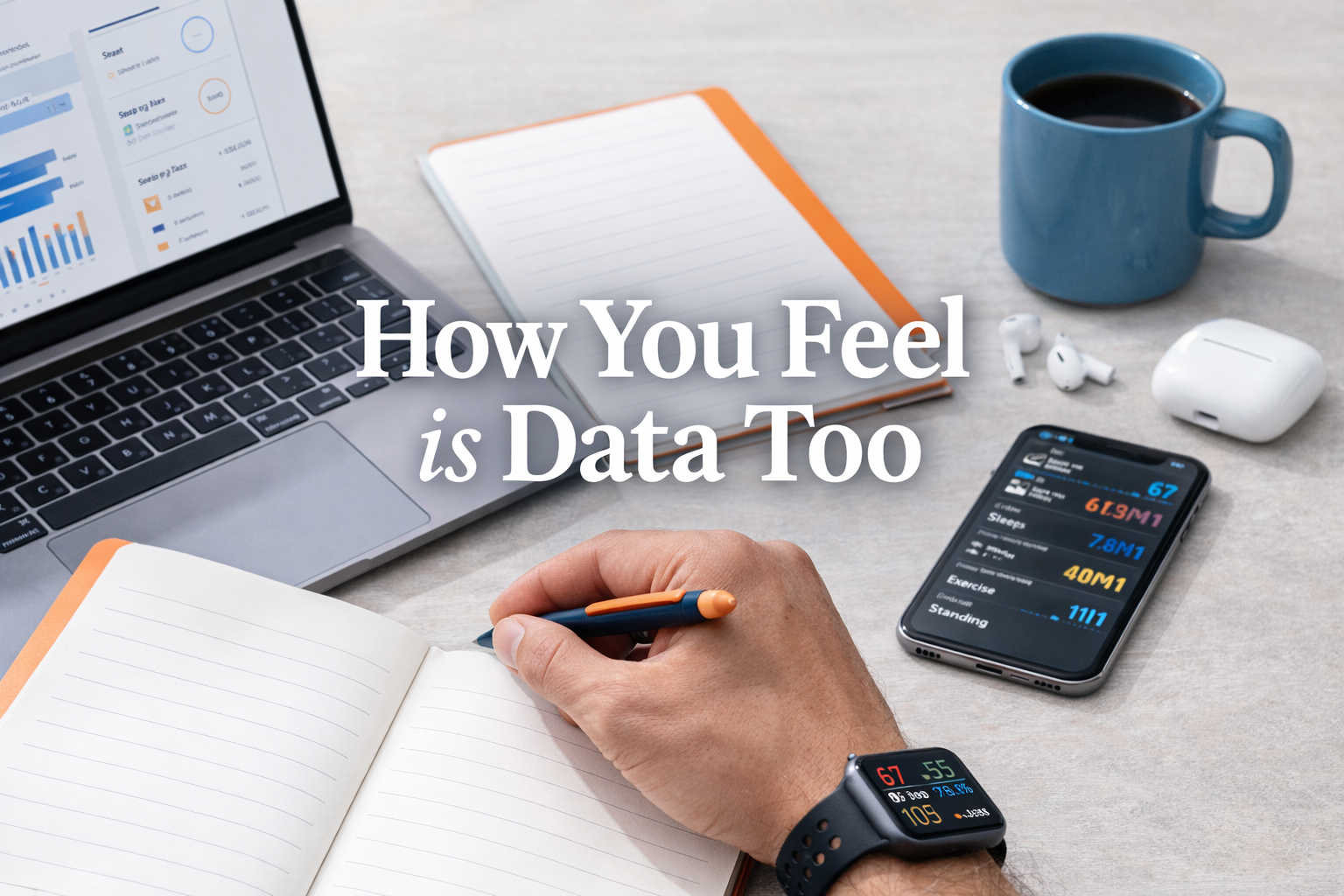
You’re Ignoring One of the Most Important Forms of Data
Calories, heart rate, sleep scores, and weight can all be useful, but they do not tell the whole story. How you feel day to day may be the missing piece of data that helps you make better decisions.
We live in a world obsessed with measurable data. Calories. Macros. Sleep scores. Pace. Heart rate. Weight. HRV.
But one of the most important data points in your entire health and performance picture is often the one people dismiss first:
How you actually feel.
I've talked about this previously, but it continues to be something I work with my clients as most either don't have the connection to how they feel or tend to minimize it. Part of the challenge is the dramatic increase in the availability of just about any kind of data on our phones and watches, or at a deeper level with bloodwork and genetic testing. While these pieces are important, they only tell one part of the story and usually only at a particular point in time. So let's dive into the two areas you can start now to build a better picture of how you're performing.
The first area I'll mention is during your workouts which is a great way to boost the quality of your workouts, especially while lifting weights. The more in touch you can be with where you feel each rep you can target specific areas, better identify any form issues, and better understand when it is time to either increase the reps or weight. This same concept applies to any cardio workout too, paying attention to your breathing, how quickly you recover from any efforts, and how the rest of your body feels as you progress through the workout helps you better understand how your body is responding to the efforts. In both cases, how you feel should also drive your intensity of that particular workout. I'm not suggesting you cut all your workouts short, or power through them, but having a better gauge on when you should do one more rep, or perhaps drop the intensity will benefit greatly in the long run.
The other aspect that I suggest this kind of self check on how you feel is a way to bookend your day. Take a couple of minutes (maybe even less than that) in the morning when you wake up, and in the evening before you go to bed to assess how you're doing. A few things you might think about:
energy level
cognitive level
any particular aches/pains
general mood
feel free to add more if you like
You can either make this an "informal" check-in with yourself, or you can add it to some sort of a journal process either written or electronic. If you're adding this to your routine, I suggest some sort of physical accountability to help reinforce the habit as well as provide a mechanism to compare.
The goal is not to replace hard data. The goal is to stop pretending that your lived experience does not count as data too.
Because if your numbers look good but your body, mind, and day-to-day function are telling a different story, that matters.
In many cases, how you feel is not a distraction from the data.
It is the missing piece.
Better decisions come from better data — and that includes the signals your body is already giving you.
When was the last time you tracked how you actually felt with the same consistency you track your numbers?
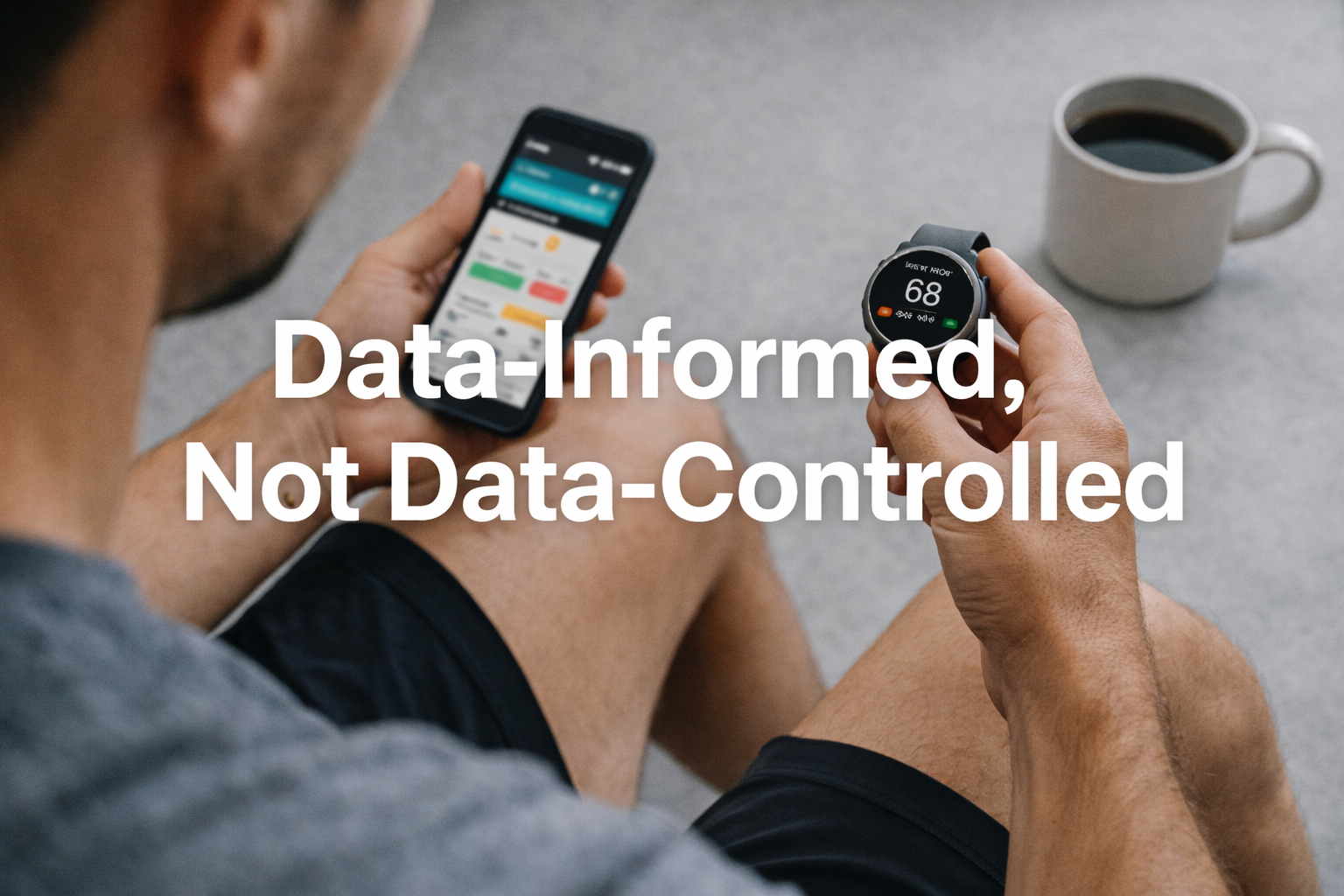
Track Your Progress — Without Letting the Data Run Your Life
Wearables and tracking tools can dramatically improve your progress — but only if you avoid obsessing over the wrong metrics. Learn what to track, what to ignore, and how to build a healthy, balanced relationship with data.
You don’t forge better performance by chasing perfect numbers.
You forge it by combining objective data with subjective awareness — using both to make better decisions, one day at a time.
Data pertaining to our health and wellness has never been more in-depth or more available than it is today with the digitization of medical records, more control given to individuals, and the boom of apps and wearables. This data can be incredibly useful to track things like performance, recovery, progress, and spot trends or illnesses early enough to act before they get out of hand. However, that amount of data sometimes become overwhelming, and it can also become easy to get wrapped up in individual metrics and miss the bigger picture.
There ae some pieces of data that are rathe straightforward and can combined with objective data to make them even more powerful indicators. For example, the weight you can squat is a good strength metric, but when you combine that with level of effort you now have a gauge for how well you're performing at that weight on that given day. As you progress lifting with that same weight, it will feel easier, and that ease (in this example) is an indication of when you're ready to progress and increase the weight. Another example would be from your blood work (something everyone should do at least a couple times a year) vitamin levels compared with the optimal levels for that nutrient helps guide towards potential supplementation, with repeat tests helping to understand absorption.
Where this process can lead to challenges is when focus is put on any one signal number with the exclusion of any subjective correlation. For example, many wearables provide some metric that represents how ready you are for the next day. And while that information usually combines a number of different pieces of information (heart rate, heart rate variability, previous days activates, sleep, etc.) it is only a snapshot of those metrics and even ignoring any potential inaccuracies, that is only one snapshot in time such that it is providing a limited view into the complex working of the body. Over time, you may come to find you typically feel similar to how that "ready" score indicates you should feel, but it is an important exercise to continue to check in to verify you feel in the ballpark of that number. Chasing the numbers can lead to additional stress, over-reaction/correction, exercising too hard or too easy, or prioritizing the wrong behaviors. It is more important to chase the process and not the numbers.
Another powerful way to leverage data is to not look at the single values, but the trends in those values over a longer period of time. When looking at something like sleep duration or heart rate variability, individual values don't tell the whole story but general movement or significant outliers can be useful to look at. Trends can help determine if behavioral changes are having a positive or negative impact while outliers can be an indication of a potential illness. Looking at trends, also helps with looking at the bigger picture as each data point builds on the previous data to form a more powerful story and helps minimize focusing on the small details.
If you're looking to make a change in a metric, first make sure it is one that you can easily and consistently track, and remember that absolute accuracy isn't a firm requirement, but the data should be consistent, or accurate compared to itself. Track that metric for a week without making any changes so you have a decent starting trend and rough idea of the variations. Then change one (maybe two) behaviors and continue monitoring for at least two weeks. This period will allow you to account for any normal variations and any issues with consistency in your behavior changes. After that period, you should be able to determine if the changes improved your metric or not. Based on that, either continue, shift behaviors, or maybe look at the next metric to attack.
Data is powerful — but only when used wisely.
Track what matters. Ignore what distracts. Let the numbers guide, not judge.
When you combine data with awareness, you make better decisions, improve consistency, and unlock higher performance.
If you want support building a balanced, data-informed approach to your health and training, I’m here to help.
🔗 Subscribe to The Wellness Forge to get weekly insights that strengthen your body, mind, and performance without the burnout.