
The Pacing Plan Problem Nobody Talks About Until Mile 20
Same athlete, different name: strong training block, a pacing plan built on a goal number, and a back half that falls apart. Here's the actual gap.
Same athlete, different name — I keep seeing this one.
Strong training block. Fitness is there. Then race week hits, and the pacing plan comes from a goal number — not from what the data actually says about that day.
Back half falls apart. Not from lack of fitness. From a plan that was never built on the athlete's real numbers in the first place.
This shows up constantly, and it's rarely a training gap. It's a data gap. → Threshold pace isn't the same as goal pace. → Fatigue-adjusted splits aren't the same as flat splits. → "What I think I can hold" isn't the same as "what my last 3 sessions say I can hold."
I built a free Race Preparedness Checklist to help athletes catch this — and four other blind spots — before race day, not after. It covers baseline data, fueling, recovery, race execution (pacing under fatigue included), and strength/durability. Takes a few minutes, and flags exactly where your prep has a gap.
And if pacing-under-fatigue is the piece you're missing: I'm finishing an 8-week Race-Ready Playbook that sits on top of whatever training plan you're already running — it walks through baseline testing, fueling, a race simulation dress rehearsal, and a full pacing/execution strategy so the back half doesn't come down to guesswork. Dropping soon — comment below to get it first.
The Sleep Problem That Looks Like a Hormone Problem
Testosterone rises during a specific sleep window in men; in women, it's estrogen and progesterone that govern whether sleep holds together at all. After 40, both get misread as the wrong problem — a hormone issue treated as sleep, or sleep treated as a standalone issue when hormones are driving it.
The single most underrated variable in the performance equation for high-output professionals over 40 is sleep. Not because of recovery. Because of what it's doing — or failing to do — to hormonal function.
The mechanism runs in opposite directions depending on sex. In men, sleep architecture drives testosterone production. In women, hormonal change drives sleep architecture. Same entanglement, opposite arrow. Both get misdiagnosed as something else.
In men: sleep architecture drives production
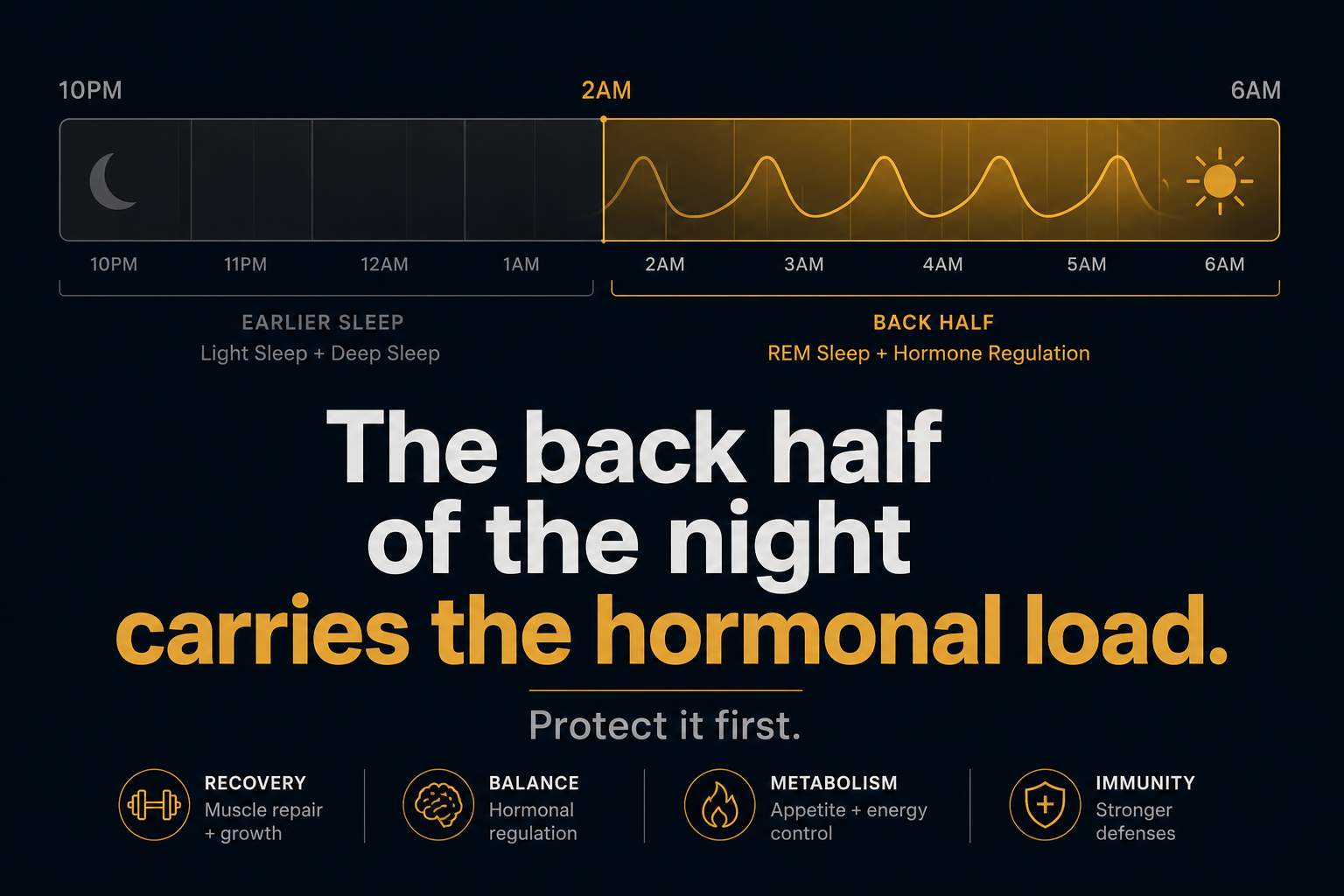
Testosterone release follows a nocturnal rhythm tied specifically to sleep stage, not just time of night. The nocturnal rise consistently precedes the first REM episode by about 90 minutes, and the rate of that rise tracks REM latency — the longer it takes to reach REM, the slower testosterone climbs.
Fragment the sleep and the rhythm fragments with it. In one study, the nocturnal testosterone rise was delayed by hours under fragmented sleep, and in subjects who never reached REM during the fragmented protocol, the rise often didn't occur at all. Restrict healthy men to 5 hours of sleep for a week — lab-monitored — and daytime testosterone drops 10-15%.
REM and slow-wave sleep concentrate in the second half of the night. So the executive who wakes at 1am and is up by 5 isn't just short on hours — he's specifically cutting the window where production peaks. His morning blood draw can still read normal. That single data point captures the peak; it says nothing about how many nights it took to get there, or how much of the day he's spending below it.
This isn't a testosterone problem in the classical sense. It's a sleep architecture problem wearing a testosterone problem's symptoms.
In women: hormonal change drives architecture
The research linking sleep to testosterone production was done almost entirely in male cohorts — it doesn't transfer as-is. The stronger, better-evidenced mechanism for women runs the other direction: estrogen and progesterone govern sleep continuity, so their decline or volatility fragments sleep independent of behavior.
This shows up earliest in perimenopause, and earlier than most people expect. Rising FSH — the pituitary's response to less responsive ovaries — correlates with sleep disruption even before hormone levels have dropped substantially or hot flashes have appeared. Perimenopause isn't a clean decline; estrogen can spike above baseline one week and drop the next, and that volatility appears to disrupt sleep as much as the average decline does. Estrogen and progesterone both support sleep continuity and slow-wave sleep, so the swings — not just the eventual lower average — are what fragment the night.
The diagnostic trap here isn't a missed hormone reading — it's a missed cause. A woman in her early-to-mid 40s with new sleep fragmentation, flat energy, and stalled recovery gets treated for insomnia as a standalone issue, sometimes years before cycles become obviously irregular enough to name what's actually happening.
The shared protocol
"Sleep more" isn't useful advice for someone whose calendar doesn't allow it, and it's the wrong advice entirely when the disruption is hormonally driven rather than behaviorally driven. The protocol has to work with the actual driver:
→ Protect the second half of the night. Alcohol, late meals, and late training load disproportionately fragment the back half of sleep — costly for men because that's the REM/production window, costly for anyone because fragmentation compounds night over night.
→ Track the right upstream data. For men, sleep-stage data alongside a single morning draw. For women, cycle or perimenopausal status alongside sleep data — treat it as an input, not an afterthought.
→ Name the mechanism before treating the symptom. Fatigue and poor recovery in a 40+ man often get treated as a testosterone problem before sleep is examined. The same symptoms in a 40+ woman often get treated as insomnia before hormonal status is examined. Both are backwards.
→ Loop in the right specialist. This is bloodwork and, where indicated, hormone-therapy territory — not something to self-manage off a wearable. I work this through in coordination with each client's physician; the coaching and the medical side need to be reading the same data.
I work through this with almost every client over 40, regardless of sex. It's almost never one intervention — usually two or three compounding factors that look minor individually and look like a hormone problem together.
DM me AUDIT if you want to start identifying which variable is failing first in your specific situation. It's free.
The GLP-1 Conversation Nobody's Having With Individuals Who Train
Most GLP-1 conversations stop at weight loss. For men over 40 who train, that's the wrong finish line — appetite suppression has downstream effects on protein intake and recovery that most prescribers aren't tracking.
The GLP-1 medication conversation has been dominated by the weight loss frame.
If you are over 40 who trains consistently, that frame is incomplete.
Here is what matters for your specific situation.
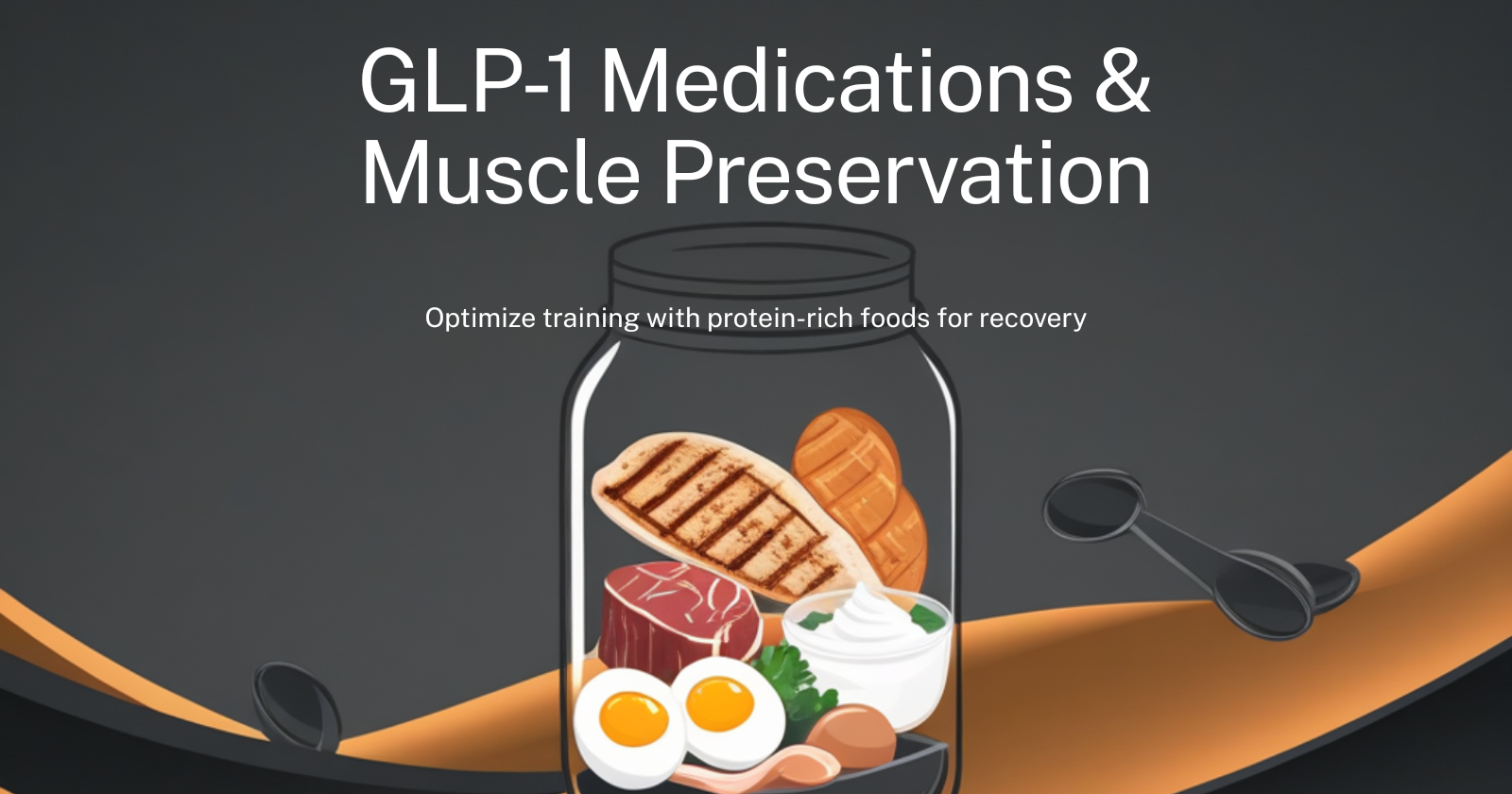
GLP-1 receptor agonists significantly reduce appetite. That is the mechanism. In the context of a structured training protocol, reduced appetite has downstream effects that most prescribers are not monitoring: lower protein intake, reduced glycogen availability, compromised recovery capacity.
Training 4 days per week on a GLP-1 while not actively managing protein targets is an almost guaranteed way to lose significant muscle alongside fat.
This doesn’t appear until his performance drops, his body composition looks wrong despite the weight loss, or his labs show what is happening.
The solution is not to avoid the medication. The solution is to build the nutritional protocol that makes it work the way it is capable of working.
Protein-first nutrition framework
Resistance training maintained or increased
Recovery protocol supporting the reduced caloric environment
Periodic clinical assessment to verify lean mass is being preserved.
I have walked several clients through this. The outcomes are different when the framework is built correctly.
If you are on a GLP-1 or considering one and you are training, you need a nutrition protocol designed around the medication. Not a generic plan. Not the macros you used before you started.
Comment AUDIT below. I built a free tool to start this conversation.
How I Stayed on Track Without Following My Normal Routine
I recently had the opportunity to put my Summer Baseline framework to the test during a trip. The routine wasn't perfect, but that wasn't the goal. Here's what actually helped me stay consistent—and why having a travel version of your plan makes all the difference.
I've been writing this past month about summer challenges and tips for travel, so it seemed natural for me to recap my most recent summer vacation and talk through how I planned things out, what worked, and what didn't.
A little context for the trip first, I was going to be gone for 10 days, with my family, and planning for a laid back, relaxing trip hoping to take the time to just enjoy the company. But I still wanted to continue the momentum I had built up, without having to stress about all the little things.
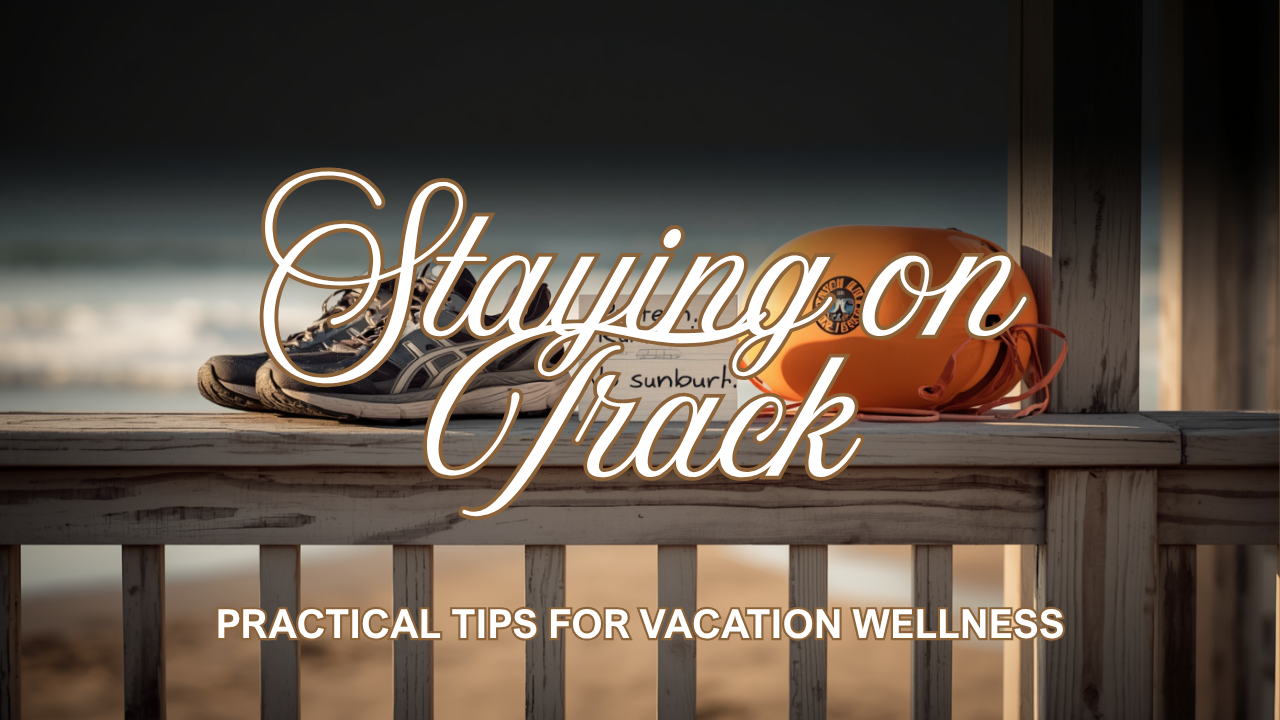
My main anchor points for the trip were breakfast, my running, swimming, and probably the most important, not getting sunburnt.
I pre-made the dry ingredients for my overnight oats knowing that we were grocery shopping and I could get milk and yogurt to finish it off for my big training days. And then milk, bagels, and eggs would work on the lighter days for some good variety.
I brought my running gear with me and looked ahead of time to get a feel for the area, map out some routes, and understand what the options were. I also knew that schedule wise, I would be up, out, back, and cleaned up before most of the group was even up such that I wouldn't miss much of the family time.
Being out in the ocean, I wanted to be cautious so I brought my buoyancy shorts as well as my inflatable buoy for visibility and extra safety. I wasn't intending to get in anything especially long, more to keep up my swim consistency and get back into some open water.
As for the sun, I brought a couple of rash-guard shirts to protect, sun-screen, hats, and then the house had great patios such that I could be outside and enjoy everything, without being in the sun.
All of these anchors worked perfectly, I managed to feel good and strong on my runs, swam twice, and didn't get burnt one bit! I then was able to pretty much eat and enjoy whatever we were doing for lunch and dinners, and add in the occasional treats. My training volume took a bit of a hit as I wasn't biking, but that just didn't make enough sense for me to try and worry about a solution.
Now of course, no trip is perfect so there were a couple of things I could have done better, but honestly they were more "nice to haves" so I wasn't overly worried about them.
I brought my suspension trainer with me, but there wasn't a good place to anchor it. One week without strength training isn't going to make a huge difference, but it would have given me a fun opportunity to show some different options for my family.
I did a pretty good job making sure I was properly hydrated, but I'm pretty confident I was low on total calories, or at least not as many as I typically have at home. Lunch was the main "challenge" meal of the day although I probably didn't do as bad as I think as there were many days that I had multiple snacks - which probably equaled one lunch.
Probably the biggest aspect I "struggled" with was sleep as my mornings were pretty set but I didn't get to bed as early as I should have. Again, this was a trade-off I was happy to make to spend time with my family.
The takeaway is not that I did everything right. It is that I decided in advance what mattered and let go of the rest without guilt.
Biking was not realistic. The suspension trainer did not have a home. Sleep was a trade-off I made with my eyes open. None of that felt like failure because none of it was unplanned. It was just the trip being the trip.
That is the whole point of the anchor system. You are not trying to replicate your home routine in a different location. You are trying to protect the things that matter most and give yourself permission to release the rest.
If you have been following this series and want help figuring out which anchors actually matter for your summer — whether that is training, nutrition, sleep, or travel — that is exactly the kind of planning I do with coaching clients. Let's map it out before your next trip.

The Sleep Anchor: The Most Underrated Part of Your Summer Routine
Summer disrupts sleep more than most people realize, and once sleep slips, training, cravings, mood, recovery, and decision-making all get harder.
Every summer, the same pattern plays out.
Training slips. Nutrition gets inconsistent. Energy tanks. Cravings spike. Motivation disappears. And people spend the rest of the season trying to figure out what went wrong with their discipline.
Most of the time, it was not discipline. It was sleep.
Sleep is the first domino — and it is almost always the last one people look at. I have saved it for last as it will be the MOST impactful thing you can adjust, but also for most the most challenging. You can have your protein anchors dialed in, your travel plan ready, your 30-minute training templates built. But if sleep is quietly unraveling in the background, everything else gets harder than it needs to be.
Summer is uniquely good at unraveling it.
What Summer Does to Your Sleep
It starts subtly. The days are longer, so the evenings stretch. A backyard cookout runs until 10. A few drinks on a Tuesday because it feels like the weekend. The kids are out of school so the morning schedule loosens. You travel across time zones twice in six weeks. The bedroom is warmer than usual. You stay up an hour later on Friday and Saturday and then try to drag yourself back to normal on Monday.
None of these things feel like a big deal individually. But together they add up to a sleep pattern that is inconsistent, shorter than it should be, and lower quality than your body actually needs.
The result is not just feeling tired. The downstream effects are more significant than most people realize.
What Happens When Sleep Slips
Poor sleep does not just make you groggy. It systematically degrades almost every other health behavior you are trying to maintain.
Cravings increase — specifically for high-calorie, low-nutrient foods. Sleep deprivation elevates ghrelin (the hunger hormone) and suppresses leptin (the satiety hormone), which means you are hungrier, less satisfied, and reaching for the wrong things more often.
Training quality drops. Output is lower. Motivation to train at all is lower. The session that would have felt manageable on a good night's sleep feels like a grind, and the temptation to skip it wins more often.
Recovery takes longer. Muscle repair, hormonal restoration, and nervous system recovery all happen predominantly during sleep. Cut the sleep short and you are cutting the recovery short — which means the training you are doing is not producing the adaptation it should.
Decision quality suffers across the board. Prefrontal cortex function — the part of your brain responsible for impulse control, planning, and long-term thinking — is one of the first things to degrade with sleep loss. Every choice you make about food, training, and routine gets a little harder and a little worse.
Mood and irritability follow. The version of you that shows up after a week of short nights is not the version that makes good calls consistently.
The compounding effect is significant. And it usually gets blamed on everything except the actual cause.
The Sleep Anchor
Just like nutrition and training, sleep does not need to be perfect during summer. It needs anchors.
A sleep anchor is a consistent behavior that stabilizes your sleep pattern even when the surrounding schedule is variable. Here are the ones worth building in.
Consistent wake time. This is the single highest-leverage sleep anchor available, and it is the one most people overlook because they focus on bedtime instead. Your circadian rhythm is anchored primarily to when you wake up, not when you fall asleep. If you protect your wake time — even after a late night, even on weekends — your body has a stable reference point that keeps the whole system from drifting. Bedtime will regulate itself over time if the wake time is consistent.
Caffeine cutoff. Caffeine has a half-life of roughly five to six hours. That afternoon coffee at 3 p.m. still has half its stimulant effect at 8 or 9 p.m. Pick a cutoff time — noon or 1 p.m. for most people — and hold it. This is a small habit change with a disproportionate impact on sleep quality.
Alcohol boundary. Alcohol is uniquely disruptive to sleep architecture. It may help you fall asleep faster, but it suppresses REM sleep and causes fragmented rest in the second half of the night — which is when a lot of the most important recovery happens. This does not mean abstaining. It means being intentional. Finishing drinks at least two to three hours before bed and being honest about how frequency during the week is affecting how you feel.
A 30-minute wind-down. Your nervous system does not switch off on command. A short wind-down routine — something that signals the transition from the day to sleep — meaningfully improves both the time it takes to fall asleep and the quality of sleep once you do. It does not need to be elaborate. Dimming lights, stepping away from screens, reading, stretching, a short walk. The content matters less than the consistency.
A cool room. Core body temperature needs to drop slightly to initiate and maintain sleep. A warm summer bedroom works against that process. Blackout curtains, a fan, keeping the thermostat lower than feels necessary — these are not luxuries. They are functional sleep tools.
Morning sunlight. Getting outside within 30 to 60 minutes of waking — even for ten minutes — is one of the most effective ways to anchor your circadian rhythm. Morning light exposure sets your internal clock, improves alertness during the day, and makes it easier to wind down at night. It is free, it takes almost no time, and most people are not doing it.
The Performance Connection
Better sleep is not just about feeling less tired. It is a direct performance input.
When sleep is consistent, energy is more stable and predictable throughout the day. Appetite regulation improves — the cravings that derail nutrition during busy stretches are significantly reduced. Training output goes up. Recovery between sessions improves. The mental clarity required to make good decisions about food, movement, and schedule comes back online.
Everything in this summer series — the training anchors, the nutrition structure, the travel plan, the weekend routine — works better when sleep is intact underneath it. It is not one piece of the puzzle. It is the foundation the rest of the puzzle sits on.
Where to Start
Pick one anchor from the list above. Not all of them — one.
If your schedule is inconsistent, start with wake time. If you are a late-caffeine drinker, start there. If alcohol is disrupting your sleep more than you want to admit, that is your anchor.
Build it for two weeks before adding anything else. Anchors compound. One consistent sleep habit makes the next one easier to implement.
Summer does not have to be the season that costs you four months of progress. But sleep is the piece most people leave unaddressed until everything else has already started to slip.
Protect it first.
This is the final post in the summer consistency series — covering training, nutrition, travel, weekends, and now sleep. If any part of this series resonated with you and you want help building a summer plan that actually holds up in real life, that is exactly what IronLane Coaching is designed for. Let's build it together.

The best travel plan is not your full home routine. It is the version that works on the road and keeps the important pieces alive.
You land Monday morning. By Wednesday you have skipped three workouts, eaten airport food twice, slept poorly two nights in a row, and you are telling yourself you will reset when you get home.
Sound familiar?
Travel is the number one routine killer I hear about from clients — and honestly, it is a legitimate challenge. Not an excuse. A real one. But the solution most people try — white-knuckling it through the trip or just giving up entirely — misses the actual problem.
The problem is not that you traveled. It is that you tried to bring your home routine with you. And that never works.
What Travel Actually Does to Your Body
Before we talk solutions, let's be honest about what you are dealing with. Travel does not just disrupt your schedule. It disrupts your physiology.
Sleep takes a hit from time zone shifts, unfamiliar beds, and late nights. Hydration tanks on flights and long drives. Meal timing goes out the window when you are at the mercy of someone else's agenda. Training access is unpredictable. Your daily step count drops when you are sitting in airports, conference rooms, and cars. And recovery — the thing that makes all of your training and nutrition actually work — takes the biggest hit of all.
That is a real accumulation of stress on your body. Pretending it is not there does not help. But catastrophizing it does not either.
The Mindset Shift That Actually Works
Stop trying to replicate your home routine on the road. That is the trap.
Your home routine was built for your home environment — your gym, your kitchen, your sleep schedule, your commute. None of that travels with you. When you try to force it anyway, you either fail and feel like you blew it, or you exhaust yourself trying to hold something together that was never designed for where you are.
The better move is to build a travel version of your routine before you leave. A simplified, portable, realistic plan that fits the actual conditions of travel — not the ideal conditions of your normal life.
This is not lowering your standards. It is matching your plan to your environment. That is just good programming.
The Travel Routine Checklist
These are the things worth deciding before you get on the plane — not improvising at 6 a.m. in a hotel room.
Pack protein options. Bars, single-serve packets, jerky, individual Greek yogurts if you have a cooler. The goal is to have something you control in a bag, so airport food and minibar snacks are not your only options when hunger hits at a bad time.
Choose your hotel with intention when possible. Walkability and gym access are worth factoring in if you have any control over where you stay. A hotel with a decent gym or located near a running path removes a barrier that stops a lot of people before they even start.
Schedule movement before the day gets away. Travel days have a way of filling every available hour. If movement is not on the calendar with a specific time, it usually does not happen. Even 20 minutes in the morning before meetings start is enough to change how you feel for the rest of the day.
Hydrate aggressively on travel days. Cabin pressure and recycled air dehydrate you faster than most people realize. Target at least 16 ounces of water before your flight, and match every alcoholic or caffeinated drink with an equal amount of water. This alone has a significant impact on how you feel when you land.
Walk after meals. This is one of the highest-leverage habits you can build on the road. It helps digestion, blunts blood sugar spikes, adds steps without requiring a workout, and gives you a few minutes away from the table or the screen. Five to ten minutes is enough.
Have a first day back plan. This is the one most people skip and one of the most important. Decide before you leave what the first 24 hours home looks like — what you will eat, whether you will train, how you will prioritize sleep. Without a re-entry plan, the travel hangover extends for days longer than it needs to.
Training Options That Actually Work on the Road
The goal on travel days is not to crush a PR. It is to maintain the habit and keep the engine running. Here is a realistic menu of options depending on what you have access to.
Hotel gym lift. Squat or hinge, push, pull, core carry. Three rounds, 30 minutes. Done. (If you missed last week's post on the 30-minute template, that one is worth going back to.)
30-minute run or walk. Get outside if the city allows it. This doubles as mental reset time, which is often what you need most after a long travel day or a packed conference schedule.
Band workout in your room. A single resistance band covers rows, pulls, hip work, and shoulder stability. Pack one. They weigh nothing and turn any hotel room into a training space.
Mobility reset. On the days when energy is genuinely low and sleep was rough, a 20-minute mobility session is not giving up — it is smart management. Hips, thoracic spine, ankles. You will feel better for the rest of the day and protect your training quality when you get home.
Airport walking. Stop circling the gate and start moving. A 45-minute layover with intentional walking is real movement. It counts.
Nutrition on the Road
You are not going to eat perfectly on a work trip or a family vacation. That is not the goal. The goal is to keep a few anchors in place so the wheels do not come off entirely.
Protein-first ordering. At every restaurant, start with the protein and build from there. Steak, chicken, fish, eggs — whatever is on the menu. This keeps your intake from defaulting to carbohydrate-heavy travel meals that leave you hungry two hours later.
Make a grocery stop. If you are somewhere for more than two days, a 15-minute stop at a grocery store pays dividends all week. Greek yogurt, fruit, protein bars, nuts, deli meat. Having real food in the room changes how the week goes.
Control breakfast. Dinner is often out of your hands — a work dinner, a restaurant with the family, a catered event. Breakfast usually is not. Own that meal. High protein, real food, intentional. Let the rest of the day have some flexibility because you started with a solid foundation.
Set a hydration target and track it. On travel days especially, water does not happen unless you make it happen. Pick a number — 80 to 100 ounces is a reasonable floor — and work toward it deliberately.
The Bigger Picture
The people who stay consistent through travel are not the ones with the most willpower. They are the ones with the simplest, most portable version of their routine — built in advance and practiced enough that it does not require a lot of decision-making in the moment.
That is what coaching actually helps with. Not just building the training plan and the nutrition structure for your normal life, but building the compressed, travel-ready version that keeps you from losing two weeks of progress every time you get on a plane.
Your home routine is your full version. Your travel routine is the version that keeps everything intact until you get back to it.
Build both before you need either one.
One Action Before Your Next Trip
Before you pack your bag, take five minutes to write down your travel version of your routine. What will you eat for breakfast? What does your 30-minute training option look like? When will you move? What will you have in your bag for protein?
That five minutes of planning is the difference between a trip that sets you back two weeks and one you walk away from feeling like you held the line.
Where are you traveling this summer — and what is the one part of your routine that tends to fall apart first when you are on the road? Drop it in the comments. I read every one.

Summer Eating Needs Anchors, Not Perfection
Summer eating often falls apart when people swing between rigid control and no structure at all. A few clear nutrition anchors can make the season much easier to navigate.
Let me paint the picture.
Cookout Friday. Birthday dinner Saturday. Road trip Sunday. Breakfast was a protein bar in the car. Lunch happened at your desk around 2 p.m. Dinner is whatever is fast because the kids have practice.
This is not a discipline failure. This is just summer.
And this is exactly where most people's nutrition goes one of two directions — neither of which actually works.
The Two Traps
The first is trying to be perfect. Locked-in meal plan, macros tracked, every deviation a setback. You white-knuckle your way through the cookout and feel vaguely miserable while everyone else is just living their life. Then one vacation weekend unravels the whole thing, because the plan had no flexibility built in.
The second is abandoning structure entirely. Every social event becomes a free-for-all. Breakfast gets skipped. Hydration is an afterthought. You tell yourself you will get back on track in September — and by August you are not feeling great, your training is suffering, and the gap is wider than when summer started.
Most people cycle between these two every single year. There is a better approach, and it does not require eating perfectly.
Nutrition Anchors
An anchor is not a rule. Rules are rigid. Rules break.
An anchor is a stable point you return to regardless of what is happening around it. For nutrition, anchors are the two or three habits that, when kept, prevent everything else from spiraling. They do not require a perfect week. They just require consistency on a small number of high-leverage behaviors.
Here are the ones worth keeping this summer.
Protein at your first meal. Thirty to forty grams early sets the tone for the day, reduces hunger, and supports muscle maintenance. Eggs, Greek yogurt, cottage cheese, a shake alongside something real. Front-load your intake so you are not playing catch-up by dinner.
A daily protein target. Pick a number — somewhere around 0.7 to 1 gram per pound of bodyweight is a reasonable range — and take a rough aim at it. You do not need to hit it perfectly. But having a target means you are making intentional choices at restaurants and on travel days instead of just winging it.
A hydration floor. Dehydration is one of the most common drivers of low energy, poor mood, and reduced training performance in summer — and it is completely fixable. A glass of water before coffee, water with every meal, something before you add alcohol at social events. Simple and non-negotiable.
Produce once or twice a day. Not a full vegetable overhaul. Just a commitment to get it on the plate. A handful of berries at breakfast. A salad at lunch. Vegetables on the grill. This handles fiber, micronutrients, and satiety — and it quietly reinforces the identity of someone who is eating well, which matters more than people give it credit for.
Plan alcohol intentionally. Pretending it does not exist is not a strategy. Decide in advance which events you will drink at, roughly how many, and what you will do around them. Planned drinking fits into a healthy summer. Reactive, untracked drinking is usually where things go sideways.
Do not show up starving. A small snack before a cookout or restaurant changes everything. When you arrive genuinely hungry, appetite drives the next twenty minutes — not intention. A piece of fruit, some nuts, a protein bar. That is it.
The Anchor Meal
Beyond the daily habits, there is one structural concept worth adding: the anchor meal.
One meal per day — usually breakfast or lunch — that you keep consistent no matter what else is happening. When dinner is a cookout or a vacation restaurant, the anchor meal has already done its job. Protein is in. Produce is in. Hydration is managed. The variable meal at the end of the day has a lot less power to derail you.
One consistent meal per day is enough to prevent a chaotic summer from becoming a chaotic summer of eating. It also reduces decision fatigue significantly — which, as I have written about in the training context, is one of the most underrated parts of staying consistent when life is busy.
Why This Goes Beyond the Scale
Consistent protein and hydration means more stable energy. Regular produce means better mood and gut function. Showing up to training sessions actually fueled means better performance and recovery. Not swinging between restriction and chaos means a healthier long-term relationship with food.
These things are connected. Nutrition anchors are not just a food strategy. They are a performance and wellbeing strategy that happens to involve food.
One side note worth naming: some of you are working with GLP-1 medications or hormone protocols as part of your health picture. Those tools can be genuinely helpful. But they produce the most durable results when lifestyle structure is present underneath them. Reduced appetite does not automatically mean better protein intake. Optimized hormones do not compensate for chronic under-fueling. The anchors matter regardless of what else is in the stack.
The Shift
You do not need a rigid plan you will abandon by the Fourth of July. You do not need to track every meal or avoid every social event.
You need a small number of anchors that are clear, manageable, and consistent enough to keep the overall picture stable. Pick two or three from above — the ones that feel most natural to maintain even during your busiest weeks — and start there before the chaos hits.
That is not a compromise. That is what sustainable nutrition actually looks like.
What is the easiest nutrition anchor for you to keep this summer — even during the most chaotic weeks? That is where you start.
The 30-Minute Rule: How to Keep Training Alive During Busy Seasons
Short workouts are not a compromise when programmed correctly. They are one of the most effective tools for staying consistent when life gets busy.
There is a belief a lot of people carry around without ever questioning it: if you cannot get a full workout in, it is not worth doing.
Sixty minutes, minimum. Ninety if you are being serious about it. Anything less and you might as well not bother.
But here is the thing: that belief is costing a lot of people consistency, and consistency is the only thing that actually produces results over time.
This summer, I want to challenge that mindset directly. Because when you understand what a well-designed 30-minute session can actually accomplish, you stop seeing it as a compromise. You start seeing it as one of the most powerful tools in your training arsenal. The goal is to protect everything you have already built — the strength, the aerobic base, the habit, the identity.
Here is what a well-programmed 30-minute workout can do.
Maintain strength. Strength is more durable than most people think. Research consistently shows that training volume can be reduced significantly (up to 1/7th) before meaningful muscle or strength loss occurs — as long as intensity is preserved. A focused 30-minute strength session, hitting the major movement patterns with appropriate load, is enough to maintain what you have earned.
Preserve aerobic fitness. The cardiovascular system adapts quickly, but it also holds on reasonably well with reduced training loads. A 20-minute conditioning block — done with real effort — maintains more fitness than people expect. The key is not duration; it is intensity. Your aerobic engine does not need to run for an hour. It needs to work.
Reduce stress. Exercise is one of the most well-documented tools for managing cortisol and improving mood. That benefit does not require a long session. Even a short workout that elevates your heart rate and gets you out of your head for 30 minutes can have a measurable impact on how you feel for the rest of the day. In a high-stress season, this alone makes it worth doing.
Reinforce your identity. This is the one most people overlook. Every time you follow through on training — even when it is short, even when it is not perfect — you send yourself a signal: I am someone who does not quit on this. That identity reinforcement compounds over time. Skipping weeks to wait for the "right" conditions erodes it. Thirty minutes of showing up builds it.
When you have only 30 minutes and you walk into the gym without a plan, half of that time disappears while you figure out what to do. Decision fatigue is real, and it is particularly brutal when you are already running short on bandwidth.
The solution is simple: build your templates now, before life gets chaotic. Then when the busy week hits, you are not starting from scratch. You are just executing.
Here are three templates I use with clients.
Template 1: Strength (30 Minutes)
Squat or Hinge — Goblet squat, trap bar deadlift, Romanian deadlift, barbell squat. Pick one. 3 sets.
Push — Dumbbell press, pushups with added load, barbell bench or overhead. 3 sets.
Pull — Rows, pulldowns, chin-ups, cable rows. 3 sets.
Core or Carry — Farmer carry, suitcase carry, Pallof press, dead bug. 1–2 sets. Keep it brief.
How to run it: Use 60–75 second rest periods. Do not exceed 4 sets per movement. Keep the weights honest — this is maintenance training, not a PR attempt. The goal is stimulus, not destruction.
You will not have time for accessories. That is fine. Compound lifts are doing the work that matters.
Template 2: Conditioning (30 Minutes)
Warm-up (5 minutes) — Light movement to elevate heart rate. A few minutes on the bike or rower, dynamic stretching, maybe a short activation drill. This is not optional — going straight into high-intensity work is how people get hurt.
Intervals (20 minutes) — This is where the real work happens. Options: bike, rower, ski erg, assault bike, track. Structure can vary: 20 seconds on/40 seconds off, 1:1 work-to-rest, 30-second all-outs with 90 seconds easy. The format matters less than the effort. You should be breathing hard during the work periods.
Cooldown (5 minutes) — Easy movement to bring the heart rate down. A short walk, some light stretching. This is how you recover faster for the next session.
This template is not glamorous. But done consistently, it preserves aerobic capacity and is one of the most effective stress management tools you have access to.
Template 3: Travel / Hotel (30 Minutes, No Equipment)
Circuit (3–4 rounds) — Squat variation (goblet squat with a bag, split squat, Bulgarian split squat), pushup variation (standard, close grip, elevated), hinge variation (single-leg RDL, hip hinge with band if available), row variation (band rows, face pulls, door frame row if you can find one), core (plank, hollow hold, bear crawl).
Cardio block (10 minutes) — Treadmill intervals, stair climbing, or jump rope if you have one. Even marching in place during intervals works in a pinch.
Travel workouts feel awkward until you have done a few of them. Keep a light resistance band in your bag and know your circuit in advance. The hotel gym does not need to be impressive for this to work.
I have said this before and I will keep saying it: structure prevents the spiral.
When you have a prebuilt plan, the decision is already made. You do not have to negotiate with yourself about what to do or whether it is worth it. You just execute the plan. That cognitive offloading is underrated, especially in a season when your bandwidth is already stretched.
Build your templates now, during a normal week when you have the time and mental space to think clearly. Test them once or twice so you know they work and how they feel. Then when the travel week or the packed project hits, you are not improvising. You are just following the plan you already built for yourself.
A 30-minute session executed consistently for six weeks beats a perfect program you followed for two weeks and then abandoned. Every time. Train with that in mind.
That is how consistency survives the summer.
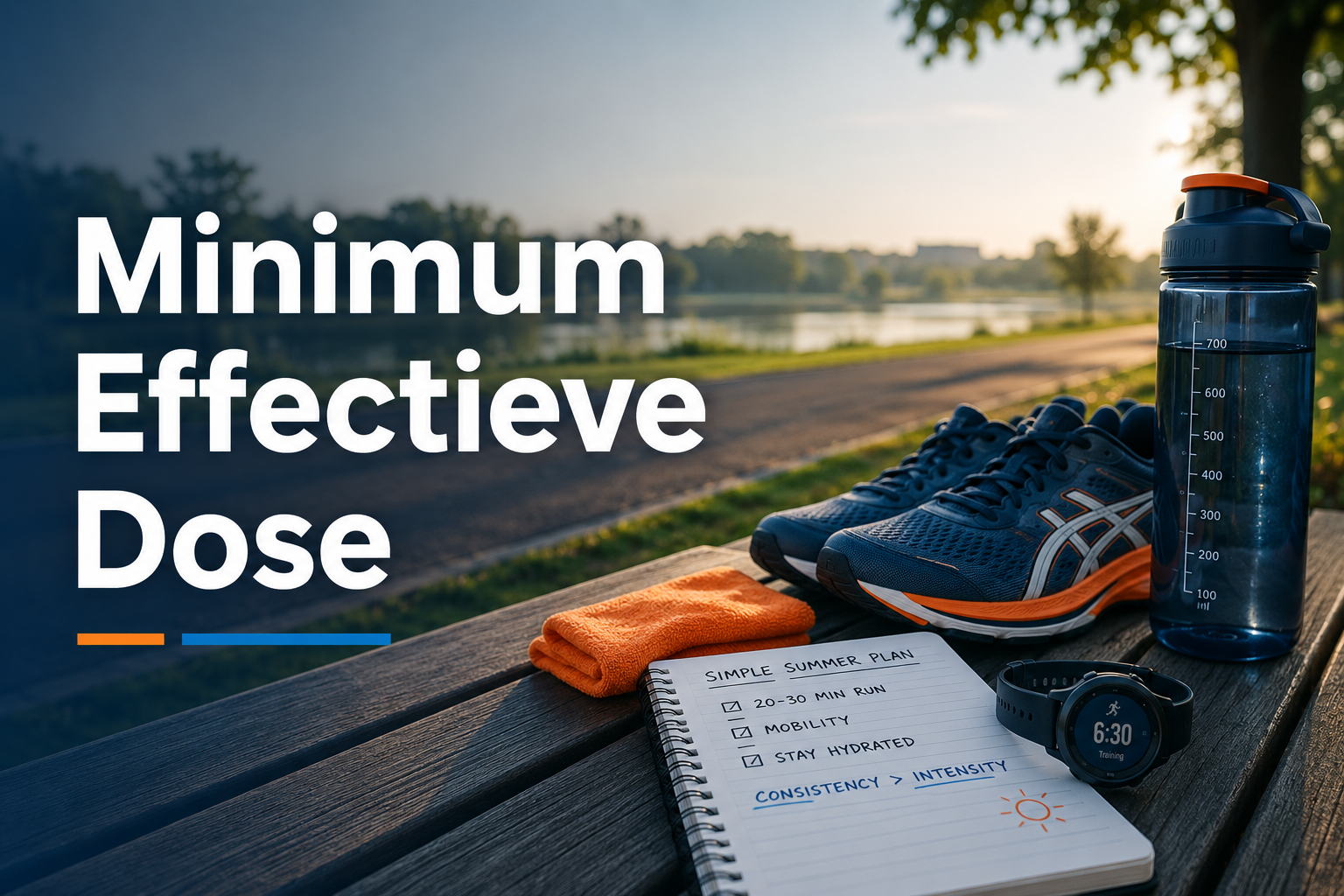
Your Summer Training Plan Needs a Minimum Effective Dose
During chaotic seasons, the smartest training plan is often not the biggest one. It is the minimum effective dose that preserves momentum, muscle, conditioning, and confidence.
When life gets chaotic, a lot of people make the same mistake: they keep trying to run an “ideal” training plan in a very non-ideal season.
That usually ends one of two ways: frustration or inconsistency.
When summer (or any busy time of year hits) it is a natural reaction to want to continue your existing training plan or even push for something bigger, but it is important to recognize that might not always be possible. Sure you might have weeks where that will work, but others will absolutely kick your butt. And if you force it, that week could derail the next and start a downward spiral of frustration, inconsistency, or both. There is a better way to not only continue to push forward and make progress but to preserve your rest and recovery such that you don't burn out due to a busier schedule. The most important part of this process is to maintain not only the momentum but keep your mental outlook high.
The first question to ask yourself is "What is the minimal dose of exercise that will preserve momentum and confidence?" This should look similar to the audits I've suggested before, but in this case you're looking to think about what kind of workouts really invigorate you and boost your mental state. Some variables you can work with might include:
reducing your workout duration (cut your workout in half)
reducing the workout intensity (lighter weights, smooth run instead of a speed workout)
swapping in a mobility workout
swapping a workout for a walk outside with the family, dog, friend, podcast, audio book, etc.
opting for a different modality of workout - swapping in a swim, bike ride, hike, etc.
Having this information in hand, you can start to create your backup plan. Whether you want to make it a full weekly shift, or allow for some day to day flexibility, that's up to you. Personally, I suggest using this process as part of that weekly assessment not only looking back, but looking forward as well. The more you can plan and structure through the busy times, the better you'll handle them. You'll feel so much better crushing your "drop" week then constantly trying to make adjustments. Best case, if things don't go as busy as you anticipated, you can always ramp back up one of your workouts later in the week. But the important thing is to not look at this as a lost week, the goal is to continue the momentum.
How this looks in practice is up for you to decide, but I recommend having at least one option for your week, and possibly even two. You could have your ideal plan, a slightly scaled back one for a busy week, and then a third that truly is the minimal dose for when things threaten to go off the rails. Then use that weekly review time to see what adjustments need to be made - for the first couple of passes at this, I suggest erring on the side of caution since it is WAY easier to add to you week then dig out of an over-exertion week.
If summer tends to throw off your training, the answer is not to expect perfection. It is to define the minimum effective dose that keeps you moving, maintaining, and mentally engaged. A plan that preserves momentum in a chaotic season is far more valuable than a perfect plan you cannot follow.
You do not need maximum training to stay on track. You need enough consistency to preserve what matters.

Find the Weak Points Before Summer Does
Summer often exposes the routines that were already fragile. A quick self-audit can help you identify what is most likely to break first.
Before summer chaos hits, do not ask whether you are motivated.
Ask where your routine is fragile.
Because that is usually where things start to slide.
One of the best ways to prepare for any upcoming change is to do an audit of where you currently stand and then make adjustments from there. And preparing for summer is no different, as no matter what your situation is, summer will bring some sort of change. And if you practice this habit now, it will be available to you during any other periods of change - new job, new relationship, additional (or first) kid, etc. Summer, just like any of these is a stress test, and those always reveal the problems in any system
So what does this look like in practice? The main idea to look for those areas where you feel least confident they will hold if something changes or goes slightly off normal. From there, you're going to target ONE to strengthen and then set boundaries as I mentioned before to help create your "stressed" gameplan. This becomes the gameplan you can fall back to that will still allow you to progress when life gets challenging. Looking at each of the following areas, you'll want to honestly understand your strengths and weaknesses.
Strength training
Do your workouts improve your mentality or drain it?
Do you look forward to your workouts, or struggle to fit them in?
Nutrition and Fueling
When stressed, do you find you eat more or less?
Do you end up skipping meals entirely?
Sleep
Can you maintain a consistent schedule, or does stress cause you to either stay up too late, or sleep in?
How much does one poor night of sleep through you off?
Recovery/Stress
Do you have a recovery plan/go-to?
How quickly can you identify when your stress level is rising?
Mindset
Do you think in all or nothing terms?
Do you need ideal circumstances to feel confident in success?
There are more questions you could ask yourself, but hopefully this gives you a good idea of the concept and allows you to figure out which of these areas is most likely to slip when under stress. Once you have identified the weakest point, look to pick something simple that you feel confident you can maintain in a stressful situation, that will improve from where you currently are. For example, lets say you recognize that getting in your strength training will be hardest for you as you just don't like to work out when you're not at your best. I'm not going to claim that you're magically going to always love working out, however you CAN make your workouts more enjoyable. A couple suggestions:
add music or tv shows while you workout
trim down your workout to include only exercises you really like.
workout with a friend, family member, etc.
focus the entire session on improving your form on one lift
Then take the time now to incorporate that change into your routine BEFORE you need it such that it just feels natural. Only when this first change feels like second nature would I look to take on something else, and that may take a matter of months, not days.
If summer tends to knock you off track, do not wait until it happens to start paying attention.
Audit the weak points now.
Because the habit that breaks first is usually the one that pulls everything else down with it. And once you know where your routine is fragile, you can strengthen it before summer puts it under pressure.
You do not need to fix everything. Just find the weak point most likely to derail you and start there.