Ergonomics for Recovery: Setting Up a Standing Desk to Reduce Pain and Prevent Flare-Ups
I didn’t add a standing desk because I wanted to “biohack” my workday—I added it because I was tired of feeling worse the longer I sat. During my own injury recovery, the biggest shift wasn’t standing all day; it was having the ability to change positions whenever symptoms started creeping in. In this post, I share what helped (and what didn’t), how I used sit-stand intervals as “active recovery,” and the key ergonomic and movement cues that made my desk setup part of the comeback—not part of the problem.
As I discussed last week, there are lots of benefits to a standing desk but I wanted to get a little more personal on how it has helped me during this past year. As a Health Coach, I spend most of my time working with my clients to help them realize how some of their habits and environments are not set up for their success, but I will admit it isn't always easy for me to do that same thing for myself. Over this past year, I've suffered two significant injuries that have not only derailed my training but have also had a massive impact on my quality of life. Based on these two injuries, I have looked into things I could put into practice during my daily life to not only help heal those injuries but better recover from my training and life activities. I do find myself sitting for a good portion of the day, not only at my desk, but also in my car as I drive quite a bit for clients. I have made some changes in the car, but those are more complicated and not quite as significant, and with both of these being hip injuries (both sides) I wanted to make changes not only in my posture but my overall workspace.
I've had my current workspace for over 6 years now, and while it mostly worked I noticed it was starting to lead to more aches and pains if I sat for too long. It also didn't have much flexibility in movement as managing all of the cables became unwieldy. I had tried a couple of half measures to piece together a standing option but with the system being manual, it was clunky and often created more problems than it solved. I then looked into the UPLIFT Desk and realized this could solve multiple problems and provide a badly needed refresh of my workspace.
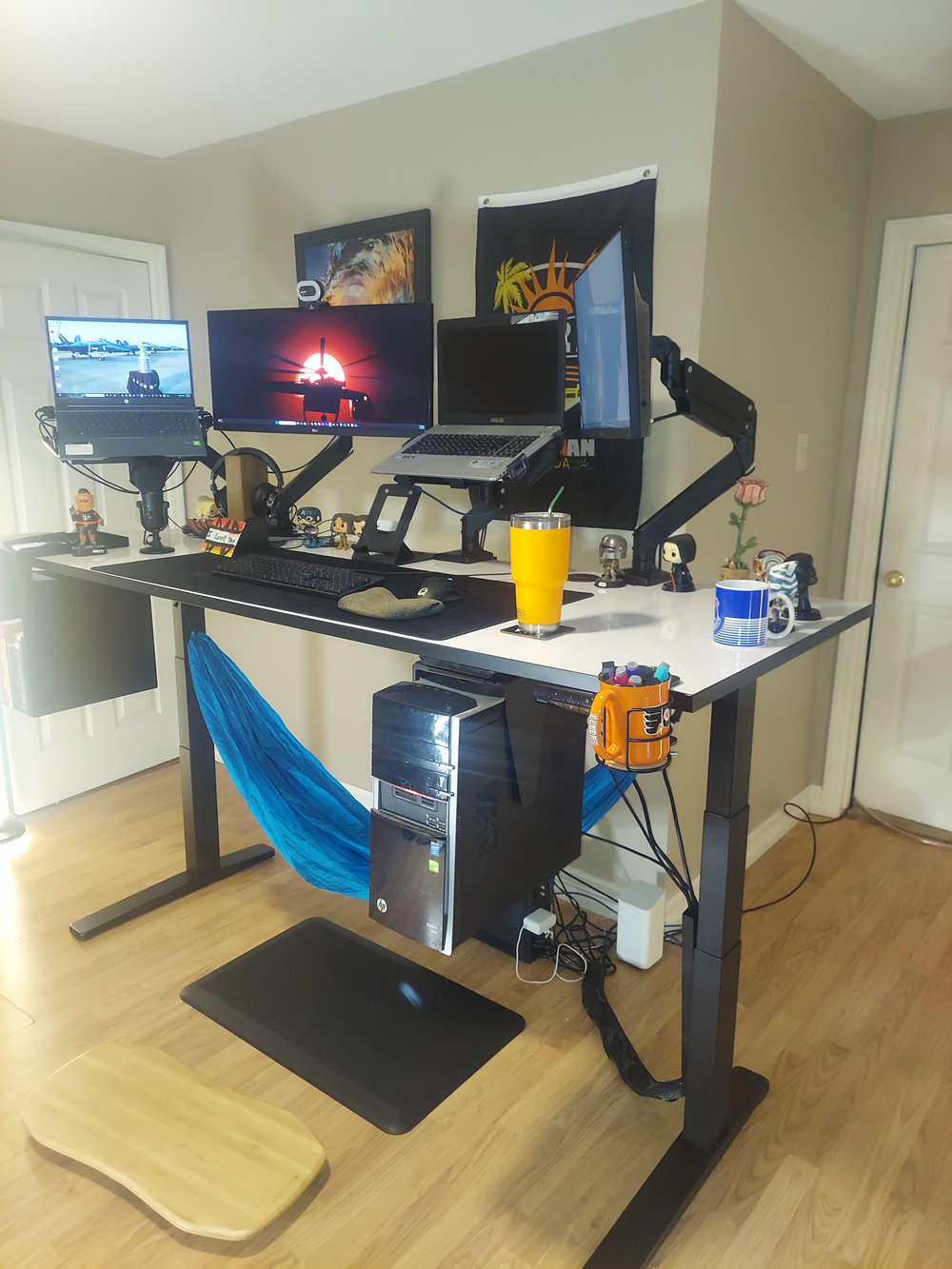
When configuring my new UPLIFT v3 Standing Desk workspace, the primary requirement for me was the simple process of converting from sitting to standing, with the capabilities to provide the peace of mind with the UPLIFT Desk FlexMount Cable Manager system so that I wouldn't have to worry about any of my cords or cables or make a series of adjustments once that transition is made. Over the years, I've realized if there's any hesitation that I'll cut a cord, or yank something off the table, I won't bother with standing at all. The UPLIFT Desk provides numerous different ways to bundle, hide, and route all of the cables (and yes I have LOTS of them) to the places they need to go, maintain their functionality, and most importantly work exactly the same sitting and standing.
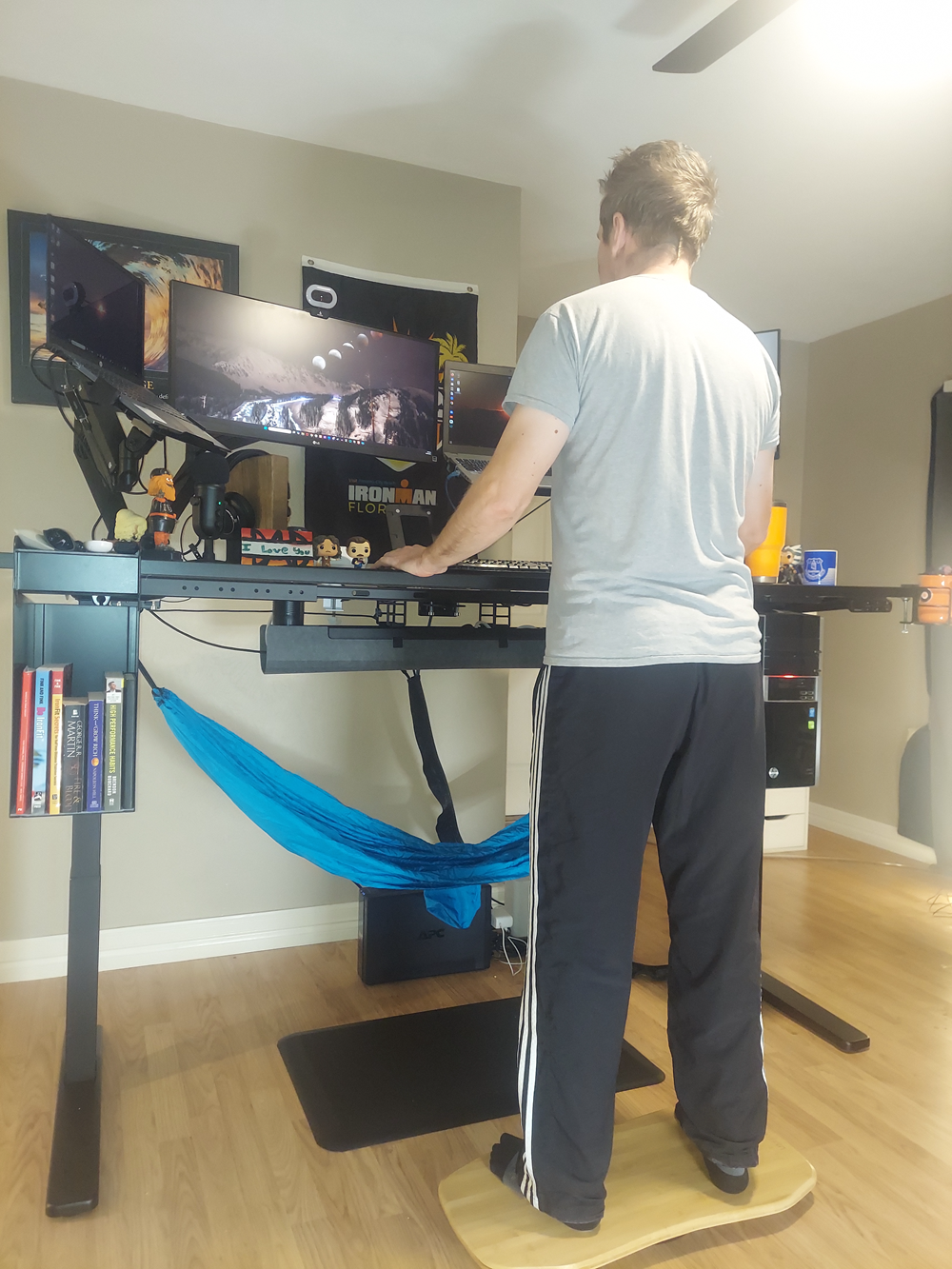
Another key component with my success with this new workstation has been the comfort while standing, having multiple options has been key. There are days when I want that cushy pad underneath my feet to provide that extra level of comfort. Then there are days where I want a little challenge, that's where the Motion X-Board comes in as it provides just enough instability to keep me mentally alert but also enough movement to help my ankles, knees, and most importantly (for me) my hips. Not only have these options allowed me to extend the time I spend standing, but also provide movement when I need it. This movement and changing of positions increases the amount of blood flowing through the legs and in general keeps the body in a more neutral position which promotes recovery.
The other key component for me of a successful workstation, is the aesthetics of it - or the looks. This isn't just the design of the desk and the material options, but the ability to keep it clean, organized, functional, and still a little fun! Being able to lift my monitors and computers off the desk clears up the entire workspace for not only utility, but allows me to display some of the other fun items in my collection. And since the entire workspace moves, I don't have to do any re-organizing when I stand or sit. Speaking of fun, another option that I initially thought was silly was the concept of having a hammock as part of my desk. But now that I have it, I love it - and not necessarily for the reasons you might think. Sure it is comfortable and fun, but it actually does help me stay more productive, let me explain. As someone who works from home (and have for the better part of 20 years) I can always find distractions if I want to (and yes, distractions are also in the office too) but on the days when I want to stretch out a little bit the hammock provides a great option that still keeps me physically in the office. I can use that time to quickly recharge and not end up on the couch where I might end up accidentally watching an entire season of Stranger Things!
All of these features and options, especially the UPLIFT Desk’s ergonomic benefits, have enabled me to successfully rehab from my injuries and build healthier more sustainable habits that should help to keep me more injury free going forward.
If you’re dealing with nagging pain or coming back from injury, think of your desk as part of your rehab plan. The goal isn’t to stand all day—it’s to create more movement opportunities and reduce time spent in the positions that provoke symptoms. Start with 10–20 minute standing blocks a couple times a day, keep your posture relaxed, and use the desk transition as a cue to reset: a few breaths, a quick walk, a gentle stretch. Want the easiest way to build that routine into your day? Explore UPLIFT Desk and set up a sit-stand station that makes consistency automatic.
If you choose to purchase through this link, I will earn an affiliate commission on that purchase - feel free to use that link or share it with others as a way to support what I do
Less Sitting, More Moving: Standing Desks, Mobility Breaks, and Everyday Comfort
Stiff hips, tight backs, and that “creaky by 5pm” feeling usually aren’t a motivation problem—they’re a positioning problem. A standing desk doesn’t magically fix mobility, but it does make it easier to change positions, move more often, and build quick “micro-breaks” into your day. This article breaks down the real mobility benefits of a sit-stand setup, how to alternate sitting and standing without fatigue, and simple movement resets you can do in under a minute to feel better during (and after) the workday.
As we start off the new year, many of us are looking for ways to improve our health, and as a Health Coach one of the main things I look for are those minor changes in a clients' lives that can stacked or progressed to accomplish a much larger change. One of those aspects I look for is movement as it has become far too easy for us to sit (or lay) in one position for far too long. I always look to incorporate small changes that can add a little movement, but that small change is then repeated multiple times throughout the day. There are many examples of this, choosing the further bathroom, walking the stairs and not using the elevator, parking further away, and so on, but another great one comes from the desk that we spend a good portion of our day behind. If we can switch that to an UPLIFT Standing Desk, even for a portion of a day, that change of position and posture plus the natural shifts and sways that will happen will naturally result in more movement during the day. Not to mention that we've now included at least two more squats during the day, which do add up.
First let's talk a bit about some of the challenges that come from sitting for long periods of time during the day. Even if you have perfect sitting posture, most of us don't, there is only so much movement you can encourage while sitting and that lack of movement not only creates stiffness but it also reduces blood flow. That stiffness and reduced blood flow makes moving even harder and creates that reinforcing circle that feeds on itself making you less likely to move. Poor posture combined with that reduced blood flow over time will reduce overall range of movement in your joints and as your body gets more used to sitting it will reduce resources sent to your leg muscles as they are spending large portions of the day resting. Yes you can (and should) strength train, but sitting for long periods makes those gains in the gym even harder to accomplish.
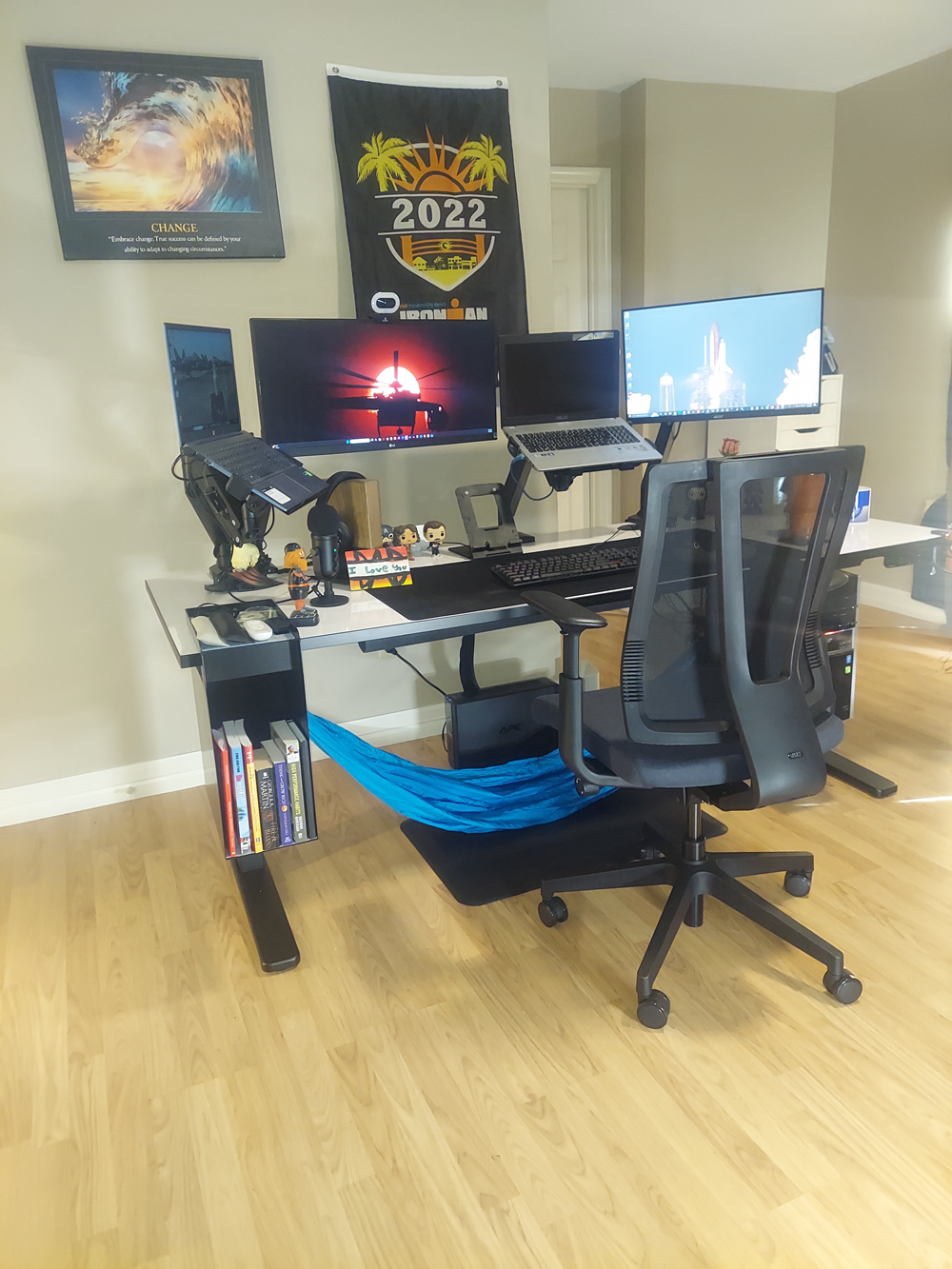
My UPLIFT Desk in the sitting configuation
One of the advantages of something like the UPLIFT Desk is that standing encourages your body to operate in a healthier fashion. First off, while it won't fix your posture, you're more likely to be in a neutral posture standing then most are when they're sitting. This posture shift not only promotes more blood flow but it removes so many of those sticking points that we sometimes find ourselves in while sitting. Also while standing there are many more opportunities even for subtle movements like shifting of weight, swaying, and small steps taken will all add up to increase your daily step count but a healthier working body overall. Standing requires your leg muscles to be activated and that will reinforce the work you're doing in the gym to help build and maintain strength. Having a standing option at your desk also promotes more movement as it presents more options.
When looking at standing options, a big component to consider is the ease at which you can switch from sitting to standing. I've tried a number of other options over the years, but one of the reasons I went with the UPLIFT Desk was the superior cable management options that can cause significant challenges if not handled properly. Also of consideration should be the ability to keep the workspace clean but also function in a similar fashion standing as it does while sitting. If you need to do a bunch of different things or use the space differently in different configurations, it becomes more of a hassle and as such you naturally won't leverage the options as frequently.
If you're looking to make a change in your workstation, I do recommend an audit of your current space, workflow, and current habits to make sure you account for as much as possible. While it may seem like a "nice to have" using mounting arms to lift and position monitors and laptops definitely is worth any extra fee they might come with. Not only does this free up your workspace but it also allows you to set it up in a way that reinforces proper posture. It is also important to look at the cable management options, something the UPLIFT Desk excels at, such that you can not only make it aesthetically pleasing, but also fully functional while both sitting and standing, without having any adjustments needed.
Mobility isn’t something you earn in one long stretching session—it’s something you build through frequent, low-effort movement. A standing desk turns everyday work into more opportunities to change angles, open up the hips, and keep the spine from locking into the same position for hours. Use the raise/lower button as your cue for a quick reset: a few breaths, a calf stretch, a hip hinge, or a 30-second walk. Want an easy way to bake that routine into your workday? Explore UPLIFT Desk and set up a sit-stand station that makes movement breaks automatic.
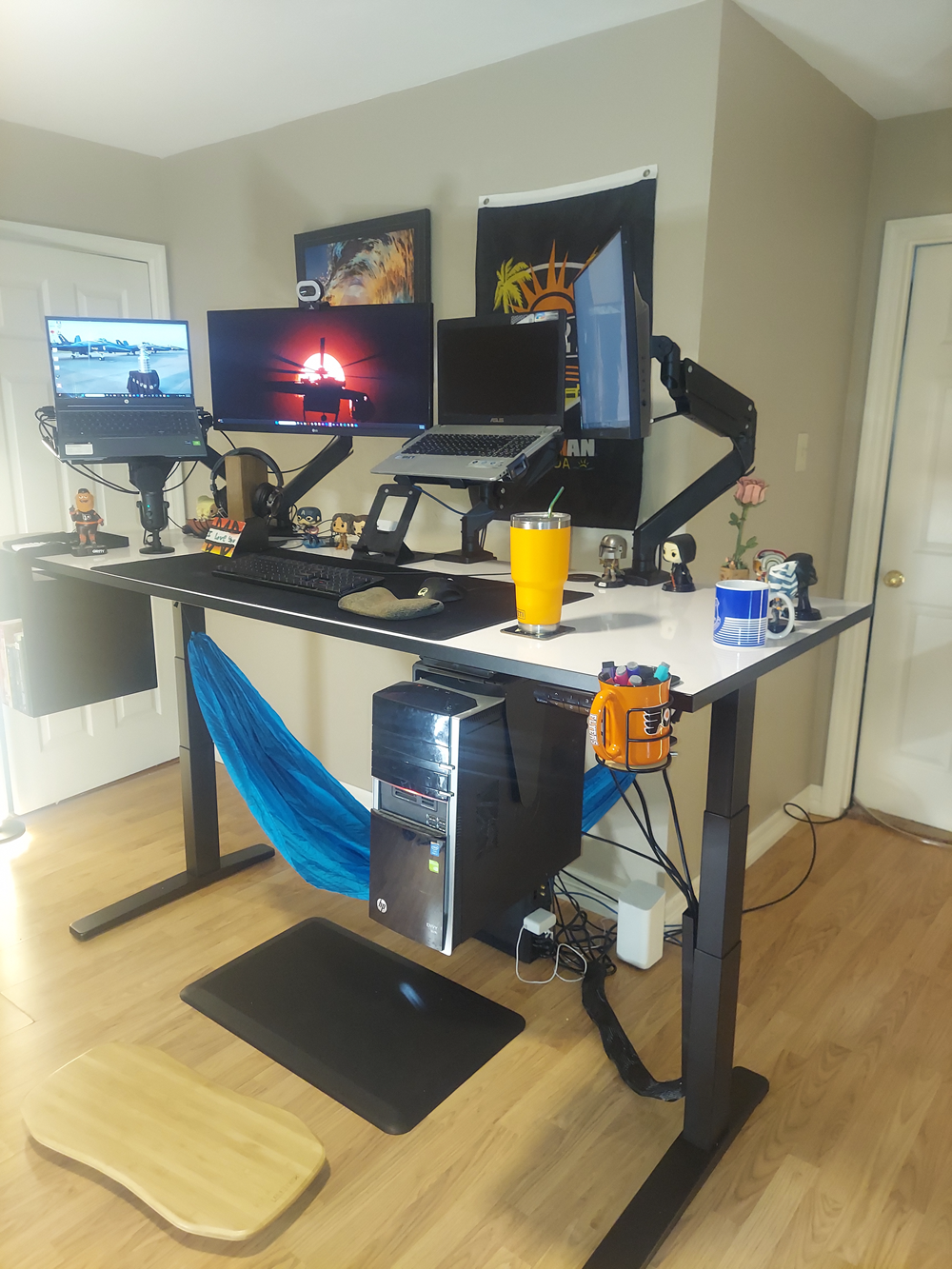
My UPLIFT Desk in the standing configuration.
If you choose to purchase through this link, I will earn an affiliate commission on that purchase - feel free to use that link or share it with others as a way to support what I do.

You Don’t Need Another Fitness Plan — You Need a Coach
Why should you consider a health coach, and what to look for in a coach you hire.
I'm sure you've been under a barrage of emails, ads, reels, threads, and videos all telling you what is lacking in your diet, what you're eating too much of, what one time hack will change your life, how to get that elusive 8 hours of sleep a night, or how this exercise plan is guaranteed to drop 10 pounds in a week. All of that information has value, but it way is too much to handle and the majority of it doesn't apply to your exact lifestyle and situation.
That is why a Health Coach could be the solution to the goal that has been eluding you for longer than you want to admit. A coach will act as a guide, empowering you to change your life not only in an effective way, but in a sustainable way such that it becomes your new normal. Probably the most important benefit is filtering the noise down to what matters and a sounding board for those items that sound interesting.
A few other way a health coach will help you hit new levels:
The accountability of someone else (outside of your family and friends) who can not only keep track of your wins, but also help you gain insight from your struggles.
Your coach will tailor everything based on your unique situation to find not only the productive steps, but the steps you are willing AND able to take.
The ability to combine raw data (calories, heart rate metrics, food intake, etc) with logistical factors (travel, commute, working hours, etc) as well as all the emotional aspects (relationships, passions, goals, etc.) to form a more complete and flexible strategy for success.
A good health coach will look at multiple aspects of your life, and not just focus on a specific thing. How do you need to modify your fueling based on your strength training, how should both of those be shifted during higher stress loads at work or while travelling, or how (and when) to double down on a sleep routine to maximize performance?
Because of the above (and others) working with a health coach will result in consistent success and not the massive fluctuations so many struggle with. Sure there will be ups and downs, but honest communication with your coach will level those out such that they're smaller in magnitude and less frequent.
If this all sounds like something you might be missing, the next question is what to look for in a health coach?
By far the most important aspect is a personality that you feel comfortable with and meshes well with your own. Coaching is only as successful as the communication between the coach and the client. If you don't feel comfortable sharing your struggles, that's not the right coach for you.
That coach needs to meet you where you are:
Technology for communication
in person
some form of video conference
phone calls
text
Meeting frequency and availability
Expectations on you
logging or tracking
communication
commitment
Price
You also will want to understand the experience and credentials of the coach, and you'll want a mix of both. I'm sure you know the booksmart but not street savy people, and the opposite as well - you'll want something in the middle. Someone who understands the details, but has enough experience to be able to tailor it for you specifically.
At the end of the day, lasting change doesn’t come from hacks or quick fixes — it comes from having the right structure, support, and accountability. If you’re ready to build momentum and start feeling your best, working with a coach might be the step that makes it stick.
If you like what I have to say, follow here, my email newsletter, or reach out and we can chat in more detail.