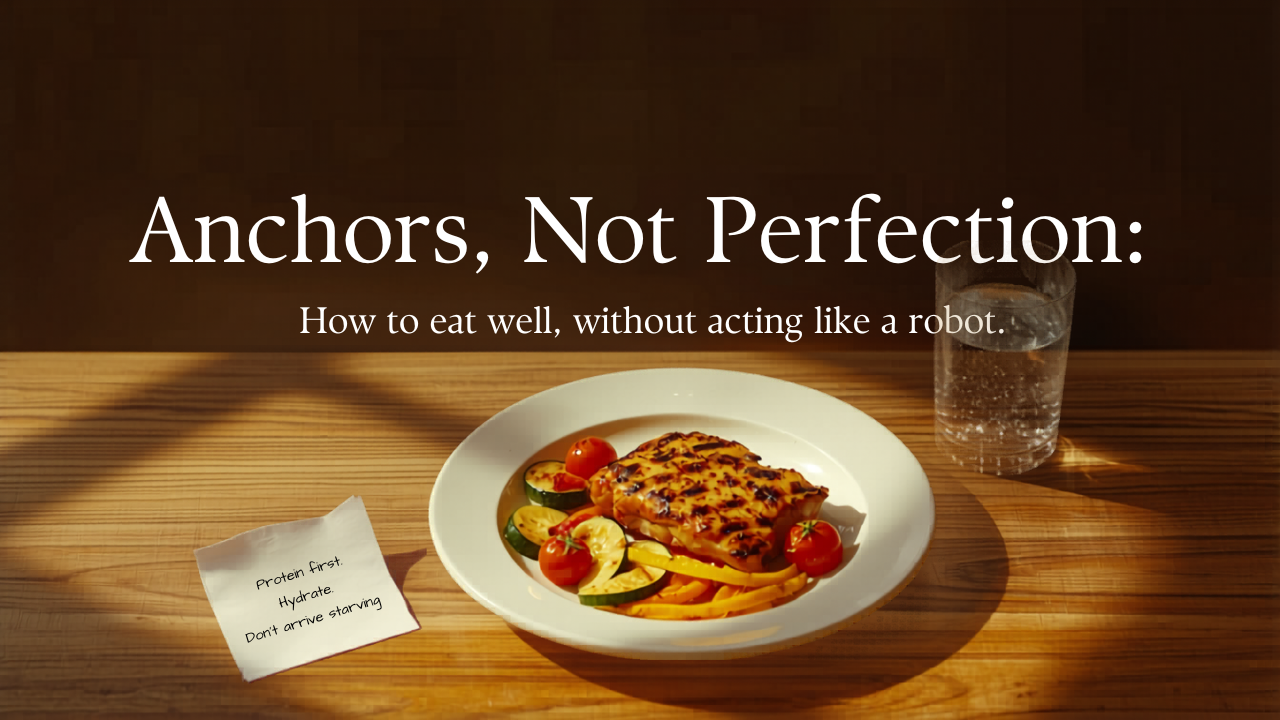
Summer Eating Needs Anchors, Not Perfection
Summer eating often falls apart when people swing between rigid control and no structure at all. A few clear nutrition anchors can make the season much easier to navigate.
Let me paint the picture.
Cookout Friday. Birthday dinner Saturday. Road trip Sunday. Breakfast was a protein bar in the car. Lunch happened at your desk around 2 p.m. Dinner is whatever is fast because the kids have practice.
This is not a discipline failure. This is just summer.
And this is exactly where most people's nutrition goes one of two directions — neither of which actually works.
The Two Traps
The first is trying to be perfect. Locked-in meal plan, macros tracked, every deviation a setback. You white-knuckle your way through the cookout and feel vaguely miserable while everyone else is just living their life. Then one vacation weekend unravels the whole thing, because the plan had no flexibility built in.
The second is abandoning structure entirely. Every social event becomes a free-for-all. Breakfast gets skipped. Hydration is an afterthought. You tell yourself you will get back on track in September — and by August you are not feeling great, your training is suffering, and the gap is wider than when summer started.
Most people cycle between these two every single year. There is a better approach, and it does not require eating perfectly.
Nutrition Anchors
An anchor is not a rule. Rules are rigid. Rules break.
An anchor is a stable point you return to regardless of what is happening around it. For nutrition, anchors are the two or three habits that, when kept, prevent everything else from spiraling. They do not require a perfect week. They just require consistency on a small number of high-leverage behaviors.
Here are the ones worth keeping this summer.
Protein at your first meal. Thirty to forty grams early sets the tone for the day, reduces hunger, and supports muscle maintenance. Eggs, Greek yogurt, cottage cheese, a shake alongside something real. Front-load your intake so you are not playing catch-up by dinner.
A daily protein target. Pick a number — somewhere around 0.7 to 1 gram per pound of bodyweight is a reasonable range — and take a rough aim at it. You do not need to hit it perfectly. But having a target means you are making intentional choices at restaurants and on travel days instead of just winging it.
A hydration floor. Dehydration is one of the most common drivers of low energy, poor mood, and reduced training performance in summer — and it is completely fixable. A glass of water before coffee, water with every meal, something before you add alcohol at social events. Simple and non-negotiable.
Produce once or twice a day. Not a full vegetable overhaul. Just a commitment to get it on the plate. A handful of berries at breakfast. A salad at lunch. Vegetables on the grill. This handles fiber, micronutrients, and satiety — and it quietly reinforces the identity of someone who is eating well, which matters more than people give it credit for.
Plan alcohol intentionally. Pretending it does not exist is not a strategy. Decide in advance which events you will drink at, roughly how many, and what you will do around them. Planned drinking fits into a healthy summer. Reactive, untracked drinking is usually where things go sideways.
Do not show up starving. A small snack before a cookout or restaurant changes everything. When you arrive genuinely hungry, appetite drives the next twenty minutes — not intention. A piece of fruit, some nuts, a protein bar. That is it.
The Anchor Meal
Beyond the daily habits, there is one structural concept worth adding: the anchor meal.
One meal per day — usually breakfast or lunch — that you keep consistent no matter what else is happening. When dinner is a cookout or a vacation restaurant, the anchor meal has already done its job. Protein is in. Produce is in. Hydration is managed. The variable meal at the end of the day has a lot less power to derail you.
One consistent meal per day is enough to prevent a chaotic summer from becoming a chaotic summer of eating. It also reduces decision fatigue significantly — which, as I have written about in the training context, is one of the most underrated parts of staying consistent when life is busy.
Why This Goes Beyond the Scale
Consistent protein and hydration means more stable energy. Regular produce means better mood and gut function. Showing up to training sessions actually fueled means better performance and recovery. Not swinging between restriction and chaos means a healthier long-term relationship with food.
These things are connected. Nutrition anchors are not just a food strategy. They are a performance and wellbeing strategy that happens to involve food.
One side note worth naming: some of you are working with GLP-1 medications or hormone protocols as part of your health picture. Those tools can be genuinely helpful. But they produce the most durable results when lifestyle structure is present underneath them. Reduced appetite does not automatically mean better protein intake. Optimized hormones do not compensate for chronic under-fueling. The anchors matter regardless of what else is in the stack.
The Shift
You do not need a rigid plan you will abandon by the Fourth of July. You do not need to track every meal or avoid every social event.
You need a small number of anchors that are clear, manageable, and consistent enough to keep the overall picture stable. Pick two or three from above — the ones that feel most natural to maintain even during your busiest weeks — and start there before the chaos hits.
That is not a compromise. That is what sustainable nutrition actually looks like.
What is the easiest nutrition anchor for you to keep this summer — even during the most chaotic weeks? That is where you start.

Why Smart Snacking Can Actually Improve Your Nutrition
Snacking isn’t the enemy. In many cases, it’s the thing that helps prevent energy crashes, overeating later, and poor nutrition choices. The key is learning how to snack with purpose.
Somewhere along the way, “snacking” became synonymous with lack of discipline.
But for busy professionals, active adults, and anyone trying to stay fueled and focused, the right snack can be one of the most useful nutrition tools you have.
The main issue many have with snacks is the wrong choice, or an incomplete choice. A very common habit is to wait until hunger really kicks in, then grab whatever is handy. This is also when cravings are typically highest and as such the choices usually go towards carbs, sugars, and sweets. Those may sound great at the time, but aren't satiating and will further challenge blood sugar levels leading to an eventual energy crash. If you can relate to this, I can guarantee you're not alone!
A better option to snacking is to plan it as part of your normal daily schedule. This way not only can you prepare to have good snacks available, but you can also schedule them BEFORE you get hungry to fend off those cravings. These planned snacks not only support long term health goals but will help maintain energy and can be crucial in performance for those with ambitious workout goals. Another benefit of scheduling a snack is that it helps ensure consistency as gaps in meals can frequently grow large enough that entire meals are skipped.
Everyone has their own ideas for what works for a snack, but I tend to find the best options are those that have some level of macro balance such that they include carbs, protein, and fats. Ease and convenience should also be a consideration depending on your schedule, perhaps not as important if you work from home, but maybe more so if you are frequently on the road. I do also suggest trying to have something for a snack that's different from what you normally eat for your larger meals to help combat flavor fatigue.
One of my go to options is a measured out container of mixed nuts with dried fruit and some chocolate chips. This gives a decent enough macro balance and also enough sweet to quell my cravings - although the chocolate can be problematic in the car when it gets warm. I specifically mention measuring the nuts as you can very easily find yourself eating more then you expect and your snack has become a meal. Another of my favorites is yogurt mixed with protein powder and some fruit, or in my case frequently chocolate chips and whipped cream. This is my usual evening snack as it replaces ice cream and still gives me enough of those things I like, such that I can save ice cream for a real treat. I specifically mention these two not because I think they work for everyone, but the ideas do:
They're different from my normal meals
They're easy to measure and portion out
They're quick to prepare, or make a few servings in bulk
They're well balanced and also significant calorically
They scratch a significant craving that I know I can over-indulge if I'm not paying attention.
There are loads of options available but a good starting point would be to look for that combination of things you crave with what you know to be healthy. I will come back and talk more about bars, shakes, and drinks soon but those can also be leveraged strategically to help, but I would be careful to not solely rely on them.
Snacking is not something you need to fear.
For many people, it’s one of the simplest ways to improve consistency, manage hunger, and support better energy throughout the day. The goal isn’t to snack constantly. The goal is to use snacks intentionally so they work for you instead of against you.
What’s one snack you keep around that actually helps you feel better, more focused, or more in control?
Drop it in the comments.
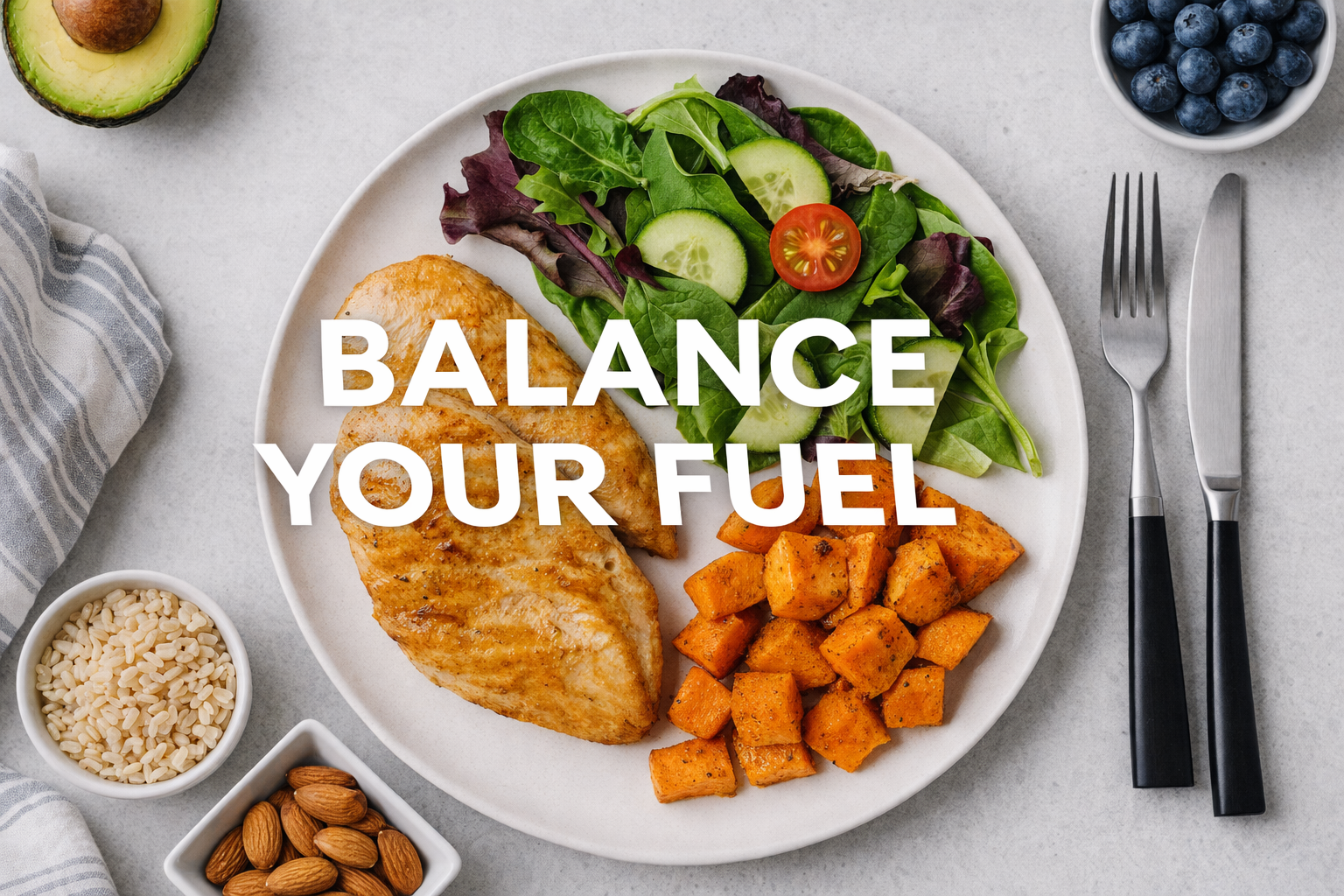
Macro Balance: How to Fuel Your Body for Real Performance
Macro balance is one of the simplest ways to improve energy, performance, and recovery. Learn what each macro does, why it matters, and how to build meals that support your goals.
Executives and athletes have something in common: they live in energy-demanding environments.
Yet most underfuel, over-restrict, or eat meals that don’t match their needs.
Macro balance is one of the simplest ways to improve daily energy, mental clarity, and training performance — without dieting.
In any given day, I'm sure you hear at least 10 different ideas of what macros (protein, carbohydrates, and fat) should be what percentage of your caloric intake. The short answer, as with most things health related, is that it depends. There is no set of ratios that works for everyone all of the time. Even for an individual, there may be times where it makes sense to shift things around based on the current life situation. Finding the right balance that works best for you and understanding how you might want to make changes as you move through different seasons of your life is a very important skill to learn. At the core, it requires not only an understanding of what you're putting in your body but also a consistent assessment of how your body is responding to that fuel.
When I start working with clients on their nutrition, I always start with protein as it is one of the easier ones mathematically and is also one that many struggle with. Protein is the primary building block and repair tool for muscles and is incredibly helpful in managing satiety and blood sugar. Because of these 2 factors it is probably the biggest (or at least near the top of the list) nutritional factor in achieving long term weight management. As an initial optimal target, I tend to use the 1 gram of protein per target weight (in pounds) since this makes the math nice and simple. Now, this is a target, not a firm rule - but in aiming high, even if falling a little short, you're still getting sufficient levels. If you're looking to get started, keep track of your current protein consumption and aim to gradually move towards your optimal target. How much additional protein you can add will vary, but start with 15 grams per day for a week and go from there.
Most of what you read will at least be in the ballpark with protein, but where the variations really come out are when it comes to fat and carbohydrates. The main role of carbohydrates is to provide fast energy to the body, muscles, and brain in the most efficient way. Yes fats and protein can be broken down to create energy, but that process takes longer and is significantly less efficient. Fats do quite a lot for the body and as such can't be ignored either as they are the building blocks for hormones, aide in nutrient absorption, brain health, and help control inflammation. There are many fads out there that suggest reducing, or eliminating, fat or carbohydrate intake will be the best option. I tend to avoid recommending the exclusion of macros or foods (unless there's a medical reason) as that withholds vital nutrients from the body and in most cases sets the individual up cravings, dietary issues, and general challenges with weight management. For most people in most situations, the best solution for the body to function optimally is some level of all 3 macro nutrients. A good starting point s to balance out the calories left over after your protein target. As an example take a 2000 daily calorie target for an individual targeting 150 pounds, such that their protein target is 150 grams. That leaves 1400 calories (2000 - 150 g * 4 calories per gram) for carbs and fat that I'd split evenly to start. That works out to 175 grams of carbs (700 calories divided be 4 calories per gram) and 78 grams of fat (700 calories divided be 9 calories per gram) as a starting point. Using these as a starting point, keep track of not only how you're hitting those numbers but also more importantly how you feel based on that, as naturally there will be some variance to the balance of fats and carbs on a day to day basis. Understanding how your body responds to those shifts in each macro will allow you to better understand how your body responds and which macros it tends to like most. For an individual, it may end up looking more like a 60/40 split or some other number, however it is important to not go below 20% of total calories from fat as that can cause some potentially significant problems for hormones and nutrient absorption.
The last "macro" I want to mention is alcohol as the body does treat it differently but it does get converted to energy with 1 gram working out to 7 calories. Many look at the health benefits of some alcohol, however many of the benefits very well could be from the associated social behaviors. There have recently been numerous studies on the disruptions alcohol has on sleep and recovery as well as other potential downsides. As with everything, the right amount for anyone may shift and change but it definitely needs to be accounted for when looking at overall intake and how the body responds to it.
I know this may sound like a lot but the good thing is that for many people this is a one time process with check-ins as necessary based on shifting life patterns. If you're starting a new training program, increasing your carbohydrates will allow you to perform better in your sessions and recover better. On the flip side, some folks notice that they feel more bloated when they eat carbs (a very natural process) and as such they may feel better with a lower percentage of carbs. There are lots of apps out there that can help with this process, you can also use a notebook, or enlist the help of a coach to keep you organized.
You don’t need a restrictive meal plan — you need balanced fuel.
Protein rebuilds. Carbs energize. Fats support. Alcohol disrupts.
When you understand what your body needs, every meal becomes an opportunity to improve performance.
🔗 Subscribe to The Wellness Forge for more practical, science-backed strategies to fuel your day and strengthen your long-term health.
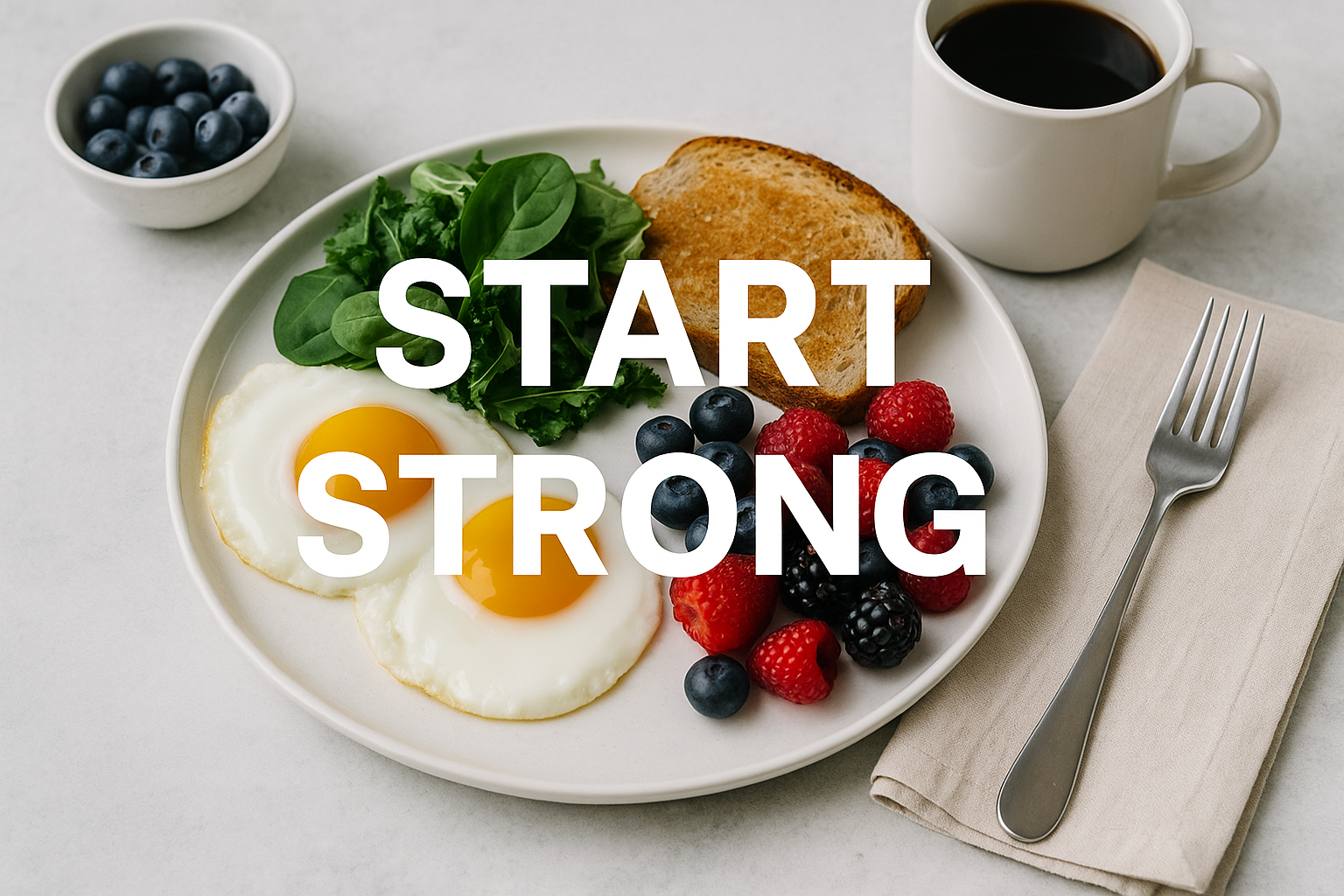
Breakfast: The Why and The What
Breakfast is one of the most powerful tools for stable energy, improved performance, and better appetite regulation. Learn why it matters — and how to build a breakfast that actually fuels your day.
Whether you’re an executive juggling meetings or an athlete in training, your morning fuel sets the tone for the entire day.
Breakfast isn’t just a meal — it’s a performance tool.
Used well, it gives you steady energy, better focus, and stronger training sessions.
For many of my clients, breakfast can be one of the most challenging habits to change and then it can also be one of those most impactful changes they can make. There are lots of explanations I've heard (and used myself) for not eating breakfast but the advantages of breakfast far outweigh any of the other options by a large margin. What I try to walk through with my clients are the benefits of breakfast, and what can we do to gradually work towards a better solution. For those with looking to perform either physically or mentally, or those looking to better manage their weight in a sustainable way, some sort of breakfast is one of the best starting points.
Let's start with the benefits:
Eating breakfast works to stabilize your blood sugar after a natural period of fasting (overnight sleep) which is one of the leading causes not only of fatigue during the day but also cravings.
An early meal helps regulate and promote the normal hormone cycles of cortisol such that it can start to decrease during the day as well as helping to regulate the appetite hormones.
From a practical standpoint, eating an early meal helps with getting not only the proper macro nutrients (primarily protein) but also getting in enough other nutrients from things like fruits and vegetables.
So what should a breakfast look like? Just like every other meal, there should be a good mix of protein, complex carbs, healthy fats, and some color typically coming from fruits or vegetables. Three options that can not only knock out those requirements but are either quick to throw together or can be batch made ahead of time:
A combination of eggs, meat (or tofu), potatoes (or toast), and veggies. This can be done as a scramble, omelette, casserole, or a burrito and each of those present other options for additional flavors and prep times.
An oat mixture is a great bulk option, I use a version of overnight oats that tastes like a chocolate chip cookie and is not only one of my breakfast staples, but my pre-race meal as well.
A shake is another great quick and portable option that allows for the combination of a lot of things, with the taste of the veggies masked by the other items.
If you're starting from not eating anything, maybe think about adding something into your tea or coffee increase calories. Things like protein powder, collagen protein, creatine, and MCT oil are all good options that dissolve well and can either be flavorless or give a nice twist to your beverage of choice.
Each of these options has its advantages and which one is best will vary by the individual, circumstances, and you may even want to rotate through to provide a level of variety. As I've said numerous times, start with understanding of where you currently are and look to make small shifts to make consistent progress.
If you want better energy, stronger workouts, and fewer cravings — don’t skip the foundation.
Build a breakfast that supports your goals and sets the tone for your entire day.
Start strong. Fuel early. Perform better.
🔗 Subscribe to The Wellness Forge for more practical strategies to fuel your body and optimize performance.
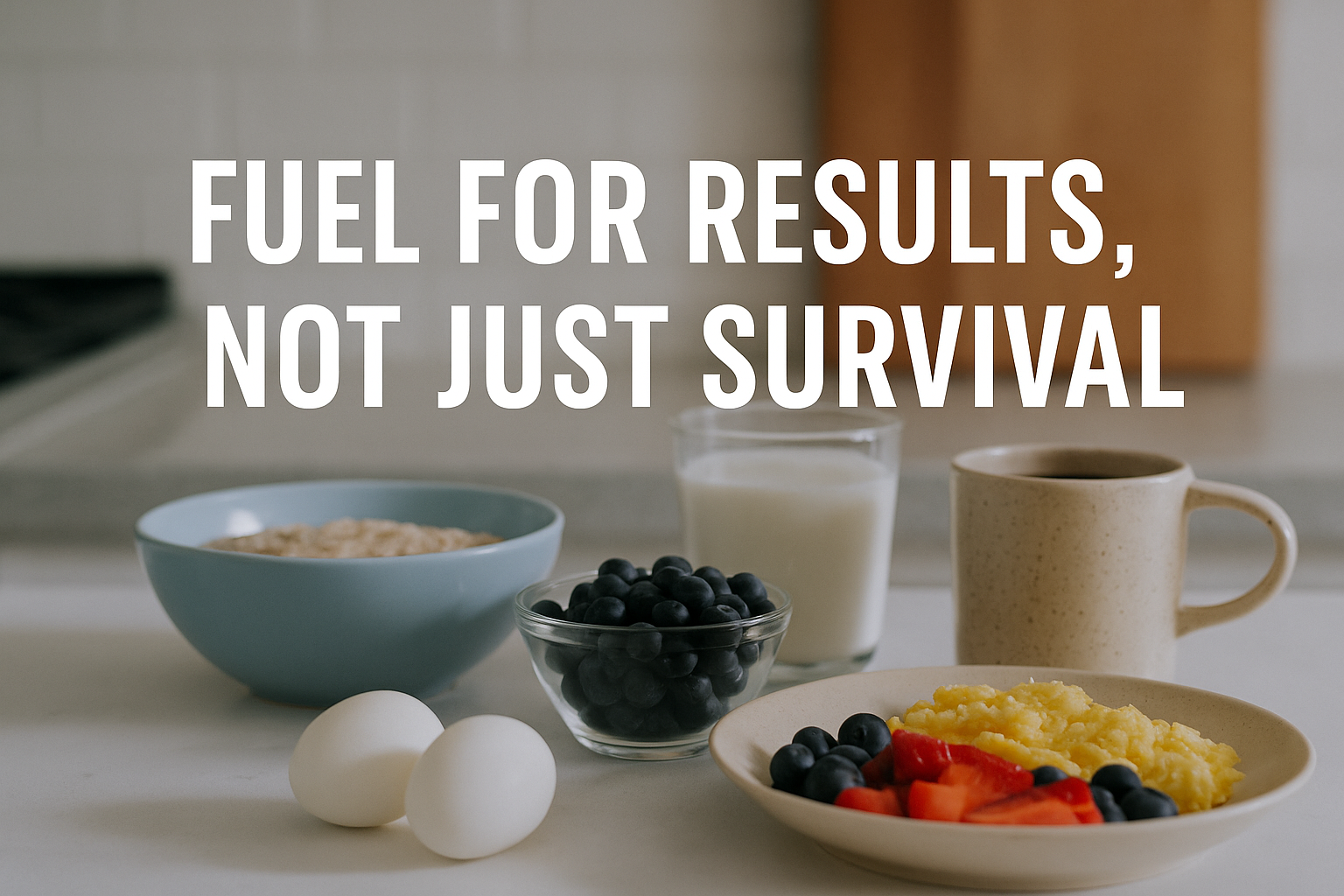
Why You’re Tired, Craving Sugar, and Plateauing: Underfueling Explained
Underfueling is one of the most common — and most overlooked — reasons people feel tired, unfocused, and stuck. Learn how to identify it and build simple fueling habits that support energy, strength, and performance.
If you’re tired, unfocused, craving sugar by mid-afternoon, or feeling flat during workouts, there’s a good chance your problem isn’t discipline — it’s underfueling.
High performers burn more energy than they think. And most of them aren’t eating nearly enough to support the pace they’re trying to maintain.
One of the sneakiest ways I see many of my clients run into roadblocks with their progress boils down to a matter of underfueling, which can eating too little, fueling incorrectly, or not balancing fuel for the demands put on the body - or for a combination of all three. In many cases these aren't conscious decisions being made, or they're decisions that seem correct but lack context, and as such correcting them can be challenging. It takes a little more digging to not only identify the issue but also recognize how simple the solution might be.
Underfueling is one of those concepts that sounds simple and yet in practice is complicated enough that it goes unnoticed. The main idea is that you're not providing enough quality fuel for you body to perform the tasks that you're asking it to. The body is also very good at adapting and compensating for these deficiencies, but can only do so for a period of time before it becomes overwhelmed. A couple of the main culprits are caffeine and fiber as while they are beneficial in many ways, they also will dull or mask hunger queues such that skipping meals entirely or not fueling enough becomes not only easy but can become consistent. The first part of the challenge is underestimating the caloric needs of the body, some like basic daily needs (Basal Metabolic Rate or BMR) and training load are relatively straightforward to get a good estimate as there are calculators and wearables to help. However, these can also be wildly inaccurate, especially when estimating caloric needs based on exercise. In addition, other factors such as poor sleep, mental stress load, travel, and injuries will all skew your fueling needs and not always in magnitudes or directions as you might expect. Based on all these factors, it can be hard to get a handle on the caloric needs and even being off a couple hundred calories a day can create a sizeable enough gap to cause challenges.
So what does underfueling look like, or what are some of the symptoms you might notice? First off, physically you may notice:
Low energy or consistent fatigue
Inability to concentrate or brain fog
Frequent illness
Poor sleep
The symptoms don't stop there, you will also notice struggles mentally as well:
Irritability or mood swings
Decreased libido
CRAVINGS
night time snacking
And then to further compound all of this, you'll notice some performance and metrics dip as well:
Workouts feeling harder than normal
Heart rate variability (HRV) dips
Higher than normal resting heart rate
With all of this, it may seem daunting to overcome this challenge - however, the first step is quite simple, remember simple doesn't always mean easy. I've mentioned this before, and will continue to suggest it - but awareness is your greatest asset for this kind of situation. And that comes down to:
Understanding your body's needs including not just calories but the allocation of those calories between carbohydrates, protein, and fat.
A good handle on your intake and timing of your fueling including the macro breakdown.
A honest self assessment of how you feel on a daily basis such that you can better understand where you may be lacking.
Another option you could consider, if you feel like you're experiencing a number of the symptoms, would be to increase your caloric intake by 200 to 500 calories, paying attention to how you feel. This could come from the addition of a snack, or if there's a particular meal (like breakfast) you typically skip, add that back in. Do this for a week or so, and see if you notice any differences. This is also a time when using a scale can be helpful to notice if you're gaining any weight, but with the increases I'm suggesting it would probably take a couple of weeks before you noticed anything significant considering the normal day to day weight fluctuations. Continue to balance how you feel with the numbers you're seeing on the scale and look to continue to increase the calories without seeing a consistent weight increase. I typically recommend increasing for a couple of weeks, then taking a week to hold steady to help accurately assess the dynamics.
Travel, busy seasons, and packed schedules make underfueling even more common. But they don’t have to derail your performance.
Learn how to fuel consistently no matter where life takes you — and build the foundation that drives your energy all year long.
🔗 Subscribe to The Wellness Forge for more tools to support strength, energy, and recovery.
How to Structure Your Eating for Better Energy & Performance
Meal timing plays a major role in energy, appetite, and performance. Here’s how to build a simple structured eating schedule — and where intermittent fasting fits in.
Many people know what to eat…
But fewer know when to eat.
Some people experiment with intermittent fasting to simplify their routines — and it can work for the right person.
But for many, structure beats restriction.
Over the years there have been lots of ideas and fads surrounding the topic of when is the best time to eat. And like most everything in the Wellness space, the optimal timing will vary wildly from person to person. The key to figuring out what works best, like I've mentioned before, is the awareness of what you're currently doing and paying attention to the signals your body and mind are already sending you. If you think that meal timing might be a challenge for you, the key things to pay attention are your hunger cues, energy levels, and mental acuity. Based on that information, you can start to piece together where sliding a meal might help, or adding in an additional meal or snack would curb the cravings and eliminate energy crashes. The goal of meal timing is to stabilize and even out not only your hunger but also keep your energy levels consistent such that you don't have any of those dreaded nose dives.
What does this look like in application? Typically for most people this ends up as 3 spaced meals with some sort of an afternoon snack mixed in there, or possibly a fourth meal. Of course, this will all vary based on training loads and work schedules but that is the general pattern that seems to benefit most people. Having a loose structure like this during that day not only stabilizes hunger and energy, but it also keeps insulin levels more consistent and helps limit over-eating. This also allows for more consistently hitting macro targets, especially protein, as you're not struggling to catch up late in the day. You'll also want to adjust this based not only your logistical schedule but any sort of training needs and can vary on a daily basis.
One concept that comes up frequently with meal timing is centered around not eating too late in the evening, or too close to going to sleep. For most people, this is a pretty decent guideline to follow - but like everything, there are possible exceptions. The main idea is that digesting food while trying to sleep doesn't lead to as productive sleep, however there is some variance here. So, if your schedule lines up or seems to work out that you're eating late - pay attention to how you sleep and feel, and try running your own test to see what differences you notice when you do or don't eat late. Personally, eating late does not bother me, but I know others that it can absolutely tank their sleep.
Another frequent comment I hear from people is that they struggle to eat breakfast or aren't hungry until later in the day. This is usually a more involved conversation but typically I do recommend people having something close to when they first wake up in the morning. A couple options if you really struggle eating in the mornings would be to include some protein powder with your morning coffee, or sliding your meals such that your snack comes during the typical breakfast time. I will do a complete post on this as I do feel strongly that breakfast is very helpful and also has more nuance then I can cover in a paragraph.
Intermittent Fasting (IF) is another common trend these days and many swear by it as a way to lose weight. IF centers around the idea of only eating during certain periods of the day, and if you think about it almost all of us naturally do this due to our sleep patterns. The main benefit of IF is that it is a simple way to reduce caloric intake, and that is the main driver with any sort of weight loss. However, as with all restrictive habits, it can lead to over eating as well as creating a more adversarial relationship with food, as opposed to eating to support and nourish your body. IF can be a useful tool, but should be used sparingly and with consistent awareness to best understand how your body is responding to the changes.
Meal timing doesn’t have to be complicated.
Build consistency. Fuel earlier. Match intake to your day.
IF can be a tool — but the real goal is finding a rhythm that supports how you live, train, and perform.
🔗 Subscribe to The Wellness Forge for more data-driven wellness guidance.
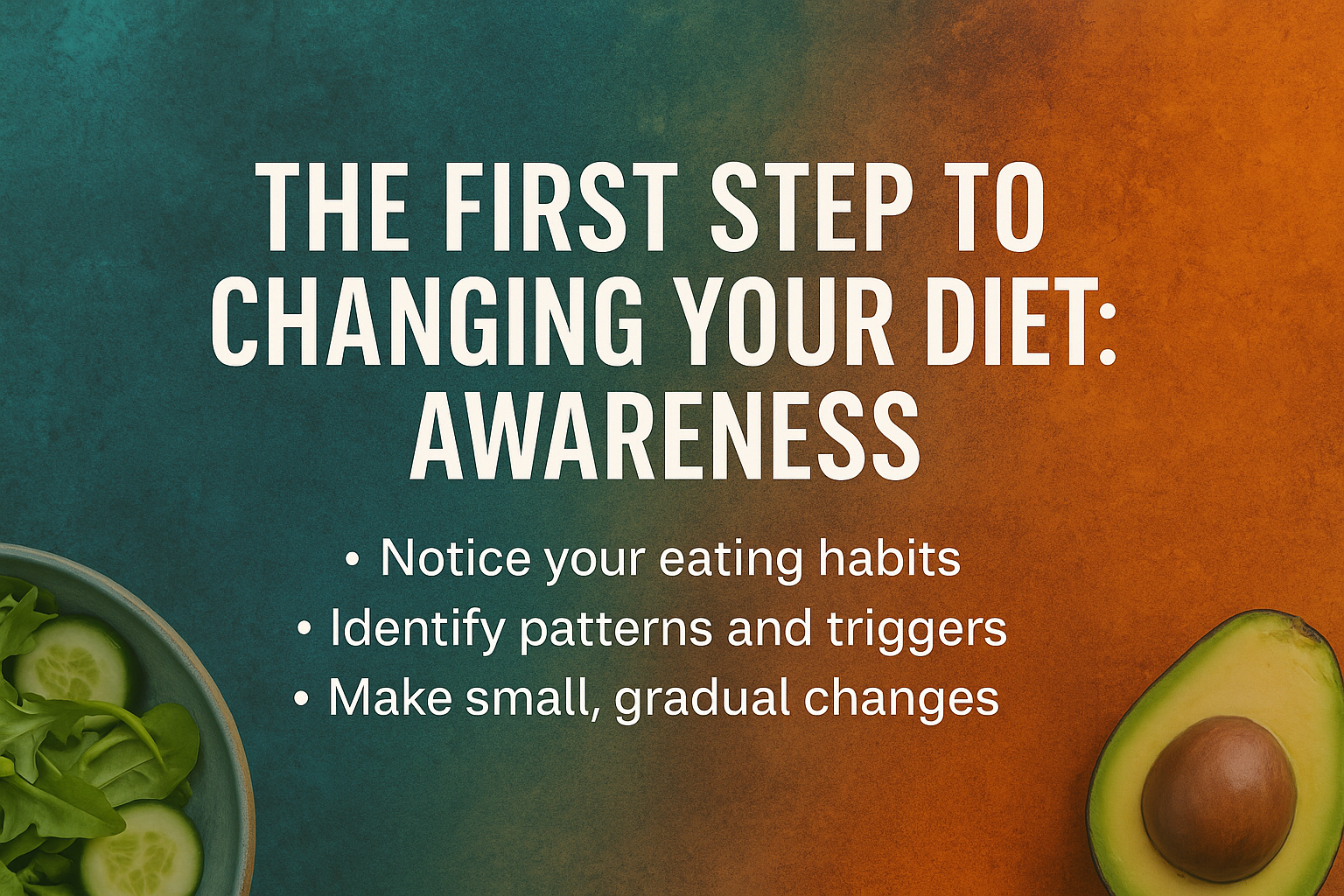
The Smarter Way to Begin Any Nutrition Shift
High performers don’t need more diet plans — they need clarity. Awareness turns mindless habits into intentional choices, setting the stage for sustainable nutrition change.
The most important part of any successful, healthy diet isn't the macro distribution or what foods are added or removed, the magic is in the awareness of what you're trying to accomplish, how you feel about the food you're eating, and how your body responds to those foods. That awareness will allow you to more accurately monitor whatever phase of life you want to shift towards, losing weight for that summer vacation, building muscle to compete with your buddies, or fuel your next endurance event.
To start this process, you'll want to add to your daily routine a few questions around each meal or snack you eat. You don't need to over think these, just a word or two is fine:
What did you eat, don't worry about measuring or weighing (yet). Pictures are fine.
A general idea of the time (or reference the time stamp on your picture)
How you felt before you ate, what you were feeling while you eat, and how you felt afterward. Again, this doesn't need to be a long dissertation, just a sentence or so for each.
Where you ate is also important as well as the other things that may have been present. This would include watching TV, scrolling on your phone, out with friends, at the table with family, or other such locations and events could be applicable here.
Keep up this log for 3-5 days and it is best if you can span a weekend as most people usually have a variance in their weekend and weekday routines. Keep this record in whatever medium makes the most sense for you. This could be a notebook, a blank email, text app, or using one of the many tracking apps available on your phone. At this stage of the process, the specific tracking mechanism isn't as important as the insights you gleam. If you decide to continue this process for a longer period of time, it may make sense to move to something more tailored to your goals.
Based on your observations, there may be some trends you can pull out into some actions. Start with making one change and working to sustain that for a couple of weeks before looking to change anything further. Think about what change you feel 90% confident you'll be able to implement on a daily basis for the next 2 weeks. This is important for 3 reasons:
making a single change is easier in practice and for the brain to accept. It also makes sustaining that change easier going forward.
With only a single change, you can track what works and what doesn't. If you make 10 changes all at once it becomes almost impossible to understand what is helping and what might be making things worse.
Picking something you feel confident in not only will allow you to build momentum, but typically after 2 weeks of doing a specific task, it becomes a habit.
Some examples of actions based on what you observed:
If there's a particular meal you're struggling with, one option is to add some calories to a drink - protein in your coffee might be something to try.
Another suggestion is to think about meal prepping something specific for a meal. This might be some sort of bulk breakfast like overnight oats, casserole, or muffins, or a larger portion of a protein, like chicken, beef, or pork that you could quickly add to a rice bowl or wrap for lunches and/or dinners.
If you notice you have energy dips, pay attention to the meal preceding that dip. You could add in a snack if there's a large time gap, or see if there's something missing from that previous meal. Look to maybe add some carbs for energy to a larger protein meal, or some protein (even some fat) to a pure carb meal.
If you notice that you're hungry late at night, or first thing in the morning then take a look at your dinner. Perhaps adding in some more filling calories like protein or fat or more fiber to boost the satiation of the meal.
This will also give you a idea around your general daily calorie intake as you may notice it is either significantly higher then you expected or lower which could be a factor in either struggles with weight management or energy levels.
Whatever change you end up deciding on, stick with that for at least a week, aware of the same questions you were before, but also pay attention to things like your mood, sleep, and energy levels such that you can better understand if this change helped and in what ways. This process can be repeated as frequently as you feel makes sense for where you are and where you what your goals are. It will also make sense to have a sustaining period where you keep everything the same, this allows you to verify that the changes you've made are showing the results you expect and want.
If you feel like having someone guide you through this process, this is exactly what I do for my clients and the process looks very similar if we decide to tackle something besides nutrition like your strength training, sleep habits, or stress management.
And remember, sustainable change doesn’t start with restriction. It starts with awareness.
See the patterns. Make one shift. Build momentum
If you like what I have to say, follow here, my email newsletter, or reach out and we can chat in more detail.