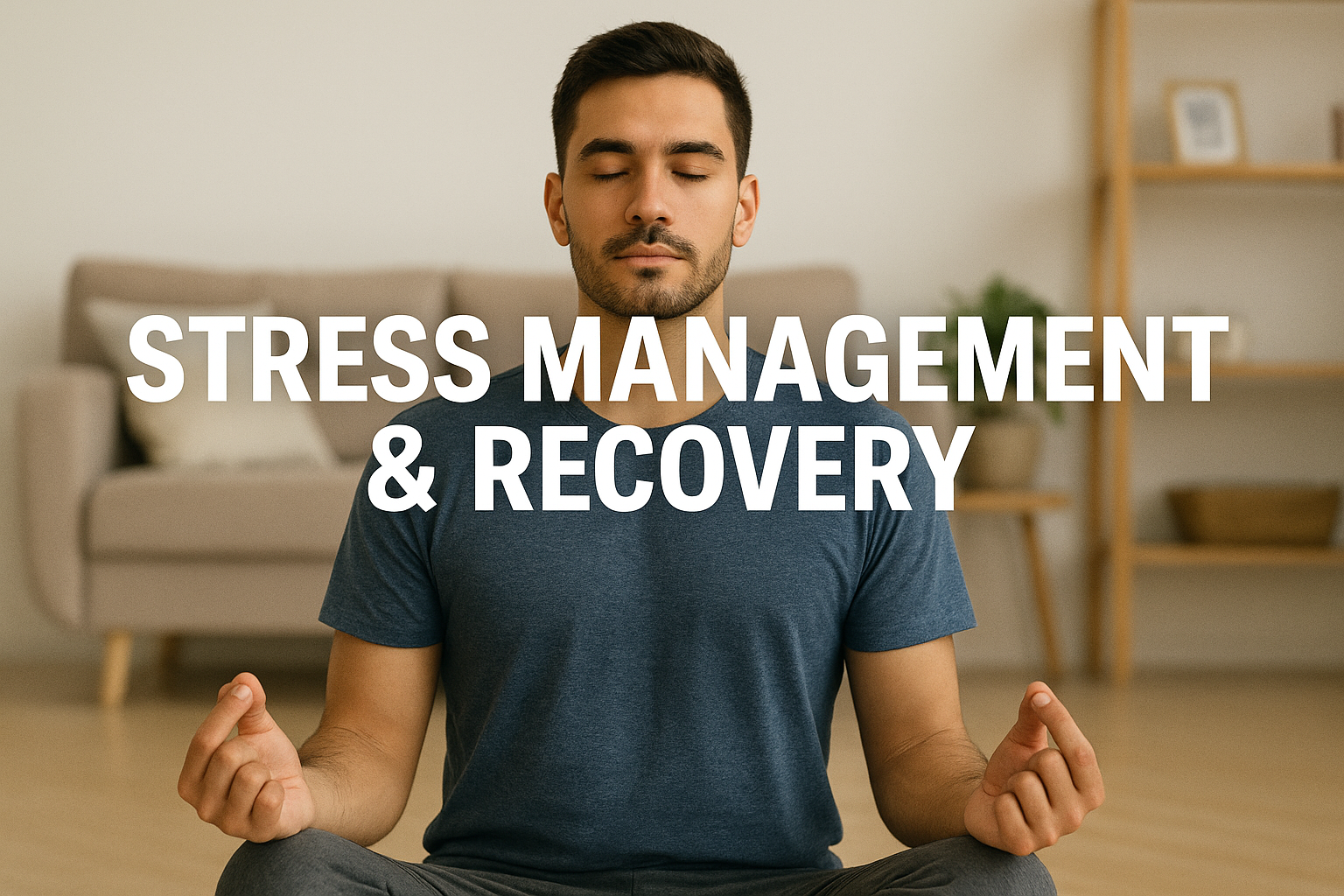
You Can’t Outperform Stress — But You Can Learn to Recover From It
Every athlete, executive, and high performer faces stress — the difference lies in how they recover.
You can’t grind your way out of chronic stress.
Recovery isn’t weakness — it’s the process that makes progress possible.
Here’s how to manage stress better and optimize recovery 👇
Even iron needs time to cool before it can be forged again.
Your body and mind are no different.
Today, we’ll explore the balance between stress and recovery — and how to strengthen both.
Stress is a part of all of our lives and what complicates the challenge is that stress is required for the exact kind of healthy adaptations we all strive for, that's the good stress. Most people think of stress as a bad thing, and in many cases it is, but the majority of stress actually has a positive impact on the body. Where stress becomes a problem is when there is too much of it for the body to handle, the classic too much of a good thing problem. Let's start with something you can implement today that will have an immediate impact on how your body handles stress. Like I've mentioned before, awareness is where I start with all my clients - but I'll admit, that process takes time (a few days) so today take at least one 5 minute break during the day to pause, reset, and get ready to tackle the next task. Maybe even take part of that 5 minutes to practice awareness of your stressors.
Taking a deeper look at stress, it typically can be divided into 6 buckets:
Physical - exercise or injury would be examples.
Mental - think learning tasks or prepping for a meeting.
Environmental - outside noise, pollution, temperature, and allergens fall into this bucket.
Emotional - general mood and happiness
Existential - why are we here and what is our purpose?
Relation - friends, family, and coworkers would fall here.
Inside of these buckets there are good stressors and bad ones, which are usually rather obvious, but there are some good stressors that can become bad if done at the wrong time or at too high of an intensity. For example, strength training when done appropriately is a great form of exercise. However, lifting too hard for what your body can handle that day will most likely lead to soreness and potential injury with long term impacts if consistently overused. This is where that self awareness comes into play, having a feel for your body and knowing when it is a day to push, when to pull back, and understanding that when you have to over-reach because of a deadline or race, you will need extra recovery on the other side. Using wearables can be a help in this area to monitor the body's response to stress and help give some quantitative measurements on things like Heart Rate Variability and Resting Heart Rate which are both good indicators of overall stress and how primed your body is to handle more. The best approach is a mixture of the numbers and the knowledge of your body to form that complete picture.
What does recovery look like then from all these different kind of stressors? As you've probably guessed, that first step in a awareness or audit of your primary stressors and then looking for ways to handle them. Some may have immediate simple solutions, for example an air filter in your office to help remove allergens and other contaminates if that's an area you struggle with. Others are more complicated and 100% might require some outside assistance to help work towards resolving. And some are constant parts of life and need continual work to manage. Inside each of those stress buckets are also recovery techniques that you can apply, here are some examples:
Physical - sleep, stretching, low intensity exercise
Mental - reading, preparation, planning
Environmental - air filters, blankets for warmth, air conditioning
Emotional - honest communication, mental exercises such as reframing
Existential - prayer or meditation
Relation - that supportive friend or family member
This isn't to say that the best way to recover from a stressor in one area is recovery in that same area, sometimes it is, sometimes it isn't. You've probably noticed that you have great ideas when taking a long hot shower - that physical recovery technique can not only relive physical stress, but open you up to recovering from pretty much all the other types of stress too. You will notice over time, what recovery techniques work for you and which ones work best for specific stressors you face. My two most consistent tools I use for recovery are my sauna blanket and reaching out to friends and/or family. These 2 not only hit multiple buckets but also are examples of a daily routine and a more tactical tool to handle the stress spikes we all go through. The way to become adept at managing your stress is to develop a full tool chest of recovery options that you know work for you, can be pulled out when needed, and used as backups when your first choice doesn't yield the results you're looking for.
Stress isn’t the enemy — it’s the signal. Recovery is the response.
You can’t eliminate stress, but you can build systems that help you handle it better and bounce back stronger.
🔗 Subscribe to The Wellness Forge for more actionable tools to help you perform, recover, and thrive — without burning out.