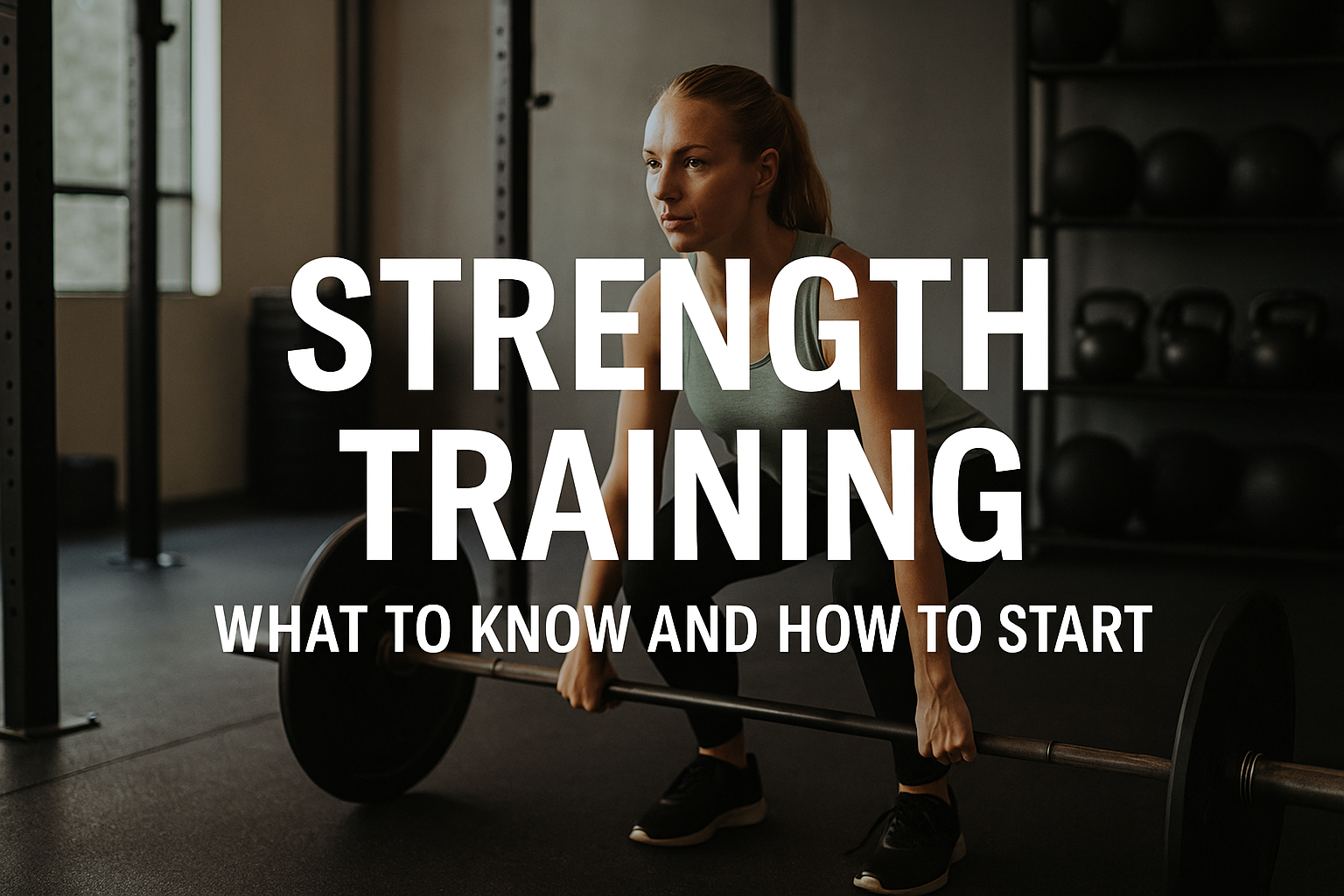
Strength Training 101: A Foundation for Health and Performance
Strength training isn’t just for athletes — it’s one of the most powerful tools for improving health, performance, and longevity. Learn what it is, why it matters, and how to get started with simple, sustainable steps.
Most people chase fitness trends, but few invest in what actually moves the needle: strength.
Whether your goal is longevity, performance, or simply feeling better in your body, strength training is the foundation.
Here’s how to get started — and why it matters more than you think.
When it comes to starting any new routine, you must understand where you're starting from and adjust accordingly. If you're completely new it would be prudent to verify with your health professional that there are no underlying issues you need to be aware of, and consulting with some sort of advisor through this process might help reduce your ramp up time. Assuming you've progressed past that point, whether you're brand new or have lifted for years and have just taken a break, always start with less then what you think is needed. It is way easier and more productive to add more to your routine than struggle because you went too hard that first session and can't move for 3 days because you're too sore. I'll go into more details in future emails, but a good starting point would be a routine you feel 95% certain is maintainable, the goal is consistency, not hammering yourself from the start. Even 1 workout a week can yield results! Another key aspect to consider is where to workout as both gyms and home have advantages and disadvantages. This is one of those honest discussions you need to have with yourself to understand if working out with other people with all the equipment you could ever want helps you, or if you'd be better served by the time flexibility and comfort of working out in your house. Neither is necessarily better than the other, but their effectiveness is highly dependant on the individual. The last suggestion I'll make, at this time, is that if you are going to go the home gym route, start small and incrementally add as you go. Don't go and spend thousands on what could become expensive hangers if you come to find out there are too many distractions at home for a consistent workout.
Let's step back and define what strength training is, and what forms don't provide the same kind of results. By definition, strength training is movement with resistance, which would include using your own body weight, bands, dumbbells, barbells, or anything else you might have lying around. The key to reaping all the benefits is to lift as if you're trying to get stronger which means you'll want to chose a weight that is challenging for you to complete 5-15 repetitions, keeping good form. To continue to see the benefits you also need make sure to progress to higher weight when those reps become too easy. Another key component to strength training, resting in between sets, should range from at least a minute to upwards of 5 minutes depending on what you're doing. Resting allows for your muscles to recover their energy stores and be ready to exert maximal effort again. The exercises themselves are not what provides the benefits, it is the body's reaction (building muscle) to those exercises as it adapts to the increased demands. This means not only do you need rest intervals during your workout, but days off between workouts such that your body has time to recover AND adapt to these stimuli. Each session should provide as different of a stimulus as possible from your normal daily routine to maximize the benefits. Because of this, "lower" repetition amounts with "heavier" weight shows far better results than lots (anything over 30) of repetitions with lighter weights.
I've mentioned the results and benefits of strength training, without any further context. Here are just some of the ways in which strength training has a positive impact on your body:
The obvious one, you get stronger. But that's not just your muscles, your tendons and ligaments which support those muscles and movements get stronger. And all of those pieces attach to your bones that then also getting stronger. Not only will this help with many daily activities and tasks (as well as any sort of performance venture) it can also help reverse or prevent bone issues like Osteoporosis and Osteopenia.
Some of the muscles that will be strengthened are the stabilizing muscles which will in turn help with balance. Not only will this help with performance, but it will dramatically increase your injury resilience. Certainly losing balance could result in falls which are a major health risk as we age, but also the majority of soft tissue injuries (think ligament tears - ACL, MCL, Achilles, etc) result from those tendons filling in the gaps for weak muscles.
Another important aspect of building more muscle is that it is one of the primary locations the body stores glucose (think sugar or carbs) which not only means that there's more energy available for the body but it is actually better at managing the energy levels. This then translates into a better insulin response which helps drive down many of the factors that leads to ailments like diabetes.
Muscle requires more energy to sustain itself than fat does, even at rest, which means that your body will naturally burn more calories because of the additional muscle mass. This allows for an increased level of metabolic flexibility since the body consumes more calories it becomes easier to either increase the amount of food you enable more muscle growth, or reduce calories to lose weight.
These are just a few of the benefits, but are some of the most impactful.
Strength training isn’t just about building muscle — it’s about building capability, confidence, and longevity.
Start small, stay consistent, and give yourself credit for each rep of progress.
Ready to build your foundation? Join The Wellness Forge and get clear, actionable guidance to help you move, perform, and live stronger.