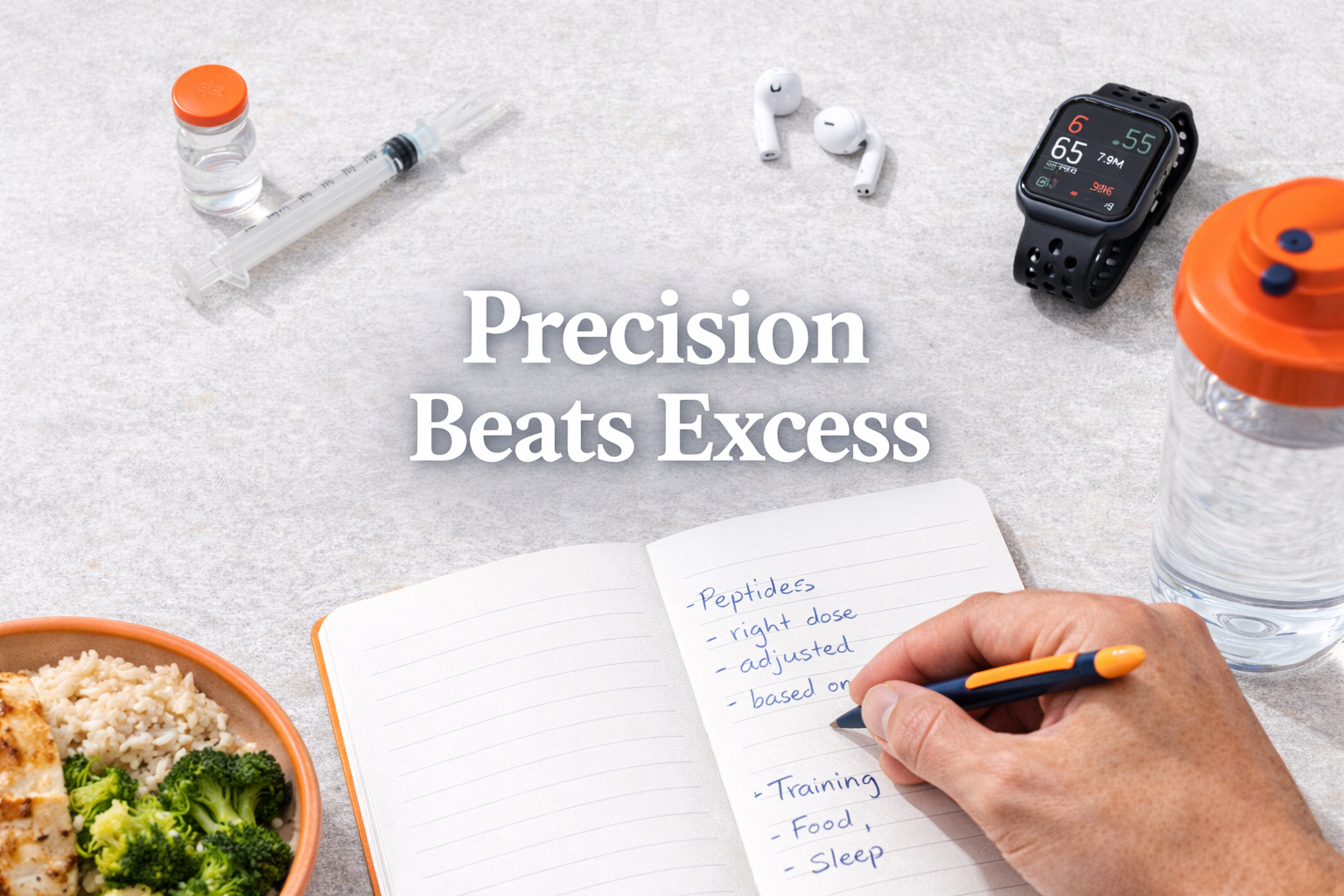
The Right Dose Matters
One of the biggest mistakes in health is assuming that if something works, more of it must work better. In reality, better outcomes usually come from the right dose.
I’ve had a personal reminder lately that the right dose matters.
And while the lesson started with peptide use, it applies just as easily to training, food, sleep, recovery, and stress management.
This past weekend I ended up experiencing a mild flare up of my most recent hip injury, no where near where it was earlier in the year but enough to catch my attention. This is also during a time where I have increased my mileage, intensity, and incorporated some hills back into my training, coupled with all the other stressors in my life the exposing of a weakness wasn't that much of a surprise. I reached out to my doctor about a temporary increase in my dose of the BPC-157 peptide I'm currently taking to help tamp things down but also swapped out a workout for a rest day, and decreased my mileage. The end result was feeling almost 100% this morning, and that reminded me how powerful the appropriate dose can be in various aspects of our lives.
The challenging part for all of this is that there is no single answer for what is the appropriate dose at any given time, there are lots of variables to consider:
Stress - too much can lead to burnout or illness, while too little decreases performance
Calories - too many leads to weight gain, but too few leads to injuries and illness
Sleep - too little leads to illness and performance issues, and too much, well for most too much probably doesn't exist 🤣
Exercise - too much leads to injuries, and too little doesn't create a strong enough stimulus to obtain results.
Medications including peptides - while consulting with your doctor, monitoring the impact of the medication versus any side effects should drive the discussion around the proper dose. For example, many of the common GLP side effects come from too high of a dose.
I could go on with loads of other examples, but you get the idea - choosing the appropriate dose isn't just a long term decision but a daily one to match the current demands and expectations. Blindly copying yesterdays (or last weeks, months, etc.) plan each day is a guaranteed recipe for a best frustration, or at worst an injury or illness. Now of course, we don't always have full control of these choices each day, but there are always ways to make modifications to balance out.
A few good questions to get in the habit of asking yourself:
Am I doing too little, or am I doing too much?
Have I asked anyone else for feedback?
Is this approach helping, or just making me feel like I’m trying hard?
Can I recover from what I’m asking my body to do?
Is this sustainable?
In my case, there were aspects that I increased and also some that I decreased, all in the pursuit of an performance as part of a larger plan. It is important to remember that in many cases, more is not always better and having advisors in your life can provide invaluable feedback.
What area of your health might improve if you focused on the right dose instead of just more?
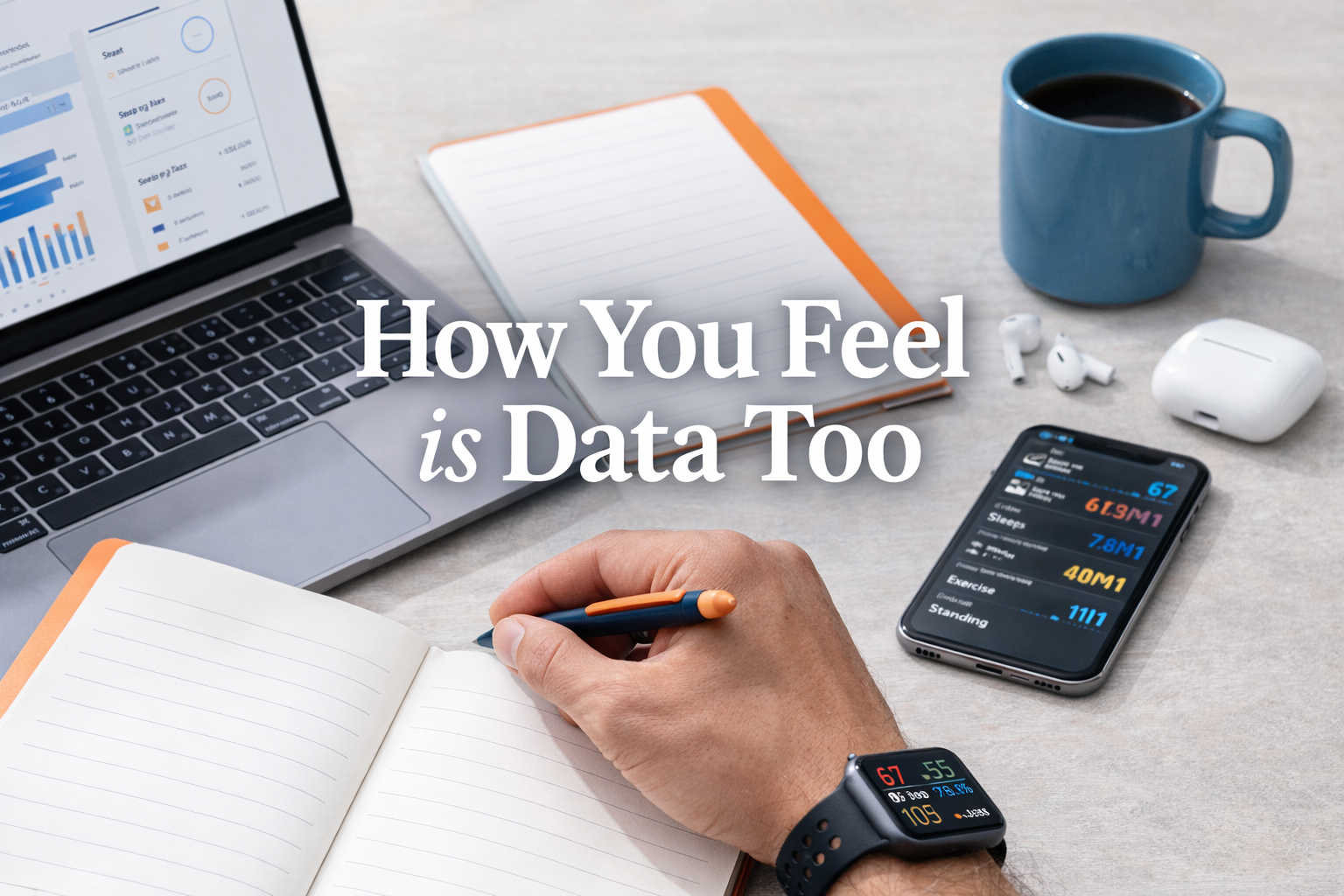
You’re Ignoring One of the Most Important Forms of Data
Calories, heart rate, sleep scores, and weight can all be useful, but they do not tell the whole story. How you feel day to day may be the missing piece of data that helps you make better decisions.
We live in a world obsessed with measurable data. Calories. Macros. Sleep scores. Pace. Heart rate. Weight. HRV.
But one of the most important data points in your entire health and performance picture is often the one people dismiss first:
How you actually feel.
I've talked about this previously, but it continues to be something I work with my clients as most either don't have the connection to how they feel or tend to minimize it. Part of the challenge is the dramatic increase in the availability of just about any kind of data on our phones and watches, or at a deeper level with bloodwork and genetic testing. While these pieces are important, they only tell one part of the story and usually only at a particular point in time. So let's dive into the two areas you can start now to build a better picture of how you're performing.
The first area I'll mention is during your workouts which is a great way to boost the quality of your workouts, especially while lifting weights. The more in touch you can be with where you feel each rep you can target specific areas, better identify any form issues, and better understand when it is time to either increase the reps or weight. This same concept applies to any cardio workout too, paying attention to your breathing, how quickly you recover from any efforts, and how the rest of your body feels as you progress through the workout helps you better understand how your body is responding to the efforts. In both cases, how you feel should also drive your intensity of that particular workout. I'm not suggesting you cut all your workouts short, or power through them, but having a better gauge on when you should do one more rep, or perhaps drop the intensity will benefit greatly in the long run.
The other aspect that I suggest this kind of self check on how you feel is a way to bookend your day. Take a couple of minutes (maybe even less than that) in the morning when you wake up, and in the evening before you go to bed to assess how you're doing. A few things you might think about:
energy level
cognitive level
any particular aches/pains
general mood
feel free to add more if you like
You can either make this an "informal" check-in with yourself, or you can add it to some sort of a journal process either written or electronic. If you're adding this to your routine, I suggest some sort of physical accountability to help reinforce the habit as well as provide a mechanism to compare.
The goal is not to replace hard data. The goal is to stop pretending that your lived experience does not count as data too.
Because if your numbers look good but your body, mind, and day-to-day function are telling a different story, that matters.
In many cases, how you feel is not a distraction from the data.
It is the missing piece.
Better decisions come from better data — and that includes the signals your body is already giving you.
When was the last time you tracked how you actually felt with the same consistency you track your numbers?
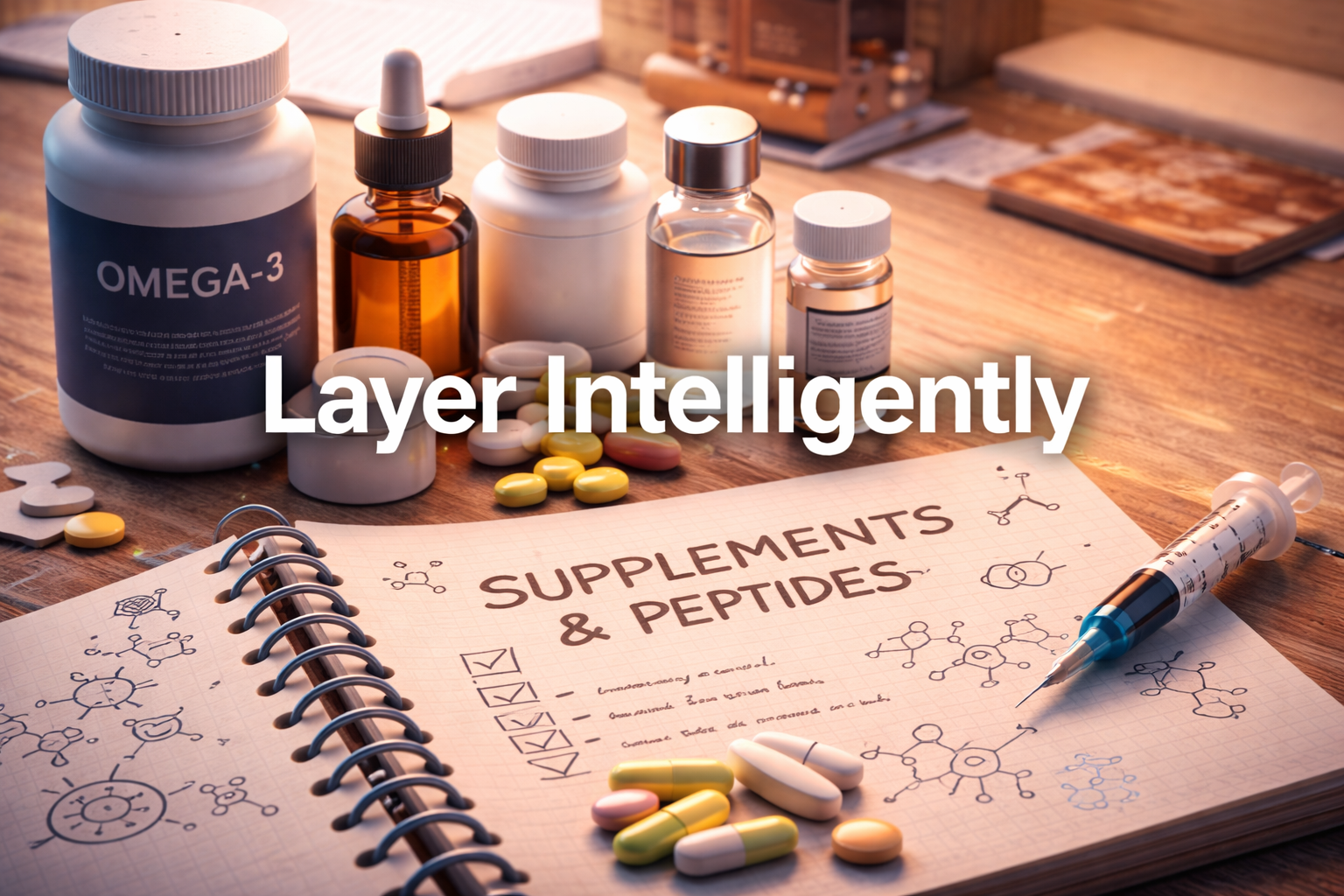
Tools, Not Shortcuts: My Approach to Supplements & Peptides
Supplements and peptides can be powerful tools — but only when layered on top of strong fundamentals. Here’s my personal perspective on what’s worth it, what’s situational, and what gets overhyped.
As part of my coaching philosophy, I make sure to consistently re-evaluate my views and recommendations based on the information available but also how it works in the real world. One of the most frequently asked questions I get surrounds supplements and similarly peptides. One thing that hasn't changed is that neither of these are magic nor will they solve all your problems. They are tools that under the right guidance and circumstances can provide added benefits when incorporated on TOP of an already existing stable platform. I thought it would be helpful to not only walk through my thought process on them but also share what I'm currently taking and why.
Starting with supplements, probably my biggest shift has come with regards to the idea of a daily multivitamin. I still recommend blood work (I aim for every 6 months myself but at least once a year) to help understand any deficiencies as supplementing that WILL make a significant difference. I view the idea of a multivitamin as something of an insurance policy to help fill in the gaps when nutrition slips a bit, or when stress levels are higher. Another shift has been in the data surrounding Creatine as it has widely been used in the muscle building space, but now it has a much broader application as the new studies are showing cognitive benefits as well. I also believe that most people (including myself) benefit from boosting their Omega3's but this is diet dependent in that some can get enough of this through their normal diet. Outside of these 3 that I think are broadly applicable, these are the others that I'm currently taking:
Reds and Greens as a way to bulk up my fruits and veggies intake as I don't always do a great job of getting them in.
Magnesium for the sleep and recovery boosts.
Ashwagandha for the mental impacts.
With all of these quality is important and especially looking for ones that are 3rd party tested as unfortunately supplements are not regulated in the US and as such there's a possibility of not getting what you're paying for. I also suggest getting the purest form of that supplement and not it mixed in with a bunch of other things. While not crucial, again this helps with quality, but it also helps to better understand how these supplements are actually helping. It is harder to know what's helping if you're taking something that's combined with 15 other items, or the flip side that specific item might be helping but the others are hurting.
When it comes to peptides (yes Creatine is technically one, but is now considered a supplement) my opinions have shifted quite a bit. When GLPs first came onto the scene I was very skeptical and saw a number of people in my circle take them without any other lifestyle changes. I'm pretty sure this is what clouded my judgement on them, as for a good long while I didn't consider them viable for sustained success. Then I started working with clients who were on them, and the combination of GLPs, coaching, and strength training created some massive results that I couldn't ignore. While not pushing them, I became more open to the appropriate usage of them under the right guidance. Then I suffered 2 significant hip injuries (opposite hips) with the first one (torn labrum) painful enough that walking was a real challenge and I found myself taking more OTC pain medication then one should. Surgery was on the table, but given the tough recovery and uncertain outcomes, my physical therapist and I decided to go all in on a non-surgical plan. At this point I was looking for ways to help regain the use of that leg and improve recovery. Having known peptides existed, I consulted a number of medical professionals and started with BPC-157 about a month after the symptoms first started. Since this was a new injury to me, I honestly don't have a reference or comparable to know exactly how much it helped. The combination of that, continued therapy, consistent strength work, and fueling my recovery allowed me to get back into running shape within 2 months. Then when the second injury came on (torn hip flexor) I immediately started on BPC-157 and more recently, as I'm almost fully recovered, I have switched over to a combination of CJC-1295 and Ipamorelin to really help my body recover and get stronger as I continue back to my full training load. This combination I have a better comparison for as I have gone through many build phases after taking "time off" or an off-season such that I know what it feels like when I start incorporating long speed intervals, long runs, and increased weight on my lifts. Again, I'm also focusing on my nutrition and strength training as well as being much more protective of my sleep so there definitely is a cascading effect going on here that's accelerating this process. This build period for me has been one of the smoothest and quickest ramps I have done, maybe not ever, but definitely since I graduated from college.
I've now expanded my team of experts to include a medical staff such that when combined with my knowledge and experiences I have put together a combination of tools and processes to empower clients (and myself) to hit their targets and goals.
I don’t see supplements or peptides as hacks. I see them as tools — powerful when used appropriately, irrelevant when misused.
The foundation always matters more than the enhancement.
If you’re thinking about supplements or peptides, start with clarity — not hype.
Build the base. Then layer intelligently.
👉 If you’d like help evaluating what makes sense for your goals, or understanding where these tools fit in your plan, I’m always open to a conversation.
Important: This post is for educational purposes and is not medical advice. Peptide therapies are not appropriate for everyone. Eligibility, risks, and potential side effects are determined by the licensed medical provider during consultation.