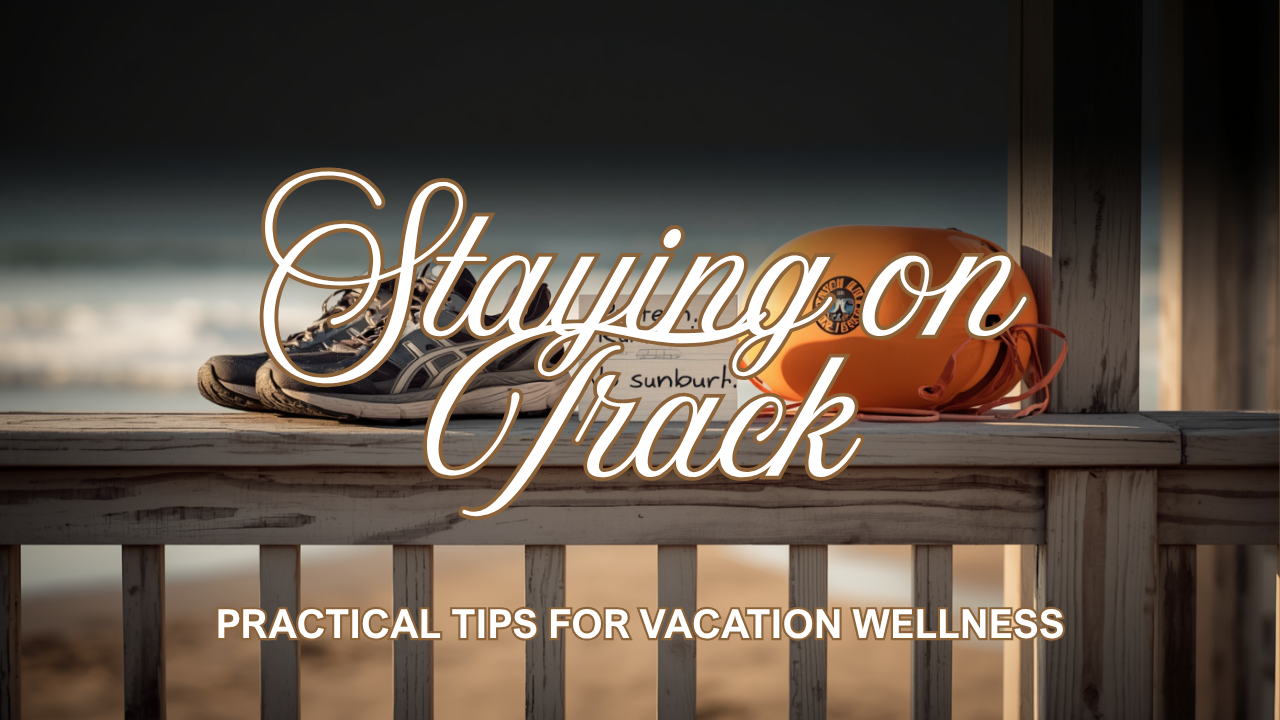
How I Stayed on Track Without Following My Normal Routine
I recently had the opportunity to put my Summer Baseline framework to the test during a trip. The routine wasn't perfect, but that wasn't the goal. Here's what actually helped me stay consistent—and why having a travel version of your plan makes all the difference.
I've been writing this past month about summer challenges and tips for travel, so it seemed natural for me to recap my most recent summer vacation and talk through how I planned things out, what worked, and what didn't.
A little context for the trip first, I was going to be gone for 10 days, with my family, and planning for a laid back, relaxing trip hoping to take the time to just enjoy the company. But I still wanted to continue the momentum I had built up, without having to stress about all the little things.
My main anchor points for the trip were breakfast, my running, swimming, and probably the most important, not getting sunburnt.
I pre-made the dry ingredients for my overnight oats knowing that we were grocery shopping and I could get milk and yogurt to finish it off for my big training days. And then milk, bagels, and eggs would work on the lighter days for some good variety.
I brought my running gear with me and looked ahead of time to get a feel for the area, map out some routes, and understand what the options were. I also knew that schedule wise, I would be up, out, back, and cleaned up before most of the group was even up such that I wouldn't miss much of the family time.
Being out in the ocean, I wanted to be cautious so I brought my buoyancy shorts as well as my inflatable buoy for visibility and extra safety. I wasn't intending to get in anything especially long, more to keep up my swim consistency and get back into some open water.
As for the sun, I brought a couple of rash-guard shirts to protect, sun-screen, hats, and then the house had great patios such that I could be outside and enjoy everything, without being in the sun.
All of these anchors worked perfectly, I managed to feel good and strong on my runs, swam twice, and didn't get burnt one bit! I then was able to pretty much eat and enjoy whatever we were doing for lunch and dinners, and add in the occasional treats. My training volume took a bit of a hit as I wasn't biking, but that just didn't make enough sense for me to try and worry about a solution.
Now of course, no trip is perfect so there were a couple of things I could have done better, but honestly they were more "nice to haves" so I wasn't overly worried about them.
I brought my suspension trainer with me, but there wasn't a good place to anchor it. One week without strength training isn't going to make a huge difference, but it would have given me a fun opportunity to show some different options for my family.
I did a pretty good job making sure I was properly hydrated, but I'm pretty confident I was low on total calories, or at least not as many as I typically have at home. Lunch was the main "challenge" meal of the day although I probably didn't do as bad as I think as there were many days that I had multiple snacks - which probably equaled one lunch.
Probably the biggest aspect I "struggled" with was sleep as my mornings were pretty set but I didn't get to bed as early as I should have. Again, this was a trade-off I was happy to make to spend time with my family.
The takeaway is not that I did everything right. It is that I decided in advance what mattered and let go of the rest without guilt.
Biking was not realistic. The suspension trainer did not have a home. Sleep was a trade-off I made with my eyes open. None of that felt like failure because none of it was unplanned. It was just the trip being the trip.
That is the whole point of the anchor system. You are not trying to replicate your home routine in a different location. You are trying to protect the things that matter most and give yourself permission to release the rest.
If you have been following this series and want help figuring out which anchors actually matter for your summer — whether that is training, nutrition, sleep, or travel — that is exactly the kind of planning I do with coaching clients. Let's map it out before your next trip.

The best travel plan is not your full home routine. It is the version that works on the road and keeps the important pieces alive.
You land Monday morning. By Wednesday you have skipped three workouts, eaten airport food twice, slept poorly two nights in a row, and you are telling yourself you will reset when you get home.
Sound familiar?
Travel is the number one routine killer I hear about from clients — and honestly, it is a legitimate challenge. Not an excuse. A real one. But the solution most people try — white-knuckling it through the trip or just giving up entirely — misses the actual problem.
The problem is not that you traveled. It is that you tried to bring your home routine with you. And that never works.
What Travel Actually Does to Your Body
Before we talk solutions, let's be honest about what you are dealing with. Travel does not just disrupt your schedule. It disrupts your physiology.
Sleep takes a hit from time zone shifts, unfamiliar beds, and late nights. Hydration tanks on flights and long drives. Meal timing goes out the window when you are at the mercy of someone else's agenda. Training access is unpredictable. Your daily step count drops when you are sitting in airports, conference rooms, and cars. And recovery — the thing that makes all of your training and nutrition actually work — takes the biggest hit of all.
That is a real accumulation of stress on your body. Pretending it is not there does not help. But catastrophizing it does not either.
The Mindset Shift That Actually Works
Stop trying to replicate your home routine on the road. That is the trap.
Your home routine was built for your home environment — your gym, your kitchen, your sleep schedule, your commute. None of that travels with you. When you try to force it anyway, you either fail and feel like you blew it, or you exhaust yourself trying to hold something together that was never designed for where you are.
The better move is to build a travel version of your routine before you leave. A simplified, portable, realistic plan that fits the actual conditions of travel — not the ideal conditions of your normal life.
This is not lowering your standards. It is matching your plan to your environment. That is just good programming.
The Travel Routine Checklist
These are the things worth deciding before you get on the plane — not improvising at 6 a.m. in a hotel room.
Pack protein options. Bars, single-serve packets, jerky, individual Greek yogurts if you have a cooler. The goal is to have something you control in a bag, so airport food and minibar snacks are not your only options when hunger hits at a bad time.
Choose your hotel with intention when possible. Walkability and gym access are worth factoring in if you have any control over where you stay. A hotel with a decent gym or located near a running path removes a barrier that stops a lot of people before they even start.
Schedule movement before the day gets away. Travel days have a way of filling every available hour. If movement is not on the calendar with a specific time, it usually does not happen. Even 20 minutes in the morning before meetings start is enough to change how you feel for the rest of the day.
Hydrate aggressively on travel days. Cabin pressure and recycled air dehydrate you faster than most people realize. Target at least 16 ounces of water before your flight, and match every alcoholic or caffeinated drink with an equal amount of water. This alone has a significant impact on how you feel when you land.
Walk after meals. This is one of the highest-leverage habits you can build on the road. It helps digestion, blunts blood sugar spikes, adds steps without requiring a workout, and gives you a few minutes away from the table or the screen. Five to ten minutes is enough.
Have a first day back plan. This is the one most people skip and one of the most important. Decide before you leave what the first 24 hours home looks like — what you will eat, whether you will train, how you will prioritize sleep. Without a re-entry plan, the travel hangover extends for days longer than it needs to.
Training Options That Actually Work on the Road
The goal on travel days is not to crush a PR. It is to maintain the habit and keep the engine running. Here is a realistic menu of options depending on what you have access to.
Hotel gym lift. Squat or hinge, push, pull, core carry. Three rounds, 30 minutes. Done. (If you missed last week's post on the 30-minute template, that one is worth going back to.)
30-minute run or walk. Get outside if the city allows it. This doubles as mental reset time, which is often what you need most after a long travel day or a packed conference schedule.
Band workout in your room. A single resistance band covers rows, pulls, hip work, and shoulder stability. Pack one. They weigh nothing and turn any hotel room into a training space.
Mobility reset. On the days when energy is genuinely low and sleep was rough, a 20-minute mobility session is not giving up — it is smart management. Hips, thoracic spine, ankles. You will feel better for the rest of the day and protect your training quality when you get home.
Airport walking. Stop circling the gate and start moving. A 45-minute layover with intentional walking is real movement. It counts.
Nutrition on the Road
You are not going to eat perfectly on a work trip or a family vacation. That is not the goal. The goal is to keep a few anchors in place so the wheels do not come off entirely.
Protein-first ordering. At every restaurant, start with the protein and build from there. Steak, chicken, fish, eggs — whatever is on the menu. This keeps your intake from defaulting to carbohydrate-heavy travel meals that leave you hungry two hours later.
Make a grocery stop. If you are somewhere for more than two days, a 15-minute stop at a grocery store pays dividends all week. Greek yogurt, fruit, protein bars, nuts, deli meat. Having real food in the room changes how the week goes.
Control breakfast. Dinner is often out of your hands — a work dinner, a restaurant with the family, a catered event. Breakfast usually is not. Own that meal. High protein, real food, intentional. Let the rest of the day have some flexibility because you started with a solid foundation.
Set a hydration target and track it. On travel days especially, water does not happen unless you make it happen. Pick a number — 80 to 100 ounces is a reasonable floor — and work toward it deliberately.
The Bigger Picture
The people who stay consistent through travel are not the ones with the most willpower. They are the ones with the simplest, most portable version of their routine — built in advance and practiced enough that it does not require a lot of decision-making in the moment.
That is what coaching actually helps with. Not just building the training plan and the nutrition structure for your normal life, but building the compressed, travel-ready version that keeps you from losing two weeks of progress every time you get on a plane.
Your home routine is your full version. Your travel routine is the version that keeps everything intact until you get back to it.
Build both before you need either one.
One Action Before Your Next Trip
Before you pack your bag, take five minutes to write down your travel version of your routine. What will you eat for breakfast? What does your 30-minute training option look like? When will you move? What will you have in your bag for protein?
That five minutes of planning is the difference between a trip that sets you back two weeks and one you walk away from feeling like you held the line.
Where are you traveling this summer — and what is the one part of your routine that tends to fall apart first when you are on the road? Drop it in the comments. I read every one.
Building Better Sleep Habits — and Keeping Them Through the Holidays
Great sleep isn’t luck — it’s built.
Learn how to create a consistent sleep environment and routine that improves recovery, focus, and performance — even during the holidays.
The holidays bring joy, connection… and disruption.
Travel, late nights, and changing routines can throw your sleep completely off track.
But with a few intentional habits and environmental tweaks, you can stay rested and ready through the busiest season of the year.
Before I dive in too deep, let's first set the ground rules for what I tend to consider when thinking about "Sleep Hygiene:"
The Environment - light, temperature, noise, other people, pets, etc.
Your Behaviors - phone usage, caffeine, stress, etc.
Your Routine - what you do leading up to attempting to fall asleep
There's more you can look at when defining Sleep Hygiene, but these are the biggest impacts you can make. The good news is that making a few tweaks now for the Holidays, allows you to roll them into the New Year and build on that foundation for continued benefits.
For each of these three areas, there's a range of changes that can be made not only in how much of an impact they'll have for your sleep quality, but also how large of a change you'll need to make. Both of which will vary wildly from person to person and as such I typically recommend making only one or two changes at a time, prioritizing your ease of implementation and sleep impact. So let's look at each of these areas, and toss out a couple of ideas for each as well as some idea on the commitment needed to make the change:
Environment
Try to create as dark of a room as possible, with the simplest option being to use a sleep mask.
A little more of a financial commitment, but might be better if masks are not comfortable, would be blackout window coverings of some sort.
Temperature is also a massive factor in sleep quality and covers not only the temperature of the room, but that of the bed as well. There are lots of options here ranging in price from adding fans to help cool down, setting the room temperature cooler, or even looking at the various options out there to cool (and heat) your bed itself.
Behaviors
Stress is one of the more impactful factors I've listed, but it is also complex and not always obvious. A workout (productive stress) done late in the day could have a calming impact on some, or it could produce too many endorphins such that it becomes harder to fall asleep. Couple stressful days with some items in the routine area I'll get to such that you moderate those days and mitigate the detrimental effects of an excess of stress.
Caffeine varies significantly not only in the magnitude of the impact but also the duration such that everyone needs to understand for themselves what does and does not work for them.
Screen usage has been consistently shown to be damaging to sleep quality, with the simple answer being to put everything away a set period before bed. However, that's practically very challenging for many people, so an alternative would be to wear blue light blocking glasses to reduce (or negate) that impact.
Routine
A routine starts with timing, ideally one that allows for consistent bed time as well as a consistent waking time. Best practices are to keep both of these times as consistent as possible, during the week and weekends. A way to think of this is the popular shift many do over the weekends essentially is subjecting your body to jet lag every week. Now, does this require a rigid structure such that there's never any fun? Of course not, but recognize the impact a night out will have and look for other ways (like a nap) to more fully restore the body and mind.
Outside of that, look for things you can stack in the evening to help enter a calm state and prepare the body for sleep. Again, these could be all sorts of things and don't need to be overly complex - start simple and work backwards from whatever time you want to go to bed. Some options to consider:
reading, journaling, stretching, meditation, turning down the lights, and way too many more to list out.
There are two separate paths you can take to work on your sleep hygiene as the holidays approach:
Pick one or two items from the list above, work to implement them, and keep track of the impact they have on your sleep duration, quality, and how you feel the next day. Look to be as consistent as possible, but allow yourself the grace to enjoy the Holidays. The goal is progress and awareness, not creating the perfect solution.
If your schedule seems overwhelming and too chaotic to control, roll with that and keep a journal of the various things that change, how they impact your sleep, and how you feel the next day. This information you gather will then better inform you for the New Year such that you can have targeted changes that you KNOW will impact YOUR sleep in a positive way. Mentally, making changes in a way you've already proven to work are significantly easier to implement and sustain such that you'll get a massive boost to start the New Year!
A final idea to consider if you're traveling for the holidays, what parts of your sleep hygiene can you bring to carry that continuity and familiarity with you?
And as always, look for the small changes you can make that are sustainable and build momentum.
The holidays don’t have to derail your rest — they can be a chance to refine it.
Build a sleep routine that supports recovery, clarity, and energy, no matter where you are.
Start small. Be consistent. Protect your foundation.
💤 Subscribe to The Wellness Forge for more actionable wellness strategies that keep you performing at your best.
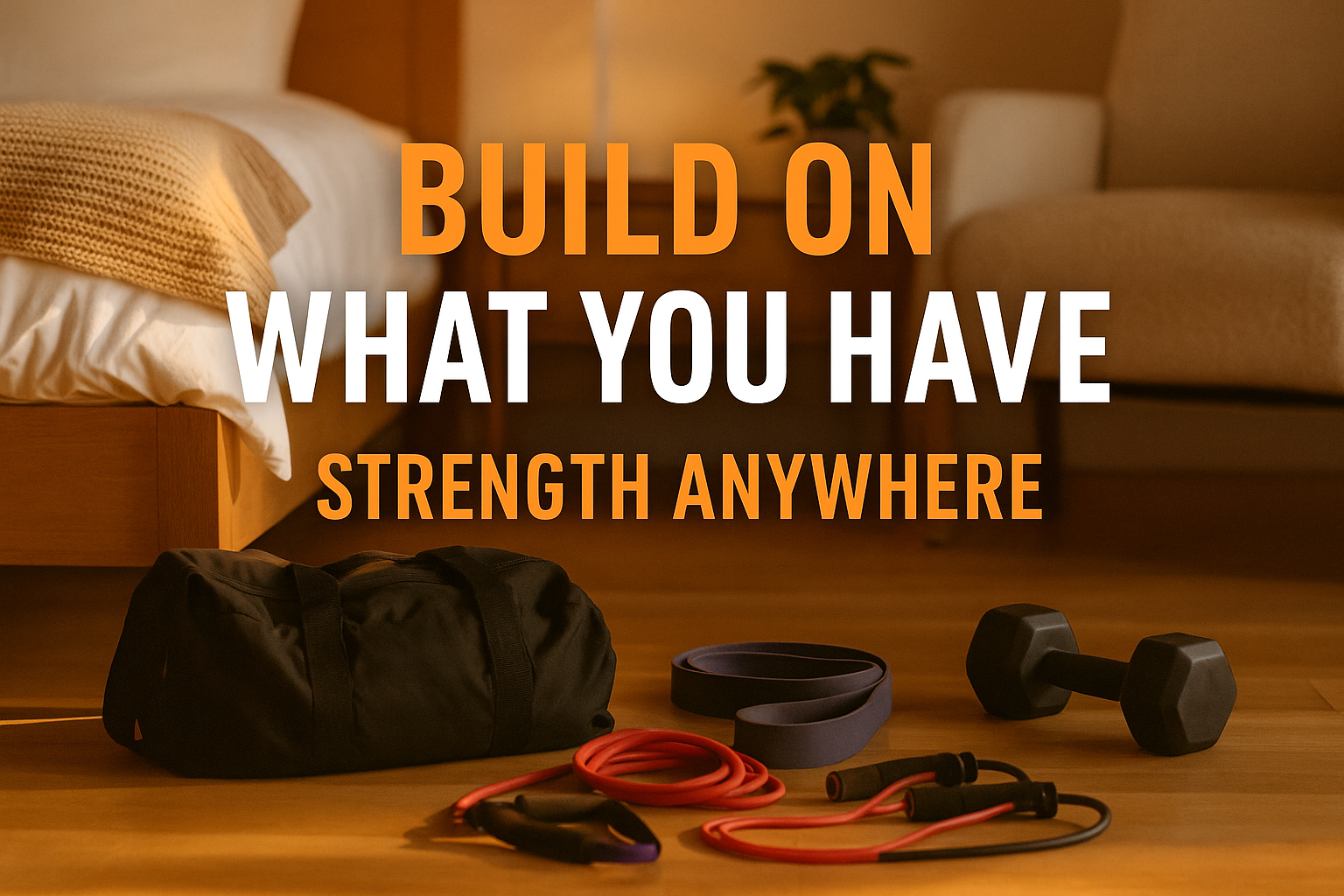
Strength Training Anywhere: Build on What You Already Have
Strength training doesn’t require a gym — it requires consistency.
Learn how to stay strong through home workouts and holiday travel using what you already have.
Strength doesn’t live in the gym — it lives in your habits.
Whether you’re training from home, a hotel, or halfway across the country visiting family, you can still build on the foundation you’ve created.
This season is about consistency, not perfection. Here’s how to make it happen.
In my earlier post on strength training I provided some ideas for getting started, as well as some ways to progress what you're currently doing. Another key aspect of consistent strength training is pivoting when your situations change, and the holiday season is right around the corner. So what kinds of options should we look at to continue our training during a busy travel and gathering time period?
The first conversation to have with yourself is the duration of the travel or holiday window you're working with. Missing one workout over a long weekend really won't have much of an impact, but a week or two starts to slide into the period where it might matter physically and definitely has a mental impact. Also consider your current stress levels and how the holidays and/or travel will impact that, taking some time off or scaling back might be the best long term answer. And then of course, think about your goals and how those align with your timing. Personally for me, I typically travel between Christmas and New Year's, and then have the Houston Half-marathon in early January, such that training is important for me. But I also know that trip is very restorative for me and I can handle the training load.
So what does it look like to strength train through this period? I would look at 3 main options that are not only scalable for anyone of any level but very portable:
Body weight exercises, think squats, step ups, core work, and pushups all provide value and can be progressed reasonably well.
Resistance bands easily fit into a suitcase and can scale to pretty much any difficulty level and provide a full body workout.
A Suspension Trainer is another very portable option that does require a mount point (tree, bar, outward opening door) but allows another option for a full body workout and most likely a different stimulus.
I would then think about shortening your workout time and pivot towards more workouts. For example, instead of two hour long workouts, think of four thirty minute workouts. You can look at either mimicking your current exercises with these tools, or maybe take advantage of the novelty and try some new movements. All of the above tools allow for lots of variations of angles and pivot points which can significantly change the stimulus that exercise provides. This unfamiliarity will not only help with your training, but also mentally it will allow you to focus on the experience and not get caught up in trying to compare numbers.
The holidays don’t have to be a setback — they’re an opportunity to stay grounded and keep your momentum.
You don’t need a perfect plan, just a flexible one.
Build on what you already have, adapt when life gets messy, and keep forging forward.
💪 Subscribe to The Wellness Forge for practical, adaptable training strategies you can take anywhere.