
The Sleep Anchor: The Most Underrated Part of Your Summer Routine
Summer disrupts sleep more than most people realize, and once sleep slips, training, cravings, mood, recovery, and decision-making all get harder.
Every summer, the same pattern plays out.
Training slips. Nutrition gets inconsistent. Energy tanks. Cravings spike. Motivation disappears. And people spend the rest of the season trying to figure out what went wrong with their discipline.
Most of the time, it was not discipline. It was sleep.
Sleep is the first domino — and it is almost always the last one people look at. I have saved it for last as it will be the MOST impactful thing you can adjust, but also for most the most challenging. You can have your protein anchors dialed in, your travel plan ready, your 30-minute training templates built. But if sleep is quietly unraveling in the background, everything else gets harder than it needs to be.
Summer is uniquely good at unraveling it.
What Summer Does to Your Sleep
It starts subtly. The days are longer, so the evenings stretch. A backyard cookout runs until 10. A few drinks on a Tuesday because it feels like the weekend. The kids are out of school so the morning schedule loosens. You travel across time zones twice in six weeks. The bedroom is warmer than usual. You stay up an hour later on Friday and Saturday and then try to drag yourself back to normal on Monday.
None of these things feel like a big deal individually. But together they add up to a sleep pattern that is inconsistent, shorter than it should be, and lower quality than your body actually needs.
The result is not just feeling tired. The downstream effects are more significant than most people realize.
What Happens When Sleep Slips
Poor sleep does not just make you groggy. It systematically degrades almost every other health behavior you are trying to maintain.
Cravings increase — specifically for high-calorie, low-nutrient foods. Sleep deprivation elevates ghrelin (the hunger hormone) and suppresses leptin (the satiety hormone), which means you are hungrier, less satisfied, and reaching for the wrong things more often.
Training quality drops. Output is lower. Motivation to train at all is lower. The session that would have felt manageable on a good night's sleep feels like a grind, and the temptation to skip it wins more often.
Recovery takes longer. Muscle repair, hormonal restoration, and nervous system recovery all happen predominantly during sleep. Cut the sleep short and you are cutting the recovery short — which means the training you are doing is not producing the adaptation it should.
Decision quality suffers across the board. Prefrontal cortex function — the part of your brain responsible for impulse control, planning, and long-term thinking — is one of the first things to degrade with sleep loss. Every choice you make about food, training, and routine gets a little harder and a little worse.
Mood and irritability follow. The version of you that shows up after a week of short nights is not the version that makes good calls consistently.
The compounding effect is significant. And it usually gets blamed on everything except the actual cause.
The Sleep Anchor
Just like nutrition and training, sleep does not need to be perfect during summer. It needs anchors.
A sleep anchor is a consistent behavior that stabilizes your sleep pattern even when the surrounding schedule is variable. Here are the ones worth building in.
Consistent wake time. This is the single highest-leverage sleep anchor available, and it is the one most people overlook because they focus on bedtime instead. Your circadian rhythm is anchored primarily to when you wake up, not when you fall asleep. If you protect your wake time — even after a late night, even on weekends — your body has a stable reference point that keeps the whole system from drifting. Bedtime will regulate itself over time if the wake time is consistent.
Caffeine cutoff. Caffeine has a half-life of roughly five to six hours. That afternoon coffee at 3 p.m. still has half its stimulant effect at 8 or 9 p.m. Pick a cutoff time — noon or 1 p.m. for most people — and hold it. This is a small habit change with a disproportionate impact on sleep quality.
Alcohol boundary. Alcohol is uniquely disruptive to sleep architecture. It may help you fall asleep faster, but it suppresses REM sleep and causes fragmented rest in the second half of the night — which is when a lot of the most important recovery happens. This does not mean abstaining. It means being intentional. Finishing drinks at least two to three hours before bed and being honest about how frequency during the week is affecting how you feel.
A 30-minute wind-down. Your nervous system does not switch off on command. A short wind-down routine — something that signals the transition from the day to sleep — meaningfully improves both the time it takes to fall asleep and the quality of sleep once you do. It does not need to be elaborate. Dimming lights, stepping away from screens, reading, stretching, a short walk. The content matters less than the consistency.
A cool room. Core body temperature needs to drop slightly to initiate and maintain sleep. A warm summer bedroom works against that process. Blackout curtains, a fan, keeping the thermostat lower than feels necessary — these are not luxuries. They are functional sleep tools.
Morning sunlight. Getting outside within 30 to 60 minutes of waking — even for ten minutes — is one of the most effective ways to anchor your circadian rhythm. Morning light exposure sets your internal clock, improves alertness during the day, and makes it easier to wind down at night. It is free, it takes almost no time, and most people are not doing it.
The Performance Connection
Better sleep is not just about feeling less tired. It is a direct performance input.
When sleep is consistent, energy is more stable and predictable throughout the day. Appetite regulation improves — the cravings that derail nutrition during busy stretches are significantly reduced. Training output goes up. Recovery between sessions improves. The mental clarity required to make good decisions about food, movement, and schedule comes back online.
Everything in this summer series — the training anchors, the nutrition structure, the travel plan, the weekend routine — works better when sleep is intact underneath it. It is not one piece of the puzzle. It is the foundation the rest of the puzzle sits on.
Where to Start
Pick one anchor from the list above. Not all of them — one.
If your schedule is inconsistent, start with wake time. If you are a late-caffeine drinker, start there. If alcohol is disrupting your sleep more than you want to admit, that is your anchor.
Build it for two weeks before adding anything else. Anchors compound. One consistent sleep habit makes the next one easier to implement.
Summer does not have to be the season that costs you four months of progress. But sleep is the piece most people leave unaddressed until everything else has already started to slip.
Protect it first.
This is the final post in the summer consistency series — covering training, nutrition, travel, weekends, and now sleep. If any part of this series resonated with you and you want help building a summer plan that actually holds up in real life, that is exactly what IronLane Coaching is designed for. Let's build it together.

You’re Ignoring One of the Most Important Forms of Data
Calories, heart rate, sleep scores, and weight can all be useful, but they do not tell the whole story. How you feel day to day may be the missing piece of data that helps you make better decisions.
We live in a world obsessed with measurable data. Calories. Macros. Sleep scores. Pace. Heart rate. Weight. HRV.
But one of the most important data points in your entire health and performance picture is often the one people dismiss first:
How you actually feel.
I've talked about this previously, but it continues to be something I work with my clients as most either don't have the connection to how they feel or tend to minimize it. Part of the challenge is the dramatic increase in the availability of just about any kind of data on our phones and watches, or at a deeper level with bloodwork and genetic testing. While these pieces are important, they only tell one part of the story and usually only at a particular point in time. So let's dive into the two areas you can start now to build a better picture of how you're performing.
The first area I'll mention is during your workouts which is a great way to boost the quality of your workouts, especially while lifting weights. The more in touch you can be with where you feel each rep you can target specific areas, better identify any form issues, and better understand when it is time to either increase the reps or weight. This same concept applies to any cardio workout too, paying attention to your breathing, how quickly you recover from any efforts, and how the rest of your body feels as you progress through the workout helps you better understand how your body is responding to the efforts. In both cases, how you feel should also drive your intensity of that particular workout. I'm not suggesting you cut all your workouts short, or power through them, but having a better gauge on when you should do one more rep, or perhaps drop the intensity will benefit greatly in the long run.
The other aspect that I suggest this kind of self check on how you feel is a way to bookend your day. Take a couple of minutes (maybe even less than that) in the morning when you wake up, and in the evening before you go to bed to assess how you're doing. A few things you might think about:
energy level
cognitive level
any particular aches/pains
general mood
feel free to add more if you like
You can either make this an "informal" check-in with yourself, or you can add it to some sort of a journal process either written or electronic. If you're adding this to your routine, I suggest some sort of physical accountability to help reinforce the habit as well as provide a mechanism to compare.
The goal is not to replace hard data. The goal is to stop pretending that your lived experience does not count as data too.
Because if your numbers look good but your body, mind, and day-to-day function are telling a different story, that matters.
In many cases, how you feel is not a distraction from the data.
It is the missing piece.
Better decisions come from better data — and that includes the signals your body is already giving you.
When was the last time you tracked how you actually felt with the same consistency you track your numbers?

Why Smart Snacking Can Actually Improve Your Nutrition
Snacking isn’t the enemy. In many cases, it’s the thing that helps prevent energy crashes, overeating later, and poor nutrition choices. The key is learning how to snack with purpose.
Somewhere along the way, “snacking” became synonymous with lack of discipline.
But for busy professionals, active adults, and anyone trying to stay fueled and focused, the right snack can be one of the most useful nutrition tools you have.
The main issue many have with snacks is the wrong choice, or an incomplete choice. A very common habit is to wait until hunger really kicks in, then grab whatever is handy. This is also when cravings are typically highest and as such the choices usually go towards carbs, sugars, and sweets. Those may sound great at the time, but aren't satiating and will further challenge blood sugar levels leading to an eventual energy crash. If you can relate to this, I can guarantee you're not alone!
A better option to snacking is to plan it as part of your normal daily schedule. This way not only can you prepare to have good snacks available, but you can also schedule them BEFORE you get hungry to fend off those cravings. These planned snacks not only support long term health goals but will help maintain energy and can be crucial in performance for those with ambitious workout goals. Another benefit of scheduling a snack is that it helps ensure consistency as gaps in meals can frequently grow large enough that entire meals are skipped.
Everyone has their own ideas for what works for a snack, but I tend to find the best options are those that have some level of macro balance such that they include carbs, protein, and fats. Ease and convenience should also be a consideration depending on your schedule, perhaps not as important if you work from home, but maybe more so if you are frequently on the road. I do also suggest trying to have something for a snack that's different from what you normally eat for your larger meals to help combat flavor fatigue.
One of my go to options is a measured out container of mixed nuts with dried fruit and some chocolate chips. This gives a decent enough macro balance and also enough sweet to quell my cravings - although the chocolate can be problematic in the car when it gets warm. I specifically mention measuring the nuts as you can very easily find yourself eating more then you expect and your snack has become a meal. Another of my favorites is yogurt mixed with protein powder and some fruit, or in my case frequently chocolate chips and whipped cream. This is my usual evening snack as it replaces ice cream and still gives me enough of those things I like, such that I can save ice cream for a real treat. I specifically mention these two not because I think they work for everyone, but the ideas do:
They're different from my normal meals
They're easy to measure and portion out
They're quick to prepare, or make a few servings in bulk
They're well balanced and also significant calorically
They scratch a significant craving that I know I can over-indulge if I'm not paying attention.
There are loads of options available but a good starting point would be to look for that combination of things you crave with what you know to be healthy. I will come back and talk more about bars, shakes, and drinks soon but those can also be leveraged strategically to help, but I would be careful to not solely rely on them.
Snacking is not something you need to fear.
For many people, it’s one of the simplest ways to improve consistency, manage hunger, and support better energy throughout the day. The goal isn’t to snack constantly. The goal is to use snacks intentionally so they work for you instead of against you.
What’s one snack you keep around that actually helps you feel better, more focused, or more in control?
Drop it in the comments.

Why High Performers Burn Out Quietly
Always being “on” feels productive, but over time it quietly erodes energy, recovery, and performance. This post breaks down the hidden cost of chronic stress — and how high performers can manage it without lowering standards.
If you’re productive, motivated, and capable, people assume you’re fine.
Even when you’re running on fumes.
That’s the cost of always being “on.”
What does always being "on" look like? It doesn't necessarily mean the same for everyone, but you will notice certain of these statements ring true for you:
consistently mentally engaged
quick to react emotionally
consistently physically tired
always reachable
trouble falling asleep as you can't turn your brain off
Now I've used some significant qualifiers there, words like "always" and "consistently" don't take those literally, but do some self reflection on how often those are the case. And maybe you're in the group that runs this way during the week, and then uses the weekend to recharge. That method can work, but typically the weekends aren't long enough, or turned down enough to truly recover from the built up stress of the week.
What this habit of living in this "on" state creates is the situation of chronic stress, and that's important to differentiate from acute stress. Acute stress is the stress we want as that's short term and recoverable stress that our body (and mind) will be able to adapt to better handle in the future. This doesn't mean they have to be the intense kinds of workouts I mentioned earlier, but any sort of event that pushes the body past its level of normalcy is a stressor. In contrast, chronic stress builds over time and indicates that the body doesn't have the capacity to recover such that the stress starts compounding. This can lead to all sorts of physical and mental challenges that take orders of magnitude longer to recover from, REDS (Relative Energy Deficiency in Sports) and stress fractures being two common examples. Chronic stress with have a significant impact on your physical performance as well as mental capacity and motivation levels that far outweigh the downtime needed to prevent this buildup. High performers are especially at risk for these behaviors as they're generally more adept at tolerating stress for longer periods and will normalize any levels of fatigue as they'll "sleep when they're dead." This class of personality is also more likely to dismiss any of the warning signs and push any sort of recovery to the weekend, next week, or once this project ends.
So how does one maximize their performance without falling into a stress cycle they can't get out of? The first step, like with many other processes I've suggested, is an awareness of the patterns. If anything I've mentioned above rings a little true, it would be worthwhile to start paying more attention to your energy levels, mental acuity, sleep habits, and emotional states to understand how they fluctuate. If you notice a couple of these are trending in the directions you don't want, then you'll want to look for ways to help create more of an energy wave, and not an energy straight line. You can still have those peaks, but you need to also create some valleys. This can be done on any timeline you want, but a great place to start would be daily - aim for at least 2 peaks and valleys (to start) during the course of the day. These don't need to be long periods of time, but even carving out a block of time for a walk, phone call with a friend or loved one, or a TV show will help create those valleys. Once you get a handle on how effective this is, you can then look to see if perhaps a full recovery day might be helpful - whether that's on a weekly basis or more spread out. And for those longer more sustained periods of stress (large work project, major presentation, goal race, etc) you should plan for at least a day of recovery after the event to mentally and physically wind down. As you work to incorporate this approach, you'll notice your peaks can become longer and higher with the valleys becoming more natural.
Being “on” isn’t the same as being effective.
Performance is built on cycles — not constant pressure.
The goal isn’t to do less — it’s to recover better.
🔗 Subscribe to The Wellness Forge for strategies that help you perform without burning out.
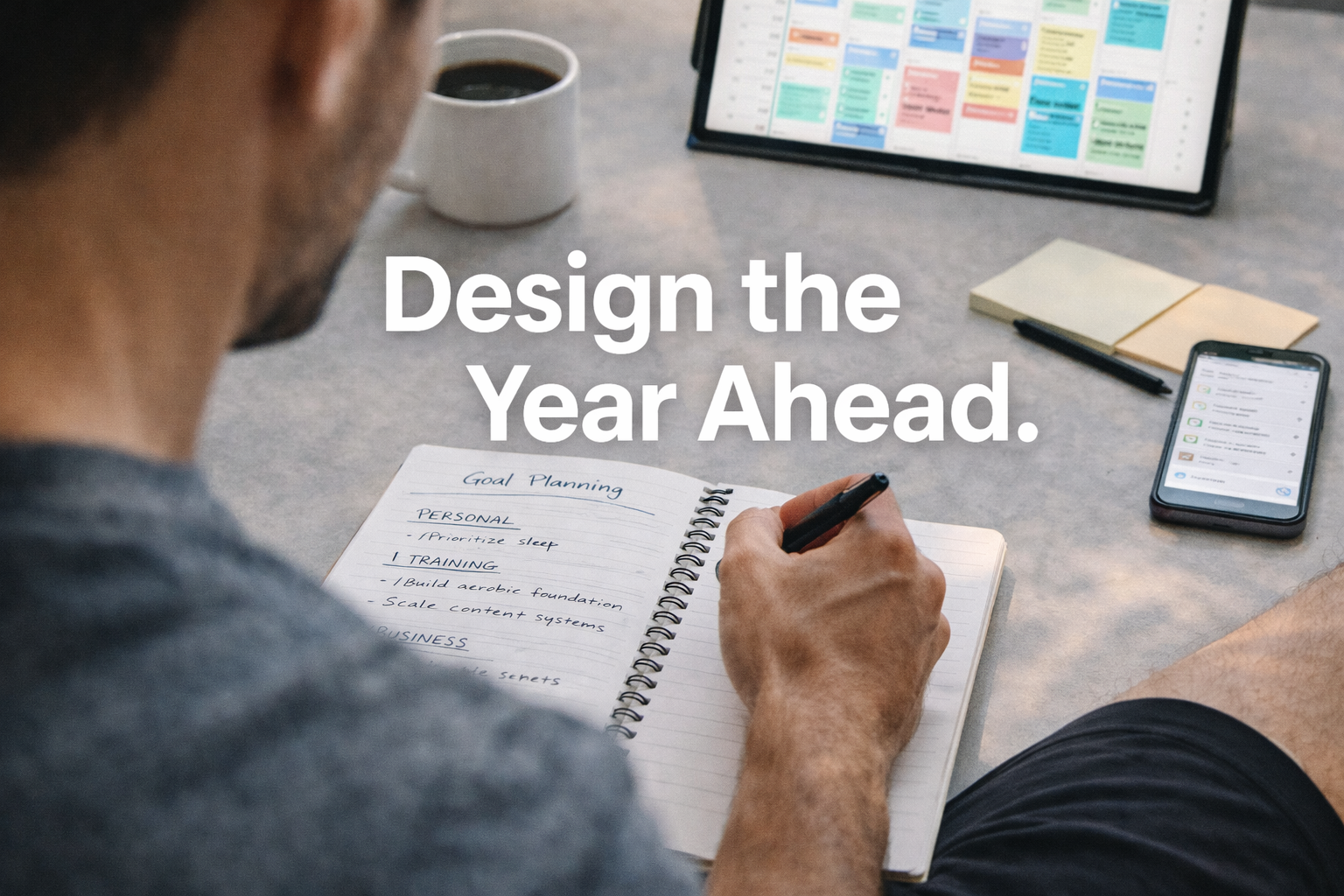
From Reflection to Direction: My New Year Process
Instead of rigid resolutions, this is the process I use to set intentional, sustainable goals across personal health, training, and business — built around energy, consistency, and long-term progress.
A strong year isn’t forged by one bold resolution — it’s shaped by consistent intention.
Before setting goals, I step back, assess the last year, and choose how I want to show up in the next one.
One of the most common traditions this time of year is some sort of resolution, change, plan, or something to do differently to start off year. Over the past few years, I have switched up towards more of a process that I also implement around any other significant event such as a race or work event. I use this as a time for reflection, looking at the things I did well in the previous year, some areas that didn't go so well and lessons learned from them, and finally a look forward to next year with a combination of incremental process goals, things I want to improve on, and then a "big scary goal" or two. I'm sharing this here for two reasons, one to walk through what I believe is a more successful concept, and two to provide myself with a level of accountability.
Looking back at last year, I didn't have any of those stand-out wins or massive highs but it definitely was a year of consistency. I feel like this consistency applies to the business side most with regards to my clients, my level of service to them, and also with my consistently looking to learn and continue to improve. I also feel like I managed to gradually work on my sleep, the most challenging part getting to bed earlier. There's still lots of room to improve but the increased awareness and small shift should help lead into this year for even more improvement. My training didn't go quite as planned as I started the year recovering from a torn labrum, and then later in the year picked up another hip injury. But I do feel like both of these injuries brought me greater awareness of my body, especially while running as I needed to make various tweaks based on my physical therapy. This awareness also helped me more smartly adhere to my training plan and also know when I needed to make shifts in the plan. The last area I wanted to call out was not only a better handle on my schedule, but also doing a better job of protecting the parts of my schedule that I needed (or wanted) to hold. While this may sound trivial, I have a habit of rearranging my schedule to fit others and while that has certain obvious advantages it does create other challenges for me and my mental outlook. Shifting just a little bit along that scale towards protecting my schedule helps me strike a better balance in my life.
As for areas that didn't go as well, I don't go into this process trying to find every issue or mistake but instead look at one or two significant aspects that were the most impactful on the year. Probably the most obvious one that jumps out to me was my consistency with strength training, which I realize might sound odd coming from someone who knows how important it is. I will firmly admit that I am one of my toughest clients, and spoiler this will be an item coming up that I plan to work on. I also recognize that I probably got a little too comfortable with my client base and didn't push as hard I as I could to grow that, or improve what I'm doing for my existing clients. This is also one of those areas where I am my worst critic as well, but I do feel like there's room for improvement there. Finally the other aspect I recognize got a bit out of control was my ability to check out for longer than I probably should. Yes there are times when I need to zone out to relax and recharge, but far too often a 30 minute mental break turned into multiple hours. This one will probably be tough to break, but I feel like one of the tweaks I made towards the end of the year will help with this and more awareness will also help reign this habit in a bit.
So what does my plan for 2026 look like? As part of this process, I look to identify a couple of processes that I want to improve, a couple of specific targets (usually with a couple levels to them), and then a "scary" goal or two. I mentioned it above, but top of the list that I need to work on is my strength training consistency and I've already addressed many of the logistical challenges with a routine - I simply need to do it. My plan to improve my consistency starts with actually scheduling the slot on my calendar, as only having it on my training plan doesn't seem to work. I will also make the mental shift that these workouts are my most important ones of the week, and need to happen before I "reward" myself with my long run. I also want to work on keeping my schedule more in control, satisfying my clients but also leaving room for myself. I've made strides this year, but feel like there's a gap between the day to day scheduling and longer term stuff. I'm recently starting using a tool called Notion (just the free version at this time) to help better organize and visualize my longer term projects and that coupled with my existing calendar should help improve this situation. I do have some specific business goals with regards to numbers I want to hit and the success of a new program I will be launching (👀SOON! 👀) but the scheduling improvement I mentioned will also have a significant positive impact on my business. I'm taking a break this year from setting a specific financial target but I will gauge this success based on my comfort level with additional expenditures, primarily vacation and travel. I know that may sound vague but it has a very specific and real meaning to me, which is the important part. As for my "scary" goals, technically I have two of them but they're related and based on how the year starts off with my injury may collapse to one. But I have some relatively lofty goals that I want to hit with regards to my marathon time, and full distance Ironman Triathlon. But before I can really narrow in on these, I need to see how the next couple weeks of training goes as that will drive whether I can tackle both of them, or if I need to focus on just one.
The New Year isn’t about doing everything — it’s about doing the right things with intention.
When your personal health, training, and business goals align, progress becomes sustainable and meaningful.
This year, to summarize my outlook, I’m focused on clarity, consistency, and energy — and helping others do the same.
🔗 Subscribe to The Wellness Forge for weekly insights on building strength, resilience, and sustainable performance.
Why Energy Matters More Than Time
High performers don’t run on constant intensity. Learn how to manage daily and weekly energy cycles to improve focus, recovery, and long-term performance.
Some days everything clicks. Other days, it feels like you’re dragging uphill.
That’s not a motivation problem — it’s biology.
When you learn to work with your energy patterns instead of fighting them, performance becomes far more sustainable.
When I look back at this past year one of my more successful changes I made was a shift in my schedule and leaning into my energy fluctuations. This allowed me to be more present for the aspects of my life I wanted to, excel when I needed to, enjoy my days more, and feel more rested - despite failing to get as much sleep as I'd want (and probably need). For me this comprised of a few small but specific changes:
Loaded up my mornings
Built in an early afternoon down time
Protected my Friday evenings such that they became my recharge time.
Shifted my workouts as needed when life necessitated it
Now I realize, not all of this will work for everyone and we all will approach this differently (as we should) but the process I went through to make these changes can work for everyone. And as we look forward to a new year, it is a great opportunity to make schedule shifts.
I started this process by recognizing what my daily energy shifts looked like and when I typically feel most energetic as well as where my lulls are. Some of this I was mostly aware of, but keeping track for a couple weeks really helped prove it to myself. Allowing for some variance week to week helps to make sure it is a real pattern and not just a one off. Not all of this is completely within our control based on work or kids so this process won't be perfect, however we can look to make progress towards a better solution. I then made a shift in my mornings since I've always been a morning person, it seemed logical to me to lean into that such that the bulk of my daily work (and workouts) were done before noon. This shift then created a gap in my early afternoon that I began to relish as an opportunity to refuel, refresh, and take some time to orient the rest of my day. Those two pieces came together rather seamlessly and in conjunction, but the Friday one took longer for me to finally acknowledge as it more or less came out of necessity. At the end of the week, Sunday is the start of my work/exercise week, I was crashing pretty hard and early in the evening. That still opened up Saturday evenings if I wanted to, but allowing Friday to be a "down" evening really helped anchor my week giving my brain and body an opportunity to recover.
While there are some differences between individuals (primarily whether you're a morning person or night-owl) the general biology and trends are consistent. Mornings are associated with a higher cortisol level which helps with mental focus and physical performance. There's a natural dip at some point "mid-day" that's a function of hormone shifts, blood sugar, and stress load. And then in the evenings the shift is toward winding down the day towards recovery. Now the magnitude of the variations aren't consistent from person to person and of course can be "controlled" to some degree by willpower and caffeine. However, understanding these variations allows you to work with your day not against it and save the coffee powered sessions for when you really need it.
So what are some of the signs that a schedule shift might be helpful?
Living on caffeine
Poor sleep, especially when feeling exhausted
Emotional swings
Forcing workouts when tired
Consistent lack of focus
There are more, but these are the key ones to look for and for me caffeine was the biggest flag that suggested I should think about a shift. I could tell that what I was doing, while working, wasn't something I could realistically sustain indefinitely, and most likely would create a problem down the road. This is where having some level of awareness and data tracking comes in handy (or a coach) to help spot these trends and allow you to do some experiments on yourself to see what moves the needle in the desired direction. I'm excited to see what I can accomplish this next year based on the continuation of this adjustment process!
Energy isn’t something to dominate — it’s something to manage.
When you learn to roll with daily and weekly trends, performance becomes more consistent, recovery improves, and burnout fades.
High performance isn’t about doing more — it’s about doing the right things at the right time.
🔗 Subscribe to The Wellness Forge for practical strategies to manage energy, reduce stress, and perform at your best.
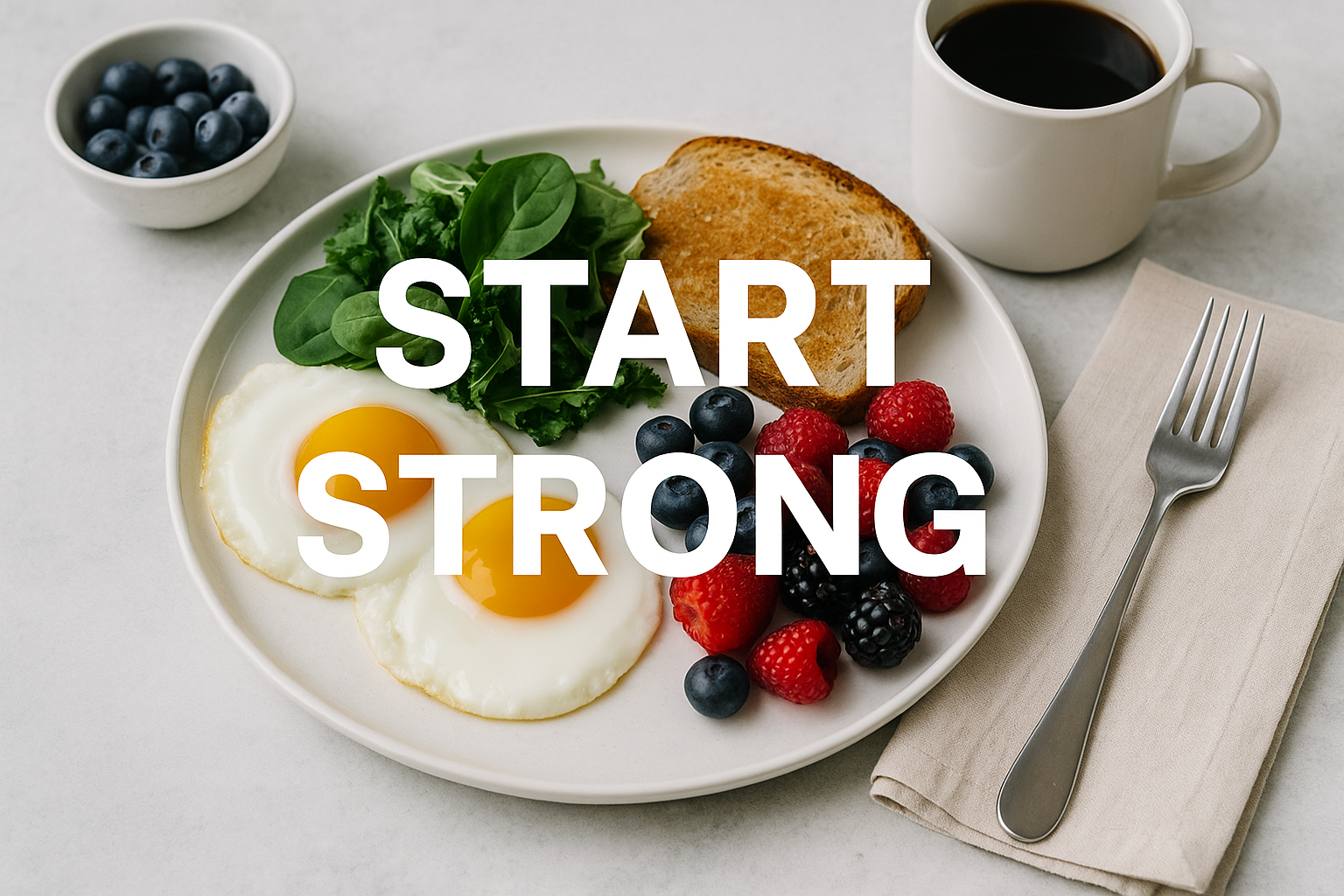
Breakfast: The Why and The What
Breakfast is one of the most powerful tools for stable energy, improved performance, and better appetite regulation. Learn why it matters — and how to build a breakfast that actually fuels your day.
Whether you’re an executive juggling meetings or an athlete in training, your morning fuel sets the tone for the entire day.
Breakfast isn’t just a meal — it’s a performance tool.
Used well, it gives you steady energy, better focus, and stronger training sessions.
For many of my clients, breakfast can be one of the most challenging habits to change and then it can also be one of those most impactful changes they can make. There are lots of explanations I've heard (and used myself) for not eating breakfast but the advantages of breakfast far outweigh any of the other options by a large margin. What I try to walk through with my clients are the benefits of breakfast, and what can we do to gradually work towards a better solution. For those with looking to perform either physically or mentally, or those looking to better manage their weight in a sustainable way, some sort of breakfast is one of the best starting points.
Let's start with the benefits:
Eating breakfast works to stabilize your blood sugar after a natural period of fasting (overnight sleep) which is one of the leading causes not only of fatigue during the day but also cravings.
An early meal helps regulate and promote the normal hormone cycles of cortisol such that it can start to decrease during the day as well as helping to regulate the appetite hormones.
From a practical standpoint, eating an early meal helps with getting not only the proper macro nutrients (primarily protein) but also getting in enough other nutrients from things like fruits and vegetables.
So what should a breakfast look like? Just like every other meal, there should be a good mix of protein, complex carbs, healthy fats, and some color typically coming from fruits or vegetables. Three options that can not only knock out those requirements but are either quick to throw together or can be batch made ahead of time:
A combination of eggs, meat (or tofu), potatoes (or toast), and veggies. This can be done as a scramble, omelette, casserole, or a burrito and each of those present other options for additional flavors and prep times.
An oat mixture is a great bulk option, I use a version of overnight oats that tastes like a chocolate chip cookie and is not only one of my breakfast staples, but my pre-race meal as well.
A shake is another great quick and portable option that allows for the combination of a lot of things, with the taste of the veggies masked by the other items.
If you're starting from not eating anything, maybe think about adding something into your tea or coffee increase calories. Things like protein powder, collagen protein, creatine, and MCT oil are all good options that dissolve well and can either be flavorless or give a nice twist to your beverage of choice.
Each of these options has its advantages and which one is best will vary by the individual, circumstances, and you may even want to rotate through to provide a level of variety. As I've said numerous times, start with understanding of where you currently are and look to make small shifts to make consistent progress.
If you want better energy, stronger workouts, and fewer cravings — don’t skip the foundation.
Build a breakfast that supports your goals and sets the tone for your entire day.
Start strong. Fuel early. Perform better.
🔗 Subscribe to The Wellness Forge for more practical strategies to fuel your body and optimize performance.
Why You’re Tired, Craving Sugar, and Plateauing: Underfueling Explained
Underfueling is one of the most common — and most overlooked — reasons people feel tired, unfocused, and stuck. Learn how to identify it and build simple fueling habits that support energy, strength, and performance.
If you’re tired, unfocused, craving sugar by mid-afternoon, or feeling flat during workouts, there’s a good chance your problem isn’t discipline — it’s underfueling.
High performers burn more energy than they think. And most of them aren’t eating nearly enough to support the pace they’re trying to maintain.
One of the sneakiest ways I see many of my clients run into roadblocks with their progress boils down to a matter of underfueling, which can eating too little, fueling incorrectly, or not balancing fuel for the demands put on the body - or for a combination of all three. In many cases these aren't conscious decisions being made, or they're decisions that seem correct but lack context, and as such correcting them can be challenging. It takes a little more digging to not only identify the issue but also recognize how simple the solution might be.
Underfueling is one of those concepts that sounds simple and yet in practice is complicated enough that it goes unnoticed. The main idea is that you're not providing enough quality fuel for you body to perform the tasks that you're asking it to. The body is also very good at adapting and compensating for these deficiencies, but can only do so for a period of time before it becomes overwhelmed. A couple of the main culprits are caffeine and fiber as while they are beneficial in many ways, they also will dull or mask hunger queues such that skipping meals entirely or not fueling enough becomes not only easy but can become consistent. The first part of the challenge is underestimating the caloric needs of the body, some like basic daily needs (Basal Metabolic Rate or BMR) and training load are relatively straightforward to get a good estimate as there are calculators and wearables to help. However, these can also be wildly inaccurate, especially when estimating caloric needs based on exercise. In addition, other factors such as poor sleep, mental stress load, travel, and injuries will all skew your fueling needs and not always in magnitudes or directions as you might expect. Based on all these factors, it can be hard to get a handle on the caloric needs and even being off a couple hundred calories a day can create a sizeable enough gap to cause challenges.
So what does underfueling look like, or what are some of the symptoms you might notice? First off, physically you may notice:
Low energy or consistent fatigue
Inability to concentrate or brain fog
Frequent illness
Poor sleep
The symptoms don't stop there, you will also notice struggles mentally as well:
Irritability or mood swings
Decreased libido
CRAVINGS
night time snacking
And then to further compound all of this, you'll notice some performance and metrics dip as well:
Workouts feeling harder than normal
Heart rate variability (HRV) dips
Higher than normal resting heart rate
With all of this, it may seem daunting to overcome this challenge - however, the first step is quite simple, remember simple doesn't always mean easy. I've mentioned this before, and will continue to suggest it - but awareness is your greatest asset for this kind of situation. And that comes down to:
Understanding your body's needs including not just calories but the allocation of those calories between carbohydrates, protein, and fat.
A good handle on your intake and timing of your fueling including the macro breakdown.
A honest self assessment of how you feel on a daily basis such that you can better understand where you may be lacking.
Another option you could consider, if you feel like you're experiencing a number of the symptoms, would be to increase your caloric intake by 200 to 500 calories, paying attention to how you feel. This could come from the addition of a snack, or if there's a particular meal (like breakfast) you typically skip, add that back in. Do this for a week or so, and see if you notice any differences. This is also a time when using a scale can be helpful to notice if you're gaining any weight, but with the increases I'm suggesting it would probably take a couple of weeks before you noticed anything significant considering the normal day to day weight fluctuations. Continue to balance how you feel with the numbers you're seeing on the scale and look to continue to increase the calories without seeing a consistent weight increase. I typically recommend increasing for a couple of weeks, then taking a week to hold steady to help accurately assess the dynamics.
Travel, busy seasons, and packed schedules make underfueling even more common. But they don’t have to derail your performance.
Learn how to fuel consistently no matter where life takes you — and build the foundation that drives your energy all year long.
🔗 Subscribe to The Wellness Forge for more tools to support strength, energy, and recovery.