From Reflection to Direction: My New Year Process
Instead of rigid resolutions, this is the process I use to set intentional, sustainable goals across personal health, training, and business — built around energy, consistency, and long-term progress.
A strong year isn’t forged by one bold resolution — it’s shaped by consistent intention.
Before setting goals, I step back, assess the last year, and choose how I want to show up in the next one.
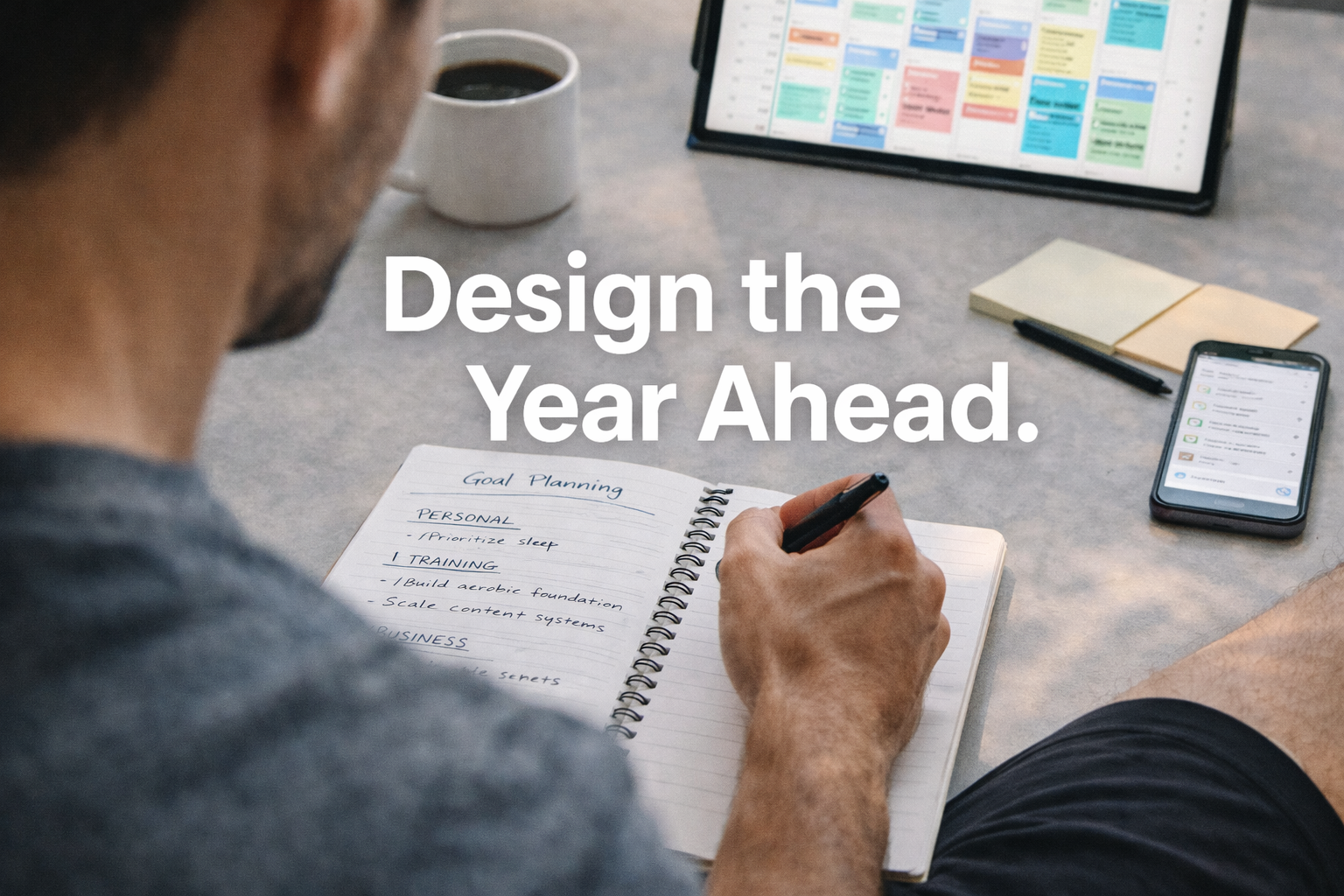
One of the most common traditions this time of year is some sort of resolution, change, plan, or something to do differently to start off year. Over the past few years, I have switched up towards more of a process that I also implement around any other significant event such as a race or work event. I use this as a time for reflection, looking at the things I did well in the previous year, some areas that didn't go so well and lessons learned from them, and finally a look forward to next year with a combination of incremental process goals, things I want to improve on, and then a "big scary goal" or two. I'm sharing this here for two reasons, one to walk through what I believe is a more successful concept, and two to provide myself with a level of accountability.
Looking back at last year, I didn't have any of those stand-out wins or massive highs but it definitely was a year of consistency. I feel like this consistency applies to the business side most with regards to my clients, my level of service to them, and also with my consistently looking to learn and continue to improve. I also feel like I managed to gradually work on my sleep, the most challenging part getting to bed earlier. There's still lots of room to improve but the increased awareness and small shift should help lead into this year for even more improvement. My training didn't go quite as planned as I started the year recovering from a torn labrum, and then later in the year picked up another hip injury. But I do feel like both of these injuries brought me greater awareness of my body, especially while running as I needed to make various tweaks based on my physical therapy. This awareness also helped me more smartly adhere to my training plan and also know when I needed to make shifts in the plan. The last area I wanted to call out was not only a better handle on my schedule, but also doing a better job of protecting the parts of my schedule that I needed (or wanted) to hold. While this may sound trivial, I have a habit of rearranging my schedule to fit others and while that has certain obvious advantages it does create other challenges for me and my mental outlook. Shifting just a little bit along that scale towards protecting my schedule helps me strike a better balance in my life.
As for areas that didn't go as well, I don't go into this process trying to find every issue or mistake but instead look at one or two significant aspects that were the most impactful on the year. Probably the most obvious one that jumps out to me was my consistency with strength training, which I realize might sound odd coming from someone who knows how important it is. I will firmly admit that I am one of my toughest clients, and spoiler this will be an item coming up that I plan to work on. I also recognize that I probably got a little too comfortable with my client base and didn't push as hard I as I could to grow that, or improve what I'm doing for my existing clients. This is also one of those areas where I am my worst critic as well, but I do feel like there's room for improvement there. Finally the other aspect I recognize got a bit out of control was my ability to check out for longer than I probably should. Yes there are times when I need to zone out to relax and recharge, but far too often a 30 minute mental break turned into multiple hours. This one will probably be tough to break, but I feel like one of the tweaks I made towards the end of the year will help with this and more awareness will also help reign this habit in a bit.
So what does my plan for 2026 look like? As part of this process, I look to identify a couple of processes that I want to improve, a couple of specific targets (usually with a couple levels to them), and then a "scary" goal or two. I mentioned it above, but top of the list that I need to work on is my strength training consistency and I've already addressed many of the logistical challenges with a routine - I simply need to do it. My plan to improve my consistency starts with actually scheduling the slot on my calendar, as only having it on my training plan doesn't seem to work. I will also make the mental shift that these workouts are my most important ones of the week, and need to happen before I "reward" myself with my long run. I also want to work on keeping my schedule more in control, satisfying my clients but also leaving room for myself. I've made strides this year, but feel like there's a gap between the day to day scheduling and longer term stuff. I'm recently starting using a tool called Notion (just the free version at this time) to help better organize and visualize my longer term projects and that coupled with my existing calendar should help improve this situation. I do have some specific business goals with regards to numbers I want to hit and the success of a new program I will be launching (👀SOON! 👀) but the scheduling improvement I mentioned will also have a significant positive impact on my business. I'm taking a break this year from setting a specific financial target but I will gauge this success based on my comfort level with additional expenditures, primarily vacation and travel. I know that may sound vague but it has a very specific and real meaning to me, which is the important part. As for my "scary" goals, technically I have two of them but they're related and based on how the year starts off with my injury may collapse to one. But I have some relatively lofty goals that I want to hit with regards to my marathon time, and full distance Ironman Triathlon. But before I can really narrow in on these, I need to see how the next couple weeks of training goes as that will drive whether I can tackle both of them, or if I need to focus on just one.
The New Year isn’t about doing everything — it’s about doing the right things with intention.
When your personal health, training, and business goals align, progress becomes sustainable and meaningful.
This year, to summarize my outlook, I’m focused on clarity, consistency, and energy — and helping others do the same.
🔗 Subscribe to The Wellness Forge for weekly insights on building strength, resilience, and sustainable performance.

You Don’t Need Another Fitness Plan — You Need a Coach
Why should you consider a health coach, and what to look for in a coach you hire.
I'm sure you've been under a barrage of emails, ads, reels, threads, and videos all telling you what is lacking in your diet, what you're eating too much of, what one time hack will change your life, how to get that elusive 8 hours of sleep a night, or how this exercise plan is guaranteed to drop 10 pounds in a week. All of that information has value, but it way is too much to handle and the majority of it doesn't apply to your exact lifestyle and situation.
That is why a Health Coach could be the solution to the goal that has been eluding you for longer than you want to admit. A coach will act as a guide, empowering you to change your life not only in an effective way, but in a sustainable way such that it becomes your new normal. Probably the most important benefit is filtering the noise down to what matters and a sounding board for those items that sound interesting.
A few other way a health coach will help you hit new levels:
The accountability of someone else (outside of your family and friends) who can not only keep track of your wins, but also help you gain insight from your struggles.
Your coach will tailor everything based on your unique situation to find not only the productive steps, but the steps you are willing AND able to take.
The ability to combine raw data (calories, heart rate metrics, food intake, etc) with logistical factors (travel, commute, working hours, etc) as well as all the emotional aspects (relationships, passions, goals, etc.) to form a more complete and flexible strategy for success.
A good health coach will look at multiple aspects of your life, and not just focus on a specific thing. How do you need to modify your fueling based on your strength training, how should both of those be shifted during higher stress loads at work or while travelling, or how (and when) to double down on a sleep routine to maximize performance?
Because of the above (and others) working with a health coach will result in consistent success and not the massive fluctuations so many struggle with. Sure there will be ups and downs, but honest communication with your coach will level those out such that they're smaller in magnitude and less frequent.
If this all sounds like something you might be missing, the next question is what to look for in a health coach?
By far the most important aspect is a personality that you feel comfortable with and meshes well with your own. Coaching is only as successful as the communication between the coach and the client. If you don't feel comfortable sharing your struggles, that's not the right coach for you.
That coach needs to meet you where you are:
Technology for communication
in person
some form of video conference
phone calls
text
Meeting frequency and availability
Expectations on you
logging or tracking
communication
commitment
Price
You also will want to understand the experience and credentials of the coach, and you'll want a mix of both. I'm sure you know the booksmart but not street savy people, and the opposite as well - you'll want something in the middle. Someone who understands the details, but has enough experience to be able to tailor it for you specifically.
At the end of the day, lasting change doesn’t come from hacks or quick fixes — it comes from having the right structure, support, and accountability. If you’re ready to build momentum and start feeling your best, working with a coach might be the step that makes it stick.
If you like what I have to say, follow here, my email newsletter, or reach out and we can chat in more detail.