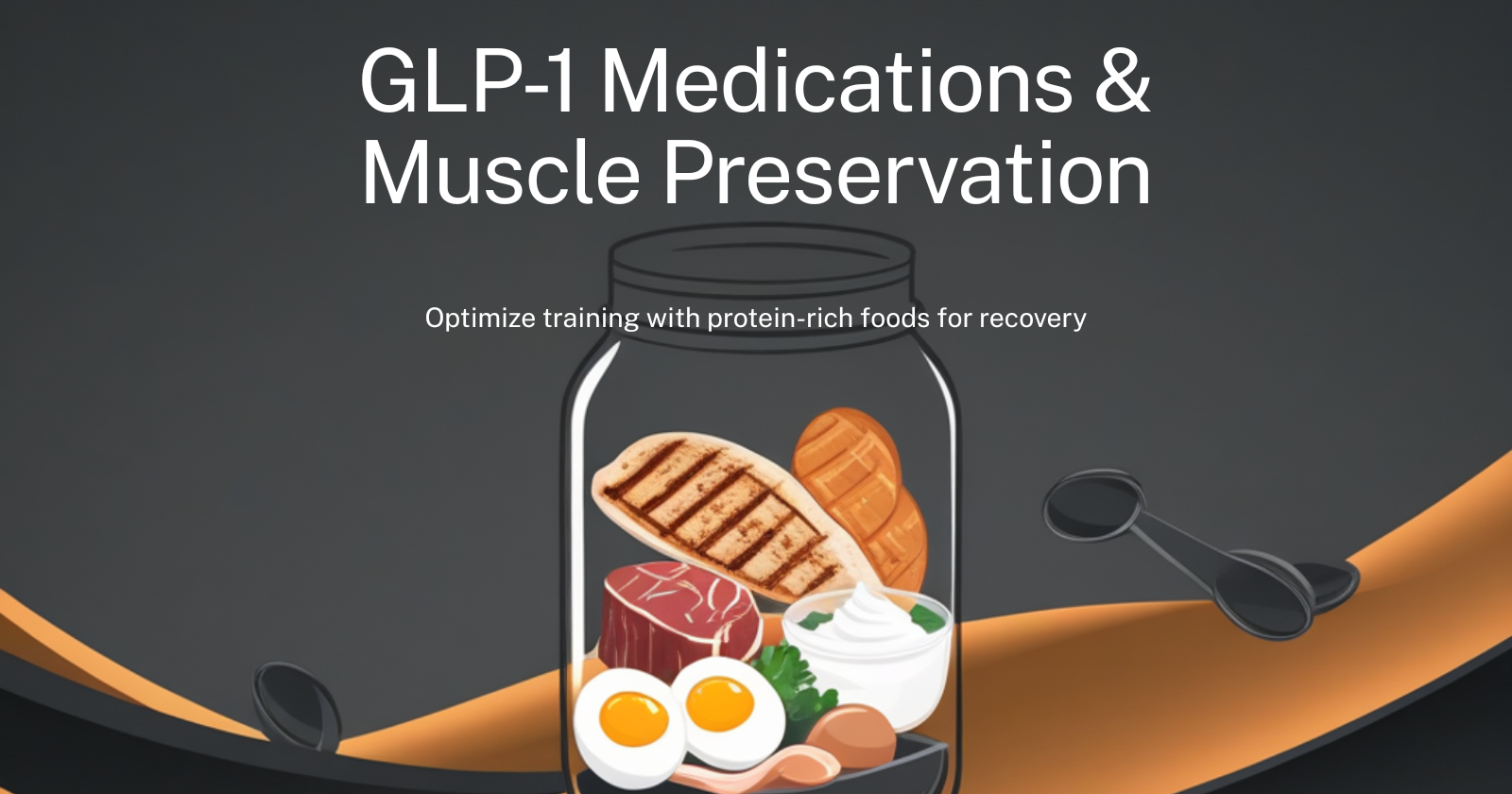
The GLP-1 Conversation Nobody's Having With Individuals Who Train
Most GLP-1 conversations stop at weight loss. For men over 40 who train, that's the wrong finish line — appetite suppression has downstream effects on protein intake and recovery that most prescribers aren't tracking.
The GLP-1 medication conversation has been dominated by the weight loss frame.
If you are over 40 who trains consistently, that frame is incomplete.
Here is what matters for your specific situation.
GLP-1 receptor agonists significantly reduce appetite. That is the mechanism. In the context of a structured training protocol, reduced appetite has downstream effects that most prescribers are not monitoring: lower protein intake, reduced glycogen availability, compromised recovery capacity.
Training 4 days per week on a GLP-1 while not actively managing protein targets is an almost guaranteed way to lose significant muscle alongside fat.
This doesn’t appear until his performance drops, his body composition looks wrong despite the weight loss, or his labs show what is happening.
The solution is not to avoid the medication. The solution is to build the nutritional protocol that makes it work the way it is capable of working.
Protein-first nutrition framework
Resistance training maintained or increased
Recovery protocol supporting the reduced caloric environment
Periodic clinical assessment to verify lean mass is being preserved.
I have walked several clients through this. The outcomes are different when the framework is built correctly.
If you are on a GLP-1 or considering one and you are training, you need a nutrition protocol designed around the medication. Not a generic plan. Not the macros you used before you started.
Comment AUDIT below. I built a free tool to start this conversation.
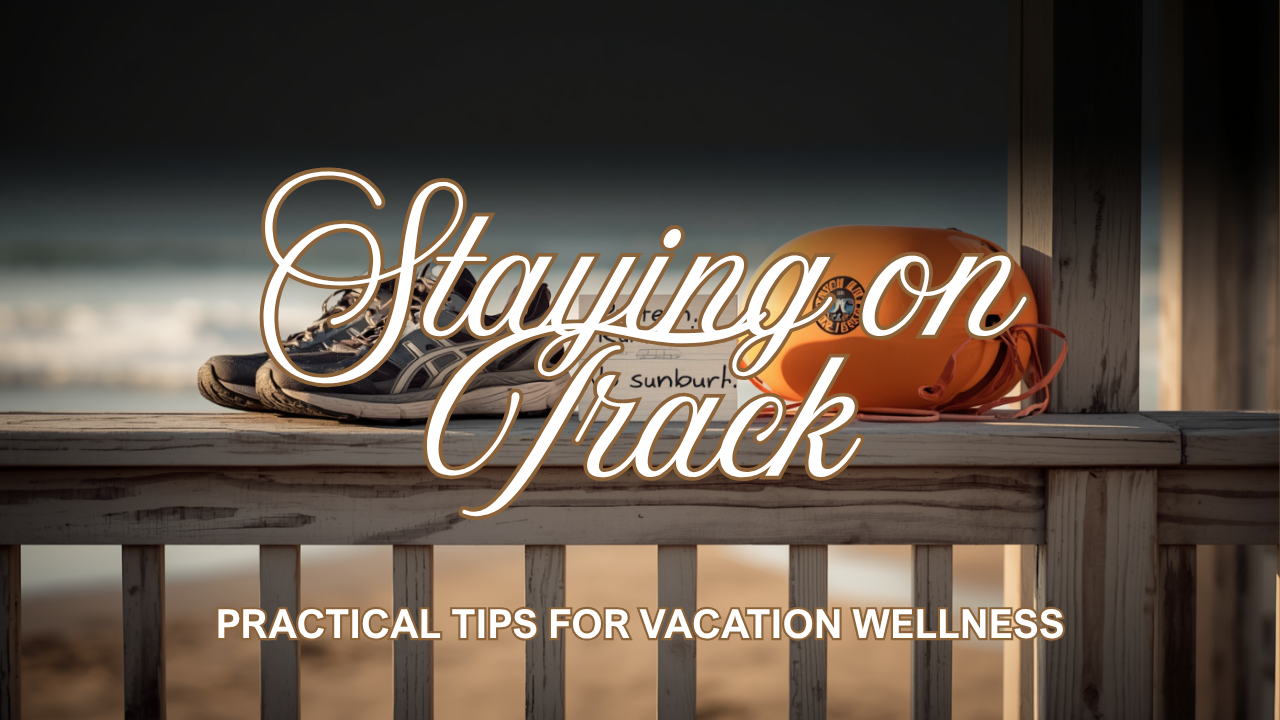
How I Stayed on Track Without Following My Normal Routine
I recently had the opportunity to put my Summer Baseline framework to the test during a trip. The routine wasn't perfect, but that wasn't the goal. Here's what actually helped me stay consistent—and why having a travel version of your plan makes all the difference.
I've been writing this past month about summer challenges and tips for travel, so it seemed natural for me to recap my most recent summer vacation and talk through how I planned things out, what worked, and what didn't.
A little context for the trip first, I was going to be gone for 10 days, with my family, and planning for a laid back, relaxing trip hoping to take the time to just enjoy the company. But I still wanted to continue the momentum I had built up, without having to stress about all the little things.
My main anchor points for the trip were breakfast, my running, swimming, and probably the most important, not getting sunburnt.
I pre-made the dry ingredients for my overnight oats knowing that we were grocery shopping and I could get milk and yogurt to finish it off for my big training days. And then milk, bagels, and eggs would work on the lighter days for some good variety.
I brought my running gear with me and looked ahead of time to get a feel for the area, map out some routes, and understand what the options were. I also knew that schedule wise, I would be up, out, back, and cleaned up before most of the group was even up such that I wouldn't miss much of the family time.
Being out in the ocean, I wanted to be cautious so I brought my buoyancy shorts as well as my inflatable buoy for visibility and extra safety. I wasn't intending to get in anything especially long, more to keep up my swim consistency and get back into some open water.
As for the sun, I brought a couple of rash-guard shirts to protect, sun-screen, hats, and then the house had great patios such that I could be outside and enjoy everything, without being in the sun.
All of these anchors worked perfectly, I managed to feel good and strong on my runs, swam twice, and didn't get burnt one bit! I then was able to pretty much eat and enjoy whatever we were doing for lunch and dinners, and add in the occasional treats. My training volume took a bit of a hit as I wasn't biking, but that just didn't make enough sense for me to try and worry about a solution.
Now of course, no trip is perfect so there were a couple of things I could have done better, but honestly they were more "nice to haves" so I wasn't overly worried about them.
I brought my suspension trainer with me, but there wasn't a good place to anchor it. One week without strength training isn't going to make a huge difference, but it would have given me a fun opportunity to show some different options for my family.
I did a pretty good job making sure I was properly hydrated, but I'm pretty confident I was low on total calories, or at least not as many as I typically have at home. Lunch was the main "challenge" meal of the day although I probably didn't do as bad as I think as there were many days that I had multiple snacks - which probably equaled one lunch.
Probably the biggest aspect I "struggled" with was sleep as my mornings were pretty set but I didn't get to bed as early as I should have. Again, this was a trade-off I was happy to make to spend time with my family.
The takeaway is not that I did everything right. It is that I decided in advance what mattered and let go of the rest without guilt.
Biking was not realistic. The suspension trainer did not have a home. Sleep was a trade-off I made with my eyes open. None of that felt like failure because none of it was unplanned. It was just the trip being the trip.
That is the whole point of the anchor system. You are not trying to replicate your home routine in a different location. You are trying to protect the things that matter most and give yourself permission to release the rest.
If you have been following this series and want help figuring out which anchors actually matter for your summer — whether that is training, nutrition, sleep, or travel — that is exactly the kind of planning I do with coaching clients. Let's map it out before your next trip.

The Sleep Anchor: The Most Underrated Part of Your Summer Routine
Summer disrupts sleep more than most people realize, and once sleep slips, training, cravings, mood, recovery, and decision-making all get harder.
Every summer, the same pattern plays out.
Training slips. Nutrition gets inconsistent. Energy tanks. Cravings spike. Motivation disappears. And people spend the rest of the season trying to figure out what went wrong with their discipline.
Most of the time, it was not discipline. It was sleep.
Sleep is the first domino — and it is almost always the last one people look at. I have saved it for last as it will be the MOST impactful thing you can adjust, but also for most the most challenging. You can have your protein anchors dialed in, your travel plan ready, your 30-minute training templates built. But if sleep is quietly unraveling in the background, everything else gets harder than it needs to be.
Summer is uniquely good at unraveling it.
What Summer Does to Your Sleep
It starts subtly. The days are longer, so the evenings stretch. A backyard cookout runs until 10. A few drinks on a Tuesday because it feels like the weekend. The kids are out of school so the morning schedule loosens. You travel across time zones twice in six weeks. The bedroom is warmer than usual. You stay up an hour later on Friday and Saturday and then try to drag yourself back to normal on Monday.
None of these things feel like a big deal individually. But together they add up to a sleep pattern that is inconsistent, shorter than it should be, and lower quality than your body actually needs.
The result is not just feeling tired. The downstream effects are more significant than most people realize.
What Happens When Sleep Slips
Poor sleep does not just make you groggy. It systematically degrades almost every other health behavior you are trying to maintain.
Cravings increase — specifically for high-calorie, low-nutrient foods. Sleep deprivation elevates ghrelin (the hunger hormone) and suppresses leptin (the satiety hormone), which means you are hungrier, less satisfied, and reaching for the wrong things more often.
Training quality drops. Output is lower. Motivation to train at all is lower. The session that would have felt manageable on a good night's sleep feels like a grind, and the temptation to skip it wins more often.
Recovery takes longer. Muscle repair, hormonal restoration, and nervous system recovery all happen predominantly during sleep. Cut the sleep short and you are cutting the recovery short — which means the training you are doing is not producing the adaptation it should.
Decision quality suffers across the board. Prefrontal cortex function — the part of your brain responsible for impulse control, planning, and long-term thinking — is one of the first things to degrade with sleep loss. Every choice you make about food, training, and routine gets a little harder and a little worse.
Mood and irritability follow. The version of you that shows up after a week of short nights is not the version that makes good calls consistently.
The compounding effect is significant. And it usually gets blamed on everything except the actual cause.
The Sleep Anchor
Just like nutrition and training, sleep does not need to be perfect during summer. It needs anchors.
A sleep anchor is a consistent behavior that stabilizes your sleep pattern even when the surrounding schedule is variable. Here are the ones worth building in.
Consistent wake time. This is the single highest-leverage sleep anchor available, and it is the one most people overlook because they focus on bedtime instead. Your circadian rhythm is anchored primarily to when you wake up, not when you fall asleep. If you protect your wake time — even after a late night, even on weekends — your body has a stable reference point that keeps the whole system from drifting. Bedtime will regulate itself over time if the wake time is consistent.
Caffeine cutoff. Caffeine has a half-life of roughly five to six hours. That afternoon coffee at 3 p.m. still has half its stimulant effect at 8 or 9 p.m. Pick a cutoff time — noon or 1 p.m. for most people — and hold it. This is a small habit change with a disproportionate impact on sleep quality.
Alcohol boundary. Alcohol is uniquely disruptive to sleep architecture. It may help you fall asleep faster, but it suppresses REM sleep and causes fragmented rest in the second half of the night — which is when a lot of the most important recovery happens. This does not mean abstaining. It means being intentional. Finishing drinks at least two to three hours before bed and being honest about how frequency during the week is affecting how you feel.
A 30-minute wind-down. Your nervous system does not switch off on command. A short wind-down routine — something that signals the transition from the day to sleep — meaningfully improves both the time it takes to fall asleep and the quality of sleep once you do. It does not need to be elaborate. Dimming lights, stepping away from screens, reading, stretching, a short walk. The content matters less than the consistency.
A cool room. Core body temperature needs to drop slightly to initiate and maintain sleep. A warm summer bedroom works against that process. Blackout curtains, a fan, keeping the thermostat lower than feels necessary — these are not luxuries. They are functional sleep tools.
Morning sunlight. Getting outside within 30 to 60 minutes of waking — even for ten minutes — is one of the most effective ways to anchor your circadian rhythm. Morning light exposure sets your internal clock, improves alertness during the day, and makes it easier to wind down at night. It is free, it takes almost no time, and most people are not doing it.
The Performance Connection
Better sleep is not just about feeling less tired. It is a direct performance input.
When sleep is consistent, energy is more stable and predictable throughout the day. Appetite regulation improves — the cravings that derail nutrition during busy stretches are significantly reduced. Training output goes up. Recovery between sessions improves. The mental clarity required to make good decisions about food, movement, and schedule comes back online.
Everything in this summer series — the training anchors, the nutrition structure, the travel plan, the weekend routine — works better when sleep is intact underneath it. It is not one piece of the puzzle. It is the foundation the rest of the puzzle sits on.
Where to Start
Pick one anchor from the list above. Not all of them — one.
If your schedule is inconsistent, start with wake time. If you are a late-caffeine drinker, start there. If alcohol is disrupting your sleep more than you want to admit, that is your anchor.
Build it for two weeks before adding anything else. Anchors compound. One consistent sleep habit makes the next one easier to implement.
Summer does not have to be the season that costs you four months of progress. But sleep is the piece most people leave unaddressed until everything else has already started to slip.
Protect it first.
This is the final post in the summer consistency series — covering training, nutrition, travel, weekends, and now sleep. If any part of this series resonated with you and you want help building a summer plan that actually holds up in real life, that is exactly what IronLane Coaching is designed for. Let's build it together.

The best travel plan is not your full home routine. It is the version that works on the road and keeps the important pieces alive.
You land Monday morning. By Wednesday you have skipped three workouts, eaten airport food twice, slept poorly two nights in a row, and you are telling yourself you will reset when you get home.
Sound familiar?
Travel is the number one routine killer I hear about from clients — and honestly, it is a legitimate challenge. Not an excuse. A real one. But the solution most people try — white-knuckling it through the trip or just giving up entirely — misses the actual problem.
The problem is not that you traveled. It is that you tried to bring your home routine with you. And that never works.
What Travel Actually Does to Your Body
Before we talk solutions, let's be honest about what you are dealing with. Travel does not just disrupt your schedule. It disrupts your physiology.
Sleep takes a hit from time zone shifts, unfamiliar beds, and late nights. Hydration tanks on flights and long drives. Meal timing goes out the window when you are at the mercy of someone else's agenda. Training access is unpredictable. Your daily step count drops when you are sitting in airports, conference rooms, and cars. And recovery — the thing that makes all of your training and nutrition actually work — takes the biggest hit of all.
That is a real accumulation of stress on your body. Pretending it is not there does not help. But catastrophizing it does not either.
The Mindset Shift That Actually Works
Stop trying to replicate your home routine on the road. That is the trap.
Your home routine was built for your home environment — your gym, your kitchen, your sleep schedule, your commute. None of that travels with you. When you try to force it anyway, you either fail and feel like you blew it, or you exhaust yourself trying to hold something together that was never designed for where you are.
The better move is to build a travel version of your routine before you leave. A simplified, portable, realistic plan that fits the actual conditions of travel — not the ideal conditions of your normal life.
This is not lowering your standards. It is matching your plan to your environment. That is just good programming.
The Travel Routine Checklist
These are the things worth deciding before you get on the plane — not improvising at 6 a.m. in a hotel room.
Pack protein options. Bars, single-serve packets, jerky, individual Greek yogurts if you have a cooler. The goal is to have something you control in a bag, so airport food and minibar snacks are not your only options when hunger hits at a bad time.
Choose your hotel with intention when possible. Walkability and gym access are worth factoring in if you have any control over where you stay. A hotel with a decent gym or located near a running path removes a barrier that stops a lot of people before they even start.
Schedule movement before the day gets away. Travel days have a way of filling every available hour. If movement is not on the calendar with a specific time, it usually does not happen. Even 20 minutes in the morning before meetings start is enough to change how you feel for the rest of the day.
Hydrate aggressively on travel days. Cabin pressure and recycled air dehydrate you faster than most people realize. Target at least 16 ounces of water before your flight, and match every alcoholic or caffeinated drink with an equal amount of water. This alone has a significant impact on how you feel when you land.
Walk after meals. This is one of the highest-leverage habits you can build on the road. It helps digestion, blunts blood sugar spikes, adds steps without requiring a workout, and gives you a few minutes away from the table or the screen. Five to ten minutes is enough.
Have a first day back plan. This is the one most people skip and one of the most important. Decide before you leave what the first 24 hours home looks like — what you will eat, whether you will train, how you will prioritize sleep. Without a re-entry plan, the travel hangover extends for days longer than it needs to.
Training Options That Actually Work on the Road
The goal on travel days is not to crush a PR. It is to maintain the habit and keep the engine running. Here is a realistic menu of options depending on what you have access to.
Hotel gym lift. Squat or hinge, push, pull, core carry. Three rounds, 30 minutes. Done. (If you missed last week's post on the 30-minute template, that one is worth going back to.)
30-minute run or walk. Get outside if the city allows it. This doubles as mental reset time, which is often what you need most after a long travel day or a packed conference schedule.
Band workout in your room. A single resistance band covers rows, pulls, hip work, and shoulder stability. Pack one. They weigh nothing and turn any hotel room into a training space.
Mobility reset. On the days when energy is genuinely low and sleep was rough, a 20-minute mobility session is not giving up — it is smart management. Hips, thoracic spine, ankles. You will feel better for the rest of the day and protect your training quality when you get home.
Airport walking. Stop circling the gate and start moving. A 45-minute layover with intentional walking is real movement. It counts.
Nutrition on the Road
You are not going to eat perfectly on a work trip or a family vacation. That is not the goal. The goal is to keep a few anchors in place so the wheels do not come off entirely.
Protein-first ordering. At every restaurant, start with the protein and build from there. Steak, chicken, fish, eggs — whatever is on the menu. This keeps your intake from defaulting to carbohydrate-heavy travel meals that leave you hungry two hours later.
Make a grocery stop. If you are somewhere for more than two days, a 15-minute stop at a grocery store pays dividends all week. Greek yogurt, fruit, protein bars, nuts, deli meat. Having real food in the room changes how the week goes.
Control breakfast. Dinner is often out of your hands — a work dinner, a restaurant with the family, a catered event. Breakfast usually is not. Own that meal. High protein, real food, intentional. Let the rest of the day have some flexibility because you started with a solid foundation.
Set a hydration target and track it. On travel days especially, water does not happen unless you make it happen. Pick a number — 80 to 100 ounces is a reasonable floor — and work toward it deliberately.
The Bigger Picture
The people who stay consistent through travel are not the ones with the most willpower. They are the ones with the simplest, most portable version of their routine — built in advance and practiced enough that it does not require a lot of decision-making in the moment.
That is what coaching actually helps with. Not just building the training plan and the nutrition structure for your normal life, but building the compressed, travel-ready version that keeps you from losing two weeks of progress every time you get on a plane.
Your home routine is your full version. Your travel routine is the version that keeps everything intact until you get back to it.
Build both before you need either one.
One Action Before Your Next Trip
Before you pack your bag, take five minutes to write down your travel version of your routine. What will you eat for breakfast? What does your 30-minute training option look like? When will you move? What will you have in your bag for protein?
That five minutes of planning is the difference between a trip that sets you back two weeks and one you walk away from feeling like you held the line.
Where are you traveling this summer — and what is the one part of your routine that tends to fall apart first when you are on the road? Drop it in the comments. I read every one.

Summer Eating Needs Anchors, Not Perfection
Summer eating often falls apart when people swing between rigid control and no structure at all. A few clear nutrition anchors can make the season much easier to navigate.
Let me paint the picture.
Cookout Friday. Birthday dinner Saturday. Road trip Sunday. Breakfast was a protein bar in the car. Lunch happened at your desk around 2 p.m. Dinner is whatever is fast because the kids have practice.
This is not a discipline failure. This is just summer.
And this is exactly where most people's nutrition goes one of two directions — neither of which actually works.
The Two Traps
The first is trying to be perfect. Locked-in meal plan, macros tracked, every deviation a setback. You white-knuckle your way through the cookout and feel vaguely miserable while everyone else is just living their life. Then one vacation weekend unravels the whole thing, because the plan had no flexibility built in.
The second is abandoning structure entirely. Every social event becomes a free-for-all. Breakfast gets skipped. Hydration is an afterthought. You tell yourself you will get back on track in September — and by August you are not feeling great, your training is suffering, and the gap is wider than when summer started.
Most people cycle between these two every single year. There is a better approach, and it does not require eating perfectly.
Nutrition Anchors
An anchor is not a rule. Rules are rigid. Rules break.
An anchor is a stable point you return to regardless of what is happening around it. For nutrition, anchors are the two or three habits that, when kept, prevent everything else from spiraling. They do not require a perfect week. They just require consistency on a small number of high-leverage behaviors.
Here are the ones worth keeping this summer.
Protein at your first meal. Thirty to forty grams early sets the tone for the day, reduces hunger, and supports muscle maintenance. Eggs, Greek yogurt, cottage cheese, a shake alongside something real. Front-load your intake so you are not playing catch-up by dinner.
A daily protein target. Pick a number — somewhere around 0.7 to 1 gram per pound of bodyweight is a reasonable range — and take a rough aim at it. You do not need to hit it perfectly. But having a target means you are making intentional choices at restaurants and on travel days instead of just winging it.
A hydration floor. Dehydration is one of the most common drivers of low energy, poor mood, and reduced training performance in summer — and it is completely fixable. A glass of water before coffee, water with every meal, something before you add alcohol at social events. Simple and non-negotiable.
Produce once or twice a day. Not a full vegetable overhaul. Just a commitment to get it on the plate. A handful of berries at breakfast. A salad at lunch. Vegetables on the grill. This handles fiber, micronutrients, and satiety — and it quietly reinforces the identity of someone who is eating well, which matters more than people give it credit for.
Plan alcohol intentionally. Pretending it does not exist is not a strategy. Decide in advance which events you will drink at, roughly how many, and what you will do around them. Planned drinking fits into a healthy summer. Reactive, untracked drinking is usually where things go sideways.
Do not show up starving. A small snack before a cookout or restaurant changes everything. When you arrive genuinely hungry, appetite drives the next twenty minutes — not intention. A piece of fruit, some nuts, a protein bar. That is it.
The Anchor Meal
Beyond the daily habits, there is one structural concept worth adding: the anchor meal.
One meal per day — usually breakfast or lunch — that you keep consistent no matter what else is happening. When dinner is a cookout or a vacation restaurant, the anchor meal has already done its job. Protein is in. Produce is in. Hydration is managed. The variable meal at the end of the day has a lot less power to derail you.
One consistent meal per day is enough to prevent a chaotic summer from becoming a chaotic summer of eating. It also reduces decision fatigue significantly — which, as I have written about in the training context, is one of the most underrated parts of staying consistent when life is busy.
Why This Goes Beyond the Scale
Consistent protein and hydration means more stable energy. Regular produce means better mood and gut function. Showing up to training sessions actually fueled means better performance and recovery. Not swinging between restriction and chaos means a healthier long-term relationship with food.
These things are connected. Nutrition anchors are not just a food strategy. They are a performance and wellbeing strategy that happens to involve food.
One side note worth naming: some of you are working with GLP-1 medications or hormone protocols as part of your health picture. Those tools can be genuinely helpful. But they produce the most durable results when lifestyle structure is present underneath them. Reduced appetite does not automatically mean better protein intake. Optimized hormones do not compensate for chronic under-fueling. The anchors matter regardless of what else is in the stack.
The Shift
You do not need a rigid plan you will abandon by the Fourth of July. You do not need to track every meal or avoid every social event.
You need a small number of anchors that are clear, manageable, and consistent enough to keep the overall picture stable. Pick two or three from above — the ones that feel most natural to maintain even during your busiest weeks — and start there before the chaos hits.
That is not a compromise. That is what sustainable nutrition actually looks like.
What is the easiest nutrition anchor for you to keep this summer — even during the most chaotic weeks? That is where you start.

Find the Weak Points Before Summer Does
Summer often exposes the routines that were already fragile. A quick self-audit can help you identify what is most likely to break first.
Before summer chaos hits, do not ask whether you are motivated.
Ask where your routine is fragile.
Because that is usually where things start to slide.
One of the best ways to prepare for any upcoming change is to do an audit of where you currently stand and then make adjustments from there. And preparing for summer is no different, as no matter what your situation is, summer will bring some sort of change. And if you practice this habit now, it will be available to you during any other periods of change - new job, new relationship, additional (or first) kid, etc. Summer, just like any of these is a stress test, and those always reveal the problems in any system
So what does this look like in practice? The main idea to look for those areas where you feel least confident they will hold if something changes or goes slightly off normal. From there, you're going to target ONE to strengthen and then set boundaries as I mentioned before to help create your "stressed" gameplan. This becomes the gameplan you can fall back to that will still allow you to progress when life gets challenging. Looking at each of the following areas, you'll want to honestly understand your strengths and weaknesses.
Strength training
Do your workouts improve your mentality or drain it?
Do you look forward to your workouts, or struggle to fit them in?
Nutrition and Fueling
When stressed, do you find you eat more or less?
Do you end up skipping meals entirely?
Sleep
Can you maintain a consistent schedule, or does stress cause you to either stay up too late, or sleep in?
How much does one poor night of sleep through you off?
Recovery/Stress
Do you have a recovery plan/go-to?
How quickly can you identify when your stress level is rising?
Mindset
Do you think in all or nothing terms?
Do you need ideal circumstances to feel confident in success?
There are more questions you could ask yourself, but hopefully this gives you a good idea of the concept and allows you to figure out which of these areas is most likely to slip when under stress. Once you have identified the weakest point, look to pick something simple that you feel confident you can maintain in a stressful situation, that will improve from where you currently are. For example, lets say you recognize that getting in your strength training will be hardest for you as you just don't like to work out when you're not at your best. I'm not going to claim that you're magically going to always love working out, however you CAN make your workouts more enjoyable. A couple suggestions:
add music or tv shows while you workout
trim down your workout to include only exercises you really like.
workout with a friend, family member, etc.
focus the entire session on improving your form on one lift
Then take the time now to incorporate that change into your routine BEFORE you need it such that it just feels natural. Only when this first change feels like second nature would I look to take on something else, and that may take a matter of months, not days.
If summer tends to knock you off track, do not wait until it happens to start paying attention.
Audit the weak points now.
Because the habit that breaks first is usually the one that pulls everything else down with it. And once you know where your routine is fragile, you can strengthen it before summer puts it under pressure.
You do not need to fix everything. Just find the weak point most likely to derail you and start there.

Why Smart Snacking Can Actually Improve Your Nutrition
Snacking isn’t the enemy. In many cases, it’s the thing that helps prevent energy crashes, overeating later, and poor nutrition choices. The key is learning how to snack with purpose.
Somewhere along the way, “snacking” became synonymous with lack of discipline.
But for busy professionals, active adults, and anyone trying to stay fueled and focused, the right snack can be one of the most useful nutrition tools you have.
The main issue many have with snacks is the wrong choice, or an incomplete choice. A very common habit is to wait until hunger really kicks in, then grab whatever is handy. This is also when cravings are typically highest and as such the choices usually go towards carbs, sugars, and sweets. Those may sound great at the time, but aren't satiating and will further challenge blood sugar levels leading to an eventual energy crash. If you can relate to this, I can guarantee you're not alone!
A better option to snacking is to plan it as part of your normal daily schedule. This way not only can you prepare to have good snacks available, but you can also schedule them BEFORE you get hungry to fend off those cravings. These planned snacks not only support long term health goals but will help maintain energy and can be crucial in performance for those with ambitious workout goals. Another benefit of scheduling a snack is that it helps ensure consistency as gaps in meals can frequently grow large enough that entire meals are skipped.
Everyone has their own ideas for what works for a snack, but I tend to find the best options are those that have some level of macro balance such that they include carbs, protein, and fats. Ease and convenience should also be a consideration depending on your schedule, perhaps not as important if you work from home, but maybe more so if you are frequently on the road. I do also suggest trying to have something for a snack that's different from what you normally eat for your larger meals to help combat flavor fatigue.
One of my go to options is a measured out container of mixed nuts with dried fruit and some chocolate chips. This gives a decent enough macro balance and also enough sweet to quell my cravings - although the chocolate can be problematic in the car when it gets warm. I specifically mention measuring the nuts as you can very easily find yourself eating more then you expect and your snack has become a meal. Another of my favorites is yogurt mixed with protein powder and some fruit, or in my case frequently chocolate chips and whipped cream. This is my usual evening snack as it replaces ice cream and still gives me enough of those things I like, such that I can save ice cream for a real treat. I specifically mention these two not because I think they work for everyone, but the ideas do:
They're different from my normal meals
They're easy to measure and portion out
They're quick to prepare, or make a few servings in bulk
They're well balanced and also significant calorically
They scratch a significant craving that I know I can over-indulge if I'm not paying attention.
There are loads of options available but a good starting point would be to look for that combination of things you crave with what you know to be healthy. I will come back and talk more about bars, shakes, and drinks soon but those can also be leveraged strategically to help, but I would be careful to not solely rely on them.
Snacking is not something you need to fear.
For many people, it’s one of the simplest ways to improve consistency, manage hunger, and support better energy throughout the day. The goal isn’t to snack constantly. The goal is to use snacks intentionally so they work for you instead of against you.
What’s one snack you keep around that actually helps you feel better, more focused, or more in control?
Drop it in the comments.
Sleep Better Without Overhauling Your Routine
Sleep quality often improves with small adjustments rather than complicated routines. Here are several simple tweaks that can improve recovery and help your body sleep more consistently.
Sleep is one of the most powerful recovery tools we have.
Yet when people struggle with sleep, they often assume the solution requires a complicated routine or expensive tools.
In reality, a few small adjustments can dramatically improve sleep quality.
Here are several quick tweaks that often make a meaningful difference.
For most clients I work with, sleep is always one of those topics they either actively want to improve or their experiences indicate that working on sleep quality would yield significant benefits. Like I've mentioned the past couple of posts, most often this doesn't require a complete change of habits but instead a couple of small tweaks will yield big results. I typically suggest picking one thing at a time, work on that for a couple of weeks such that you can evaluate the impact that change is making. From there you can either pick another aspect to work on or look to further improve that area.
Getting sunlight (even just 5-10 minutes) early in the day helps set your circadian rhythm such that not only will you find it easier to get moving mentally and physically in the morning, but your natural rhythm will help queue your body to sleep. Something as simple as your morning coffee, tea, or a glass of water on your porch/patio will accomplish this.
Protecting your sleep time as much as you block out your morning routine is another one that many overlook. Most people can easily walk through their mornings, but struggle to point to their plan for arguably the most important part of your day - sleep. Start by dedicated 5-10 minutes to simply wind down before going to bed by putting away electronics, and getting ready for bed. As you get better at this you can include things like journaling, meditation, stretching, etc to further help your mind and body prepare for a more restorative rest.
Cutting back on stimulants is another one that can help, and this would include caffeine but also for many sugars can cause challenges to sleep. Of all the suggestions, this is probably the most variable from person to person as some are not impacted at all by this (I fall into this bucket) others notice small amounts of caffeine even at lunch will cause challenges. So if you recognize these impact your sleep, work to move them earlier into the day.
Making your room a little cooler or darker is another shift that can be accomplished relatively simply. Changing the thermostat or fans can help with temperature as well as all sorts of other bedding options. As for darkness, curtains and other options exist but I find one of the simplest options is an eye mask.
The final one I'll mention is trying to maintain consistency with sleep time, as most people (except for the weekends) normally keep a consistent wake time. The more consistent you can keep both of these times (including the weekends) the better your sleep quality will become. Again, don't make radical shifts but try moving in 15 minute increments and this would also apply to trying to get more sleep as most can adjust the sleep time easier then their wake time.
There are lots of options out there to improve your sleep but these are some of the simplest, cheapest, and universally available ones you can try out that are proven to make a difference. Notice I didn't say these changes are easy as that's a term I try to avoid since "easy" is incredibly dependant on the person, pick whichever one you think will be easiest for you to implement and see how you feel after 2 weeks of consistency.
If improving sleep is part of your performance or health goals, start simple.
Recovery improves faster than most people expect when sleep improves first.
You Don’t Need to Start Over — You Need a Reset
Falling off your routine doesn’t mean you need to start from scratch. Often the solution isn’t a restart — it’s a reset. Here’s how to rebuild momentum without abandoning your progress.
January tends to start strong.
Motivation is high, schedules feel manageable, and the goals are clear.
But by late winter or early spring, something shifts.
Work gets busier. Travel creeps back in. Life happens.
And suddenly the plan that felt so solid a few weeks ago starts to slip.
Most people assume that means they need to start over.
In reality, what they usually need is something much simpler:
A reset.
We all have been down this path, and maybe some of you are there right now where your plans for the year you thought were so attainable in January are starting to slip away. One of the most common responses to this situation is to completely scarp the original plan since it didn't work and start with a whole new plan. This creates two primary issues that will set you back even further in your efforts for improvement:
You're ignoring the progress you have made
You're encouraging an all or nothing mentality
However, this is the perfect time to re-evaluate those goals, how your process has worked so far, and most importantly what shifts need to be made to put you on the best path forward.
A better path forward starts with awareness of what you've already done, hopefully with some measure of what worked and what didn't work. If you don't have a firm grasp on this information, your best bet is to continue on your current path for a week with the sole focus being to gather data. Without this information you'll inevitably circle along a number of different paths without ever getting any closer to your actual goals. As you evaluate your progress, there are a couple of important questions to ask yourself:
What has worked so far?
What specifically was a struggle?
What is realistic right now, or put another way - do my goals need to shift?
From there, it isn't about massive changes, the goal is to identify the minor shifts that can be made to the things that ARE working such that you can move closer towards your goals. For example, maybe your goal was to workout three times a week, but you're only finding time for one workout. First off, celebrate the consistency of your workouts and look for what is a realistic add in your schedule to fit in something more. Maybe that is another full workout, or maybe it is a weekend walk, or you may realize you upcoming schedule is too packed and that one workout is all you can do at this time. That's fine too, look for ways to progress that workout either with additional weight, a new exercise, or perhaps adding an extra few minutes. Over time that consistency will reinforce the habit and as your priorities shift you may find new time windows open up to add an additional workout. I used the workout as an example as that's pretty straightforward, but that same idea and thought process works across the board, no matter the goal or the progress you've made.
You don’t need to wait for a perfect restart.
You don’t need a brand-new plan.
Most of the time, you simply need to adjust the system and keep moving forward.
If your routine slipped a little after a strong start to the year, that’s normal.
The key is not to scrap the progress you’ve already built.
It’s to reset the structure so it works with your life again.
If you’re looking for help building a system that stays sustainable even when life gets busy, feel free to reach out.
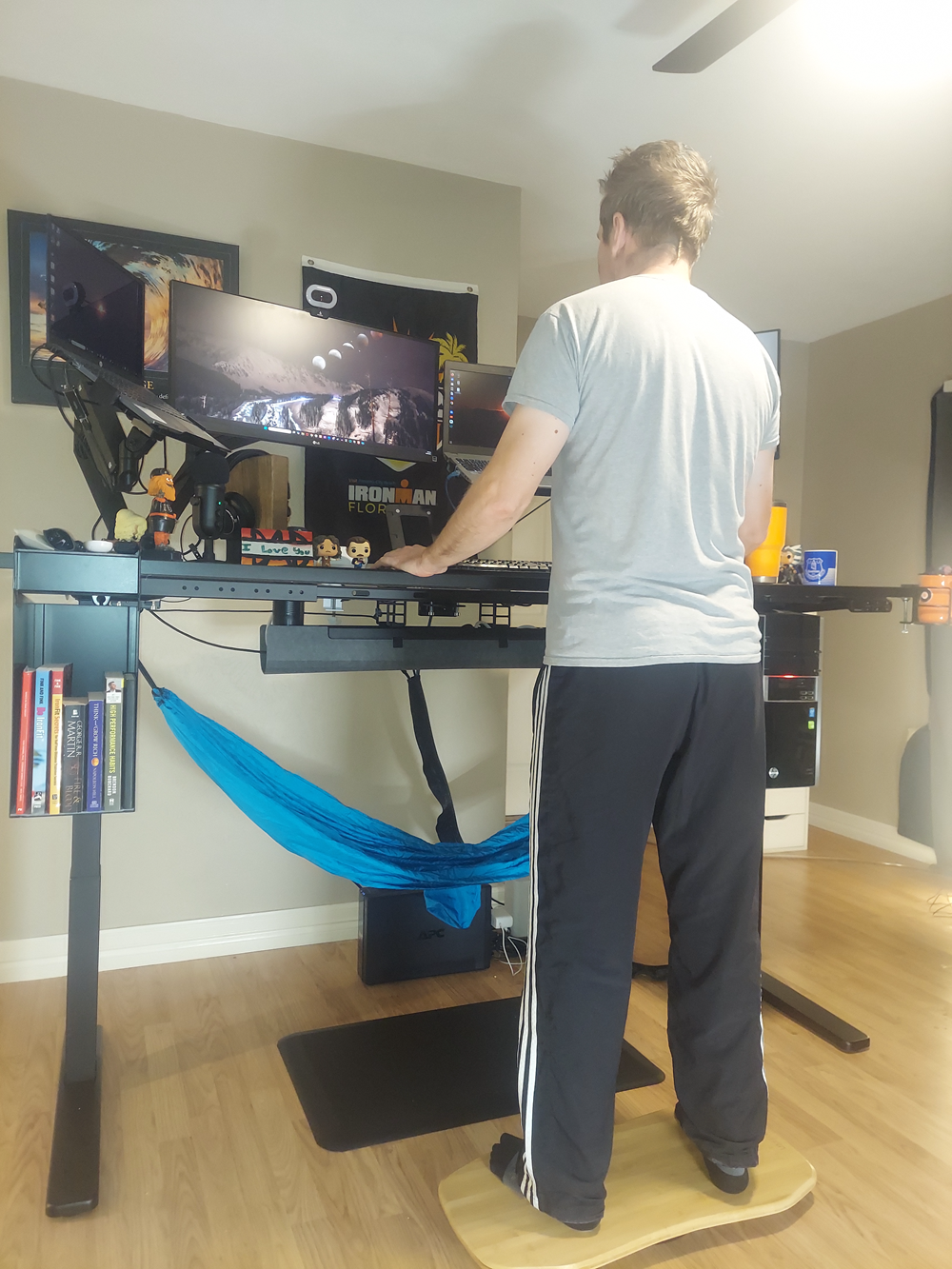
Ergonomics for Recovery: Setting Up a Standing Desk to Reduce Pain and Prevent Flare-Ups
I didn’t add a standing desk because I wanted to “biohack” my workday—I added it because I was tired of feeling worse the longer I sat. During my own injury recovery, the biggest shift wasn’t standing all day; it was having the ability to change positions whenever symptoms started creeping in. In this post, I share what helped (and what didn’t), how I used sit-stand intervals as “active recovery,” and the key ergonomic and movement cues that made my desk setup part of the comeback—not part of the problem.
As I discussed last week, there are lots of benefits to a standing desk but I wanted to get a little more personal on how it has helped me during this past year. As a Health Coach, I spend most of my time working with my clients to help them realize how some of their habits and environments are not set up for their success, but I will admit it isn't always easy for me to do that same thing for myself. Over this past year, I've suffered two significant injuries that have not only derailed my training but have also had a massive impact on my quality of life. Based on these two injuries, I have looked into things I could put into practice during my daily life to not only help heal those injuries but better recover from my training and life activities. I do find myself sitting for a good portion of the day, not only at my desk, but also in my car as I drive quite a bit for clients. I have made some changes in the car, but those are more complicated and not quite as significant, and with both of these being hip injuries (both sides) I wanted to make changes not only in my posture but my overall workspace.
I've had my current workspace for over 6 years now, and while it mostly worked I noticed it was starting to lead to more aches and pains if I sat for too long. It also didn't have much flexibility in movement as managing all of the cables became unwieldy. I had tried a couple of half measures to piece together a standing option but with the system being manual, it was clunky and often created more problems than it solved. I then looked into the UPLIFT Desk and realized this could solve multiple problems and provide a badly needed refresh of my workspace.
When configuring my new UPLIFT v3 Standing Desk workspace, the primary requirement for me was the simple process of converting from sitting to standing, with the capabilities to provide the peace of mind with the UPLIFT Desk FlexMount Cable Manager system so that I wouldn't have to worry about any of my cords or cables or make a series of adjustments once that transition is made. Over the years, I've realized if there's any hesitation that I'll cut a cord, or yank something off the table, I won't bother with standing at all. The UPLIFT Desk provides numerous different ways to bundle, hide, and route all of the cables (and yes I have LOTS of them) to the places they need to go, maintain their functionality, and most importantly work exactly the same sitting and standing.
Another key component with my success with this new workstation has been the comfort while standing, having multiple options has been key. There are days when I want that cushy pad underneath my feet to provide that extra level of comfort. Then there are days where I want a little challenge, that's where the Motion X-Board comes in as it provides just enough instability to keep me mentally alert but also enough movement to help my ankles, knees, and most importantly (for me) my hips. Not only have these options allowed me to extend the time I spend standing, but also provide movement when I need it. This movement and changing of positions increases the amount of blood flowing through the legs and in general keeps the body in a more neutral position which promotes recovery.
The other key component for me of a successful workstation, is the aesthetics of it - or the looks. This isn't just the design of the desk and the material options, but the ability to keep it clean, organized, functional, and still a little fun! Being able to lift my monitors and computers off the desk clears up the entire workspace for not only utility, but allows me to display some of the other fun items in my collection. And since the entire workspace moves, I don't have to do any re-organizing when I stand or sit. Speaking of fun, another option that I initially thought was silly was the concept of having a hammock as part of my desk. But now that I have it, I love it - and not necessarily for the reasons you might think. Sure it is comfortable and fun, but it actually does help me stay more productive, let me explain. As someone who works from home (and have for the better part of 20 years) I can always find distractions if I want to (and yes, distractions are also in the office too) but on the days when I want to stretch out a little bit the hammock provides a great option that still keeps me physically in the office. I can use that time to quickly recharge and not end up on the couch where I might end up accidentally watching an entire season of Stranger Things!
All of these features and options, especially the UPLIFT Desk’s ergonomic benefits, have enabled me to successfully rehab from my injuries and build healthier more sustainable habits that should help to keep me more injury free going forward.
If you’re dealing with nagging pain or coming back from injury, think of your desk as part of your rehab plan. The goal isn’t to stand all day—it’s to create more movement opportunities and reduce time spent in the positions that provoke symptoms. Start with 10–20 minute standing blocks a couple times a day, keep your posture relaxed, and use the desk transition as a cue to reset: a few breaths, a quick walk, a gentle stretch. Want the easiest way to build that routine into your day? Explore UPLIFT Desk and set up a sit-stand station that makes consistency automatic.
If you choose to purchase through this link, I will earn an affiliate commission on that purchase - feel free to use that link or share it with others as a way to support what I do