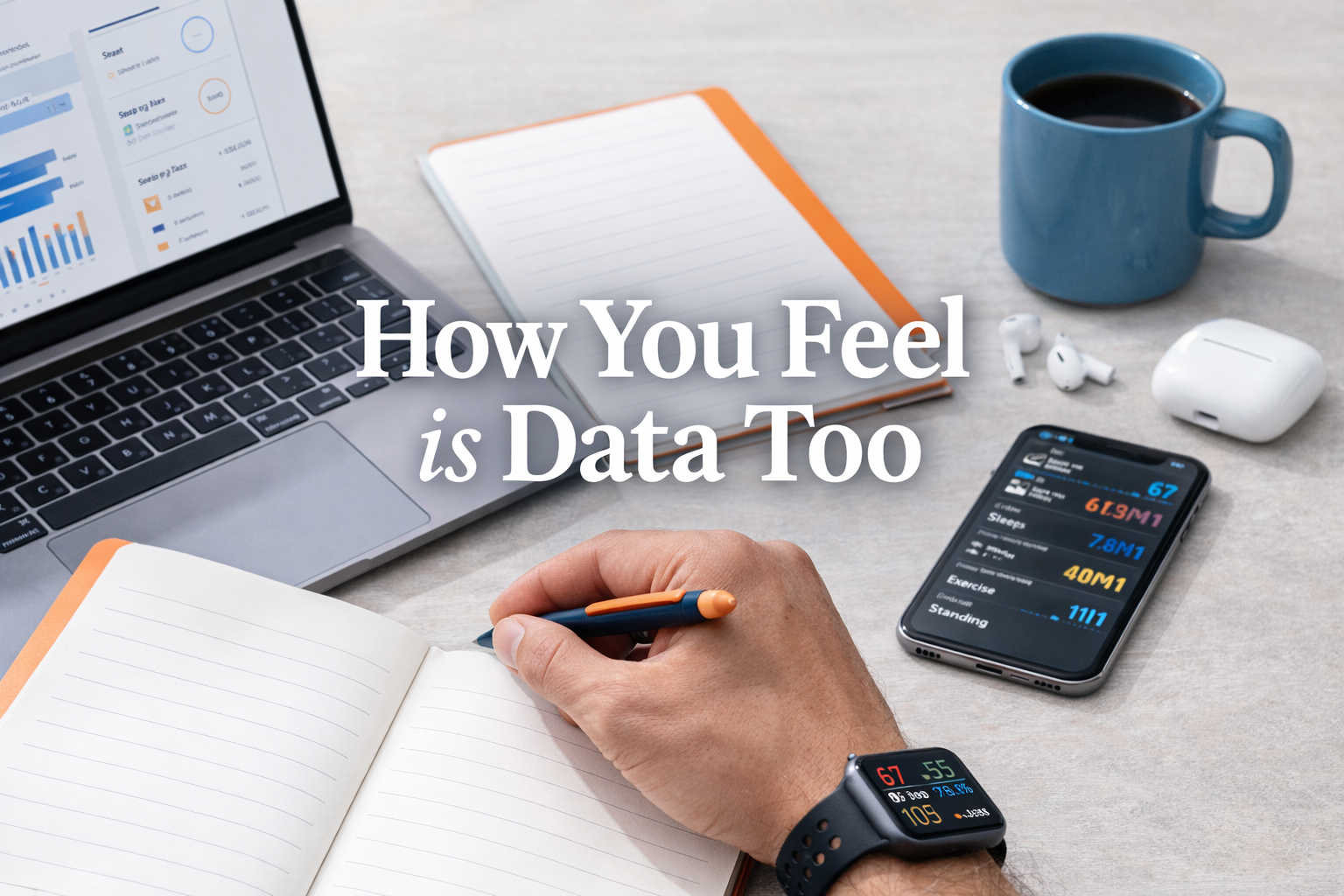
You’re Ignoring One of the Most Important Forms of Data
Calories, heart rate, sleep scores, and weight can all be useful, but they do not tell the whole story. How you feel day to day may be the missing piece of data that helps you make better decisions.
We live in a world obsessed with measurable data. Calories. Macros. Sleep scores. Pace. Heart rate. Weight. HRV.
But one of the most important data points in your entire health and performance picture is often the one people dismiss first:
How you actually feel.
I've talked about this previously, but it continues to be something I work with my clients as most either don't have the connection to how they feel or tend to minimize it. Part of the challenge is the dramatic increase in the availability of just about any kind of data on our phones and watches, or at a deeper level with bloodwork and genetic testing. While these pieces are important, they only tell one part of the story and usually only at a particular point in time. So let's dive into the two areas you can start now to build a better picture of how you're performing.
The first area I'll mention is during your workouts which is a great way to boost the quality of your workouts, especially while lifting weights. The more in touch you can be with where you feel each rep you can target specific areas, better identify any form issues, and better understand when it is time to either increase the reps or weight. This same concept applies to any cardio workout too, paying attention to your breathing, how quickly you recover from any efforts, and how the rest of your body feels as you progress through the workout helps you better understand how your body is responding to the efforts. In both cases, how you feel should also drive your intensity of that particular workout. I'm not suggesting you cut all your workouts short, or power through them, but having a better gauge on when you should do one more rep, or perhaps drop the intensity will benefit greatly in the long run.
The other aspect that I suggest this kind of self check on how you feel is a way to bookend your day. Take a couple of minutes (maybe even less than that) in the morning when you wake up, and in the evening before you go to bed to assess how you're doing. A few things you might think about:
energy level
cognitive level
any particular aches/pains
general mood
feel free to add more if you like
You can either make this an "informal" check-in with yourself, or you can add it to some sort of a journal process either written or electronic. If you're adding this to your routine, I suggest some sort of physical accountability to help reinforce the habit as well as provide a mechanism to compare.
The goal is not to replace hard data. The goal is to stop pretending that your lived experience does not count as data too.
Because if your numbers look good but your body, mind, and day-to-day function are telling a different story, that matters.
In many cases, how you feel is not a distraction from the data.
It is the missing piece.
Better decisions come from better data — and that includes the signals your body is already giving you.
When was the last time you tracked how you actually felt with the same consistency you track your numbers?

The Gadgets That Actually Moved the Needle
Not every health purchase is worth it. Here’s a personal look at the investments that actually improved my consistency, recovery, and performance — and the ones that didn’t.
Over the years, I’ve spent money on plenty of things in the name of health.
Some were worth it.
Some weren’t.
I wanted to pick a couple to highlight some keys to look at when making decisions or looking for ways to upgrade.
I'm sure like many of you, there are loads of purchases you've made to pursue your health and I could point to many of them as significantly valuable for me. Some of the big ticket items (I'll talk about those in a future post) have made a difference, especially when you look at the cost per use, but I wanted to walk through a couple specific gadgets that help convey some common ideals. We all love new toys to play with, but that money (and time) does add up that could be applied elsewhere.
The most recent of the three was my search for a small blender I could use that was more convenient then my Vitamix and could handle smaller portions. I primarily wanted to use it for mixing various things into my coffee (creatine and protein powder) so I started with a frother but that lasted only a couple weeks (if that). I then went for a rechargeable stick blender for the convenience of not having a cord, but consistent usage also wore that down. So the third purchase was a corded stick blender, that while I initially thought was overkill turned out to be the right tool for that and other uses. Trying to go with the cheapest solution was not only frustrating but time wasting.
One of the items I've probably had the longest (close tie with my Vitamix) is my rice cooker. This is one of those single use tools (yes I could use it as a steamer and probably a couple other things, but I don't) that I use at least once a week, and it does that one thing very well. I'm sure I could cook rice but the "set it and forget it" not only makes it idiot proof, but also allows me to multi-task and simplify bulk cooking. The ability to simply cook different grains (quinoa is my current favorite) with various spices and liquids allows for variety without creating any more stress in the kitchen. This is one of those, don't complicate the situation just find the tool that does the job.
Finally I wanted to mention a pretty niche purchase, but I think the applicability of tools like it will make it translatable for everyone. This purchase is the Stryd Footpod, and specifically the Duo model (I'm still on the previous version, not the latest 5.0 model) that attaches to both shoes while running. I've always been drawn to tools the provide data, and one of the key points for Stryd is its ability to monitor wind contributions (or challenges) such that there's a quantitative measure of how much the wind is impacting a run. Not a tool I use during the run, but helps me correlate how I felt during the run to the data such that I can better tune my perception of my effort levels. And then through my last two injuries, having a pod of each foot allows for the measuring of each individual impact such that I could better understand if I was favoring one over the other. Again, a tool I used post run to understand how I was progressing not only physically through my rehab but also did that track how I was feeling. Do I use all the data Stryd provides every run? No, but the availability of it for those key times are invaluable, and when it comes to race day pacing, power is an awesome metric to use.
So why did I pick these 3 items? I feel like in a nutshell you should look at the following when making a purchase to improve your health:
Is it the right tool for the job? Don't skimp out if you plan to use it frequently.
Sometimes the simplest solution is the best one - don't overcomplicate something that doesn't need it.
When looking at tools that provide data, make sure the data is actionable - allowing you to learn or make better decisions.
The best purchases I’ve made didn’t promise transformation — they supported repetition.
Health isn’t built on hacks. It’s built on consistency.
If you’re considering that next gadget, ask yourself: “Will this make consistency easier?”
👉 If you want help identifying high-leverage moves in your own plan, let’s talk — or subscribe to The Wellness Forge for practical guidance.
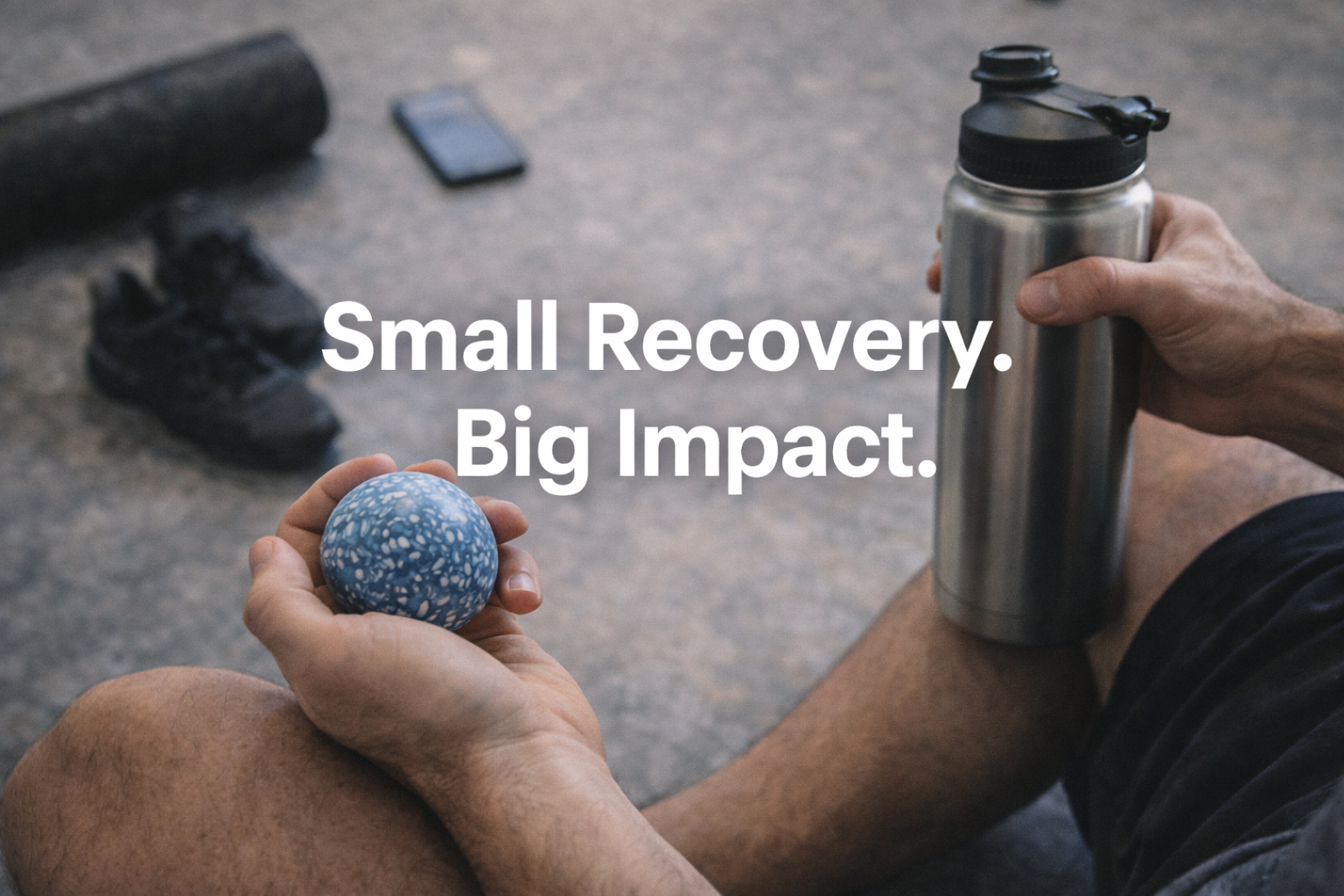
Micro-Recovery: Small Actions That Drive Big Performance Gains
Micro-recovery is about small, intentional actions that help your body and mind reset throughout the day. Learn simple tactics you can use anywhere to improve energy, focus, and recovery.
Most people think recovery requires time they don’t have.
In reality, recovery works best when it happens in small doses, often.
These micro-recovery habits can change how you feel, train, and perform — without adding anything to your calendar.
While looking at some of the big movers for recovery, things like nutrition and sleep, there's also lots to be gained from thinking small when it comes to recovery. And by small, I mean short periods of dedicated time that can have outsized benefits in both physical and mental recovery. As with other topics, I wouldn't suggest trying to implement ALL of these, but pick one or two and see if they help. Don't panic if something doesn't work for you, pick something else and keep trying. Once you find something that works, keep it consistent and try to make it part of your normal routines.
Let's start with some that are more physical in nature, with probably the simplest and lowest barrier to entry being a short walk - even just a couple of minutes provides not only muscular benefits, improves digestion, but it can be a nice mental break as well. Also in this bucket would be some sort of mobility work focusing on whatever joints or muscles that may be nagging you, either while sitting by moving through the joints' full range of motion, or coupled with a walk and making it a bit more of a dynamic stretch. Maybe even incorporate some sort of recovery tool in this process, foam rollers may be tougher in the office, but massage guns or a lacrosse ball work wonders and can travel pretty easily. The last one I'll touch on in this article would be to have some sort of a snack, sometimes the best way to break up your day is the injection of a little energy. This snack doesn't have to be large but something that can not only distract you physically (and mentally) but also provide a nice energy boost.
The other aspect of these little recovery breaks are ones that I'll put into more of a mental space or requiring little physical movement. A couple of examples of these kinds of breaks would be:
Breathing resets - think deep breaths, either structured or just a pause
Giving your eyes a rest - look away from screens, or close your eyes for a period (don't try this while driving!)
Another idea to consider in this area would be ways to shift your environment to reduce or shift the stressors in some way:
Wearing Blue light blocking glasses
Noise generator - white noise works for many, but there are different options that work better for some
Background music
If you're looking for a plan to implement a break or two into your day, pay attention to your energy levels during the day and see if you notice a period (or two) where you struggle. That's the time you'll want to apply one of these techniques, and try the same one for a couple days to see if you notice a benefit. This is also a case where having some sort of logging or journal routine will come in handy to not only find those lulls, but see what works and what doesn't. I personally use the journal function in the Whoop app to help with these kinds of trials and shoot for a handful of days with the routine and without to have a somewhat decent comparison. The actual tool used doesn't really matter, it is the process of adding that recovery tactic and monitoring how (if) it impacts your body and mentality.
Recovery doesn’t need to be dramatic to be effective.
Small, consistent recovery habits protect your energy, sharpen focus, and keep performance sustainable — especially on busy days.
Start small. Repeat often. Let recovery work with you.
🔗 Subscribe to The Wellness Forge for practical strategies that help you train, work, and live stronger — without burnout.
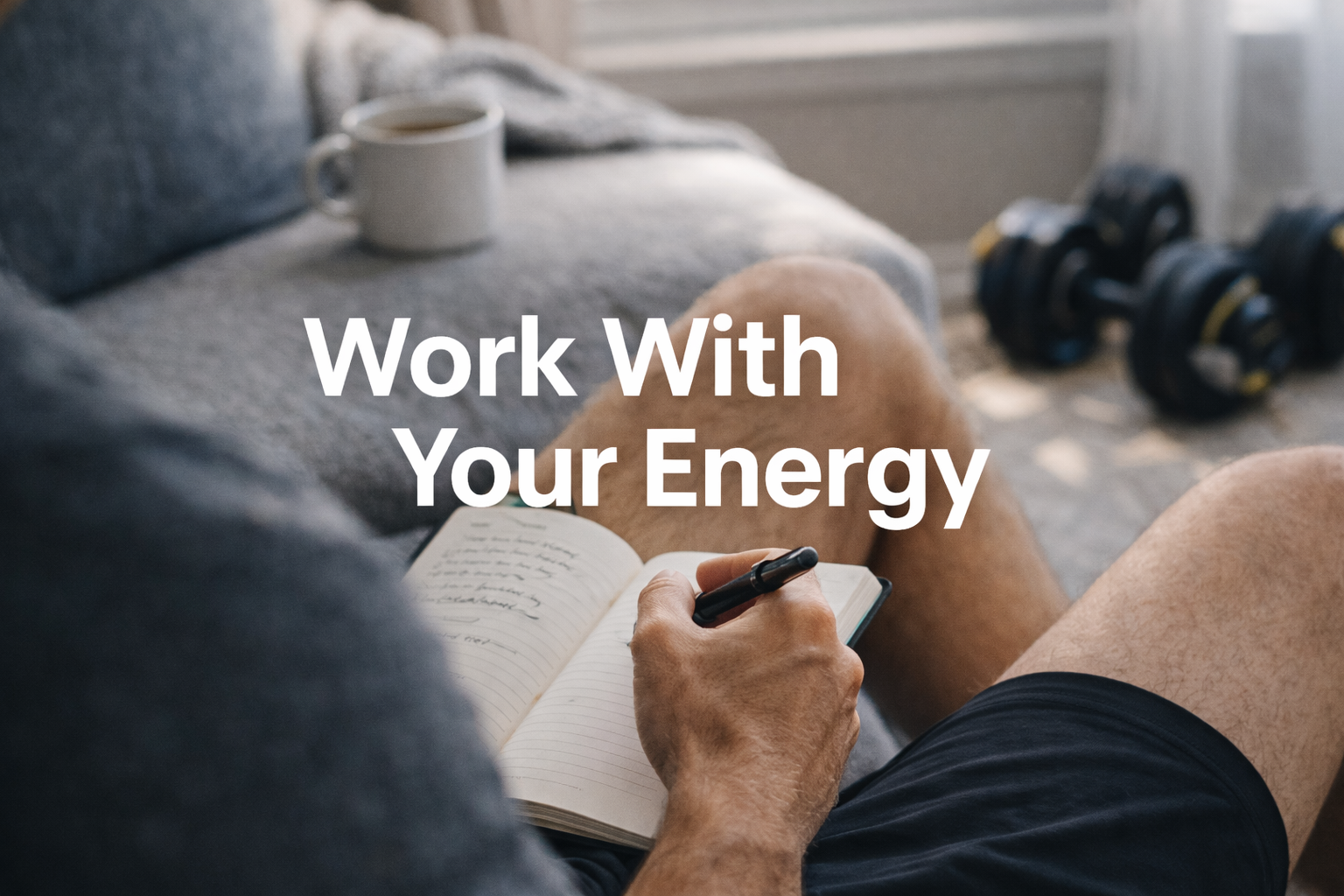
Why Energy Matters More Than Time
High performers don’t run on constant intensity. Learn how to manage daily and weekly energy cycles to improve focus, recovery, and long-term performance.
Some days everything clicks. Other days, it feels like you’re dragging uphill.
That’s not a motivation problem — it’s biology.
When you learn to work with your energy patterns instead of fighting them, performance becomes far more sustainable.
When I look back at this past year one of my more successful changes I made was a shift in my schedule and leaning into my energy fluctuations. This allowed me to be more present for the aspects of my life I wanted to, excel when I needed to, enjoy my days more, and feel more rested - despite failing to get as much sleep as I'd want (and probably need). For me this comprised of a few small but specific changes:
Loaded up my mornings
Built in an early afternoon down time
Protected my Friday evenings such that they became my recharge time.
Shifted my workouts as needed when life necessitated it
Now I realize, not all of this will work for everyone and we all will approach this differently (as we should) but the process I went through to make these changes can work for everyone. And as we look forward to a new year, it is a great opportunity to make schedule shifts.
I started this process by recognizing what my daily energy shifts looked like and when I typically feel most energetic as well as where my lulls are. Some of this I was mostly aware of, but keeping track for a couple weeks really helped prove it to myself. Allowing for some variance week to week helps to make sure it is a real pattern and not just a one off. Not all of this is completely within our control based on work or kids so this process won't be perfect, however we can look to make progress towards a better solution. I then made a shift in my mornings since I've always been a morning person, it seemed logical to me to lean into that such that the bulk of my daily work (and workouts) were done before noon. This shift then created a gap in my early afternoon that I began to relish as an opportunity to refuel, refresh, and take some time to orient the rest of my day. Those two pieces came together rather seamlessly and in conjunction, but the Friday one took longer for me to finally acknowledge as it more or less came out of necessity. At the end of the week, Sunday is the start of my work/exercise week, I was crashing pretty hard and early in the evening. That still opened up Saturday evenings if I wanted to, but allowing Friday to be a "down" evening really helped anchor my week giving my brain and body an opportunity to recover.
While there are some differences between individuals (primarily whether you're a morning person or night-owl) the general biology and trends are consistent. Mornings are associated with a higher cortisol level which helps with mental focus and physical performance. There's a natural dip at some point "mid-day" that's a function of hormone shifts, blood sugar, and stress load. And then in the evenings the shift is toward winding down the day towards recovery. Now the magnitude of the variations aren't consistent from person to person and of course can be "controlled" to some degree by willpower and caffeine. However, understanding these variations allows you to work with your day not against it and save the coffee powered sessions for when you really need it.
So what are some of the signs that a schedule shift might be helpful?
Living on caffeine
Poor sleep, especially when feeling exhausted
Emotional swings
Forcing workouts when tired
Consistent lack of focus
There are more, but these are the key ones to look for and for me caffeine was the biggest flag that suggested I should think about a shift. I could tell that what I was doing, while working, wasn't something I could realistically sustain indefinitely, and most likely would create a problem down the road. This is where having some level of awareness and data tracking comes in handy (or a coach) to help spot these trends and allow you to do some experiments on yourself to see what moves the needle in the desired direction. I'm excited to see what I can accomplish this next year based on the continuation of this adjustment process!
Energy isn’t something to dominate — it’s something to manage.
When you learn to roll with daily and weekly trends, performance becomes more consistent, recovery improves, and burnout fades.
High performance isn’t about doing more — it’s about doing the right things at the right time.
🔗 Subscribe to The Wellness Forge for practical strategies to manage energy, reduce stress, and perform at your best.
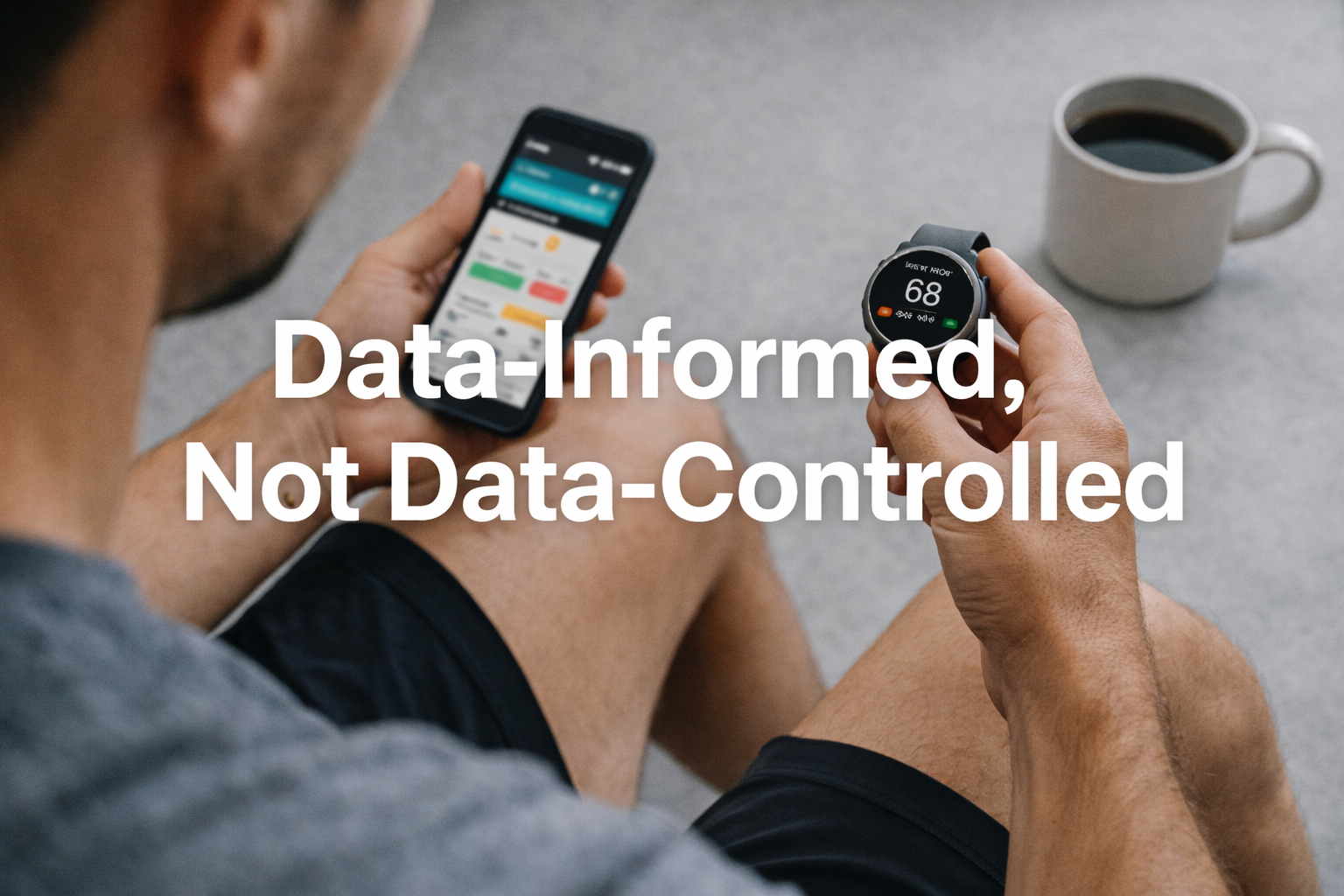
Track Your Progress — Without Letting the Data Run Your Life
Wearables and tracking tools can dramatically improve your progress — but only if you avoid obsessing over the wrong metrics. Learn what to track, what to ignore, and how to build a healthy, balanced relationship with data.
You don’t forge better performance by chasing perfect numbers.
You forge it by combining objective data with subjective awareness — using both to make better decisions, one day at a time.
Data pertaining to our health and wellness has never been more in-depth or more available than it is today with the digitization of medical records, more control given to individuals, and the boom of apps and wearables. This data can be incredibly useful to track things like performance, recovery, progress, and spot trends or illnesses early enough to act before they get out of hand. However, that amount of data sometimes become overwhelming, and it can also become easy to get wrapped up in individual metrics and miss the bigger picture.
There ae some pieces of data that are rathe straightforward and can combined with objective data to make them even more powerful indicators. For example, the weight you can squat is a good strength metric, but when you combine that with level of effort you now have a gauge for how well you're performing at that weight on that given day. As you progress lifting with that same weight, it will feel easier, and that ease (in this example) is an indication of when you're ready to progress and increase the weight. Another example would be from your blood work (something everyone should do at least a couple times a year) vitamin levels compared with the optimal levels for that nutrient helps guide towards potential supplementation, with repeat tests helping to understand absorption.
Where this process can lead to challenges is when focus is put on any one signal number with the exclusion of any subjective correlation. For example, many wearables provide some metric that represents how ready you are for the next day. And while that information usually combines a number of different pieces of information (heart rate, heart rate variability, previous days activates, sleep, etc.) it is only a snapshot of those metrics and even ignoring any potential inaccuracies, that is only one snapshot in time such that it is providing a limited view into the complex working of the body. Over time, you may come to find you typically feel similar to how that "ready" score indicates you should feel, but it is an important exercise to continue to check in to verify you feel in the ballpark of that number. Chasing the numbers can lead to additional stress, over-reaction/correction, exercising too hard or too easy, or prioritizing the wrong behaviors. It is more important to chase the process and not the numbers.
Another powerful way to leverage data is to not look at the single values, but the trends in those values over a longer period of time. When looking at something like sleep duration or heart rate variability, individual values don't tell the whole story but general movement or significant outliers can be useful to look at. Trends can help determine if behavioral changes are having a positive or negative impact while outliers can be an indication of a potential illness. Looking at trends, also helps with looking at the bigger picture as each data point builds on the previous data to form a more powerful story and helps minimize focusing on the small details.
If you're looking to make a change in a metric, first make sure it is one that you can easily and consistently track, and remember that absolute accuracy isn't a firm requirement, but the data should be consistent, or accurate compared to itself. Track that metric for a week without making any changes so you have a decent starting trend and rough idea of the variations. Then change one (maybe two) behaviors and continue monitoring for at least two weeks. This period will allow you to account for any normal variations and any issues with consistency in your behavior changes. After that period, you should be able to determine if the changes improved your metric or not. Based on that, either continue, shift behaviors, or maybe look at the next metric to attack.
Data is powerful — but only when used wisely.
Track what matters. Ignore what distracts. Let the numbers guide, not judge.
When you combine data with awareness, you make better decisions, improve consistency, and unlock higher performance.
If you want support building a balanced, data-informed approach to your health and training, I’m here to help.
🔗 Subscribe to The Wellness Forge to get weekly insights that strengthen your body, mind, and performance without the burnout.
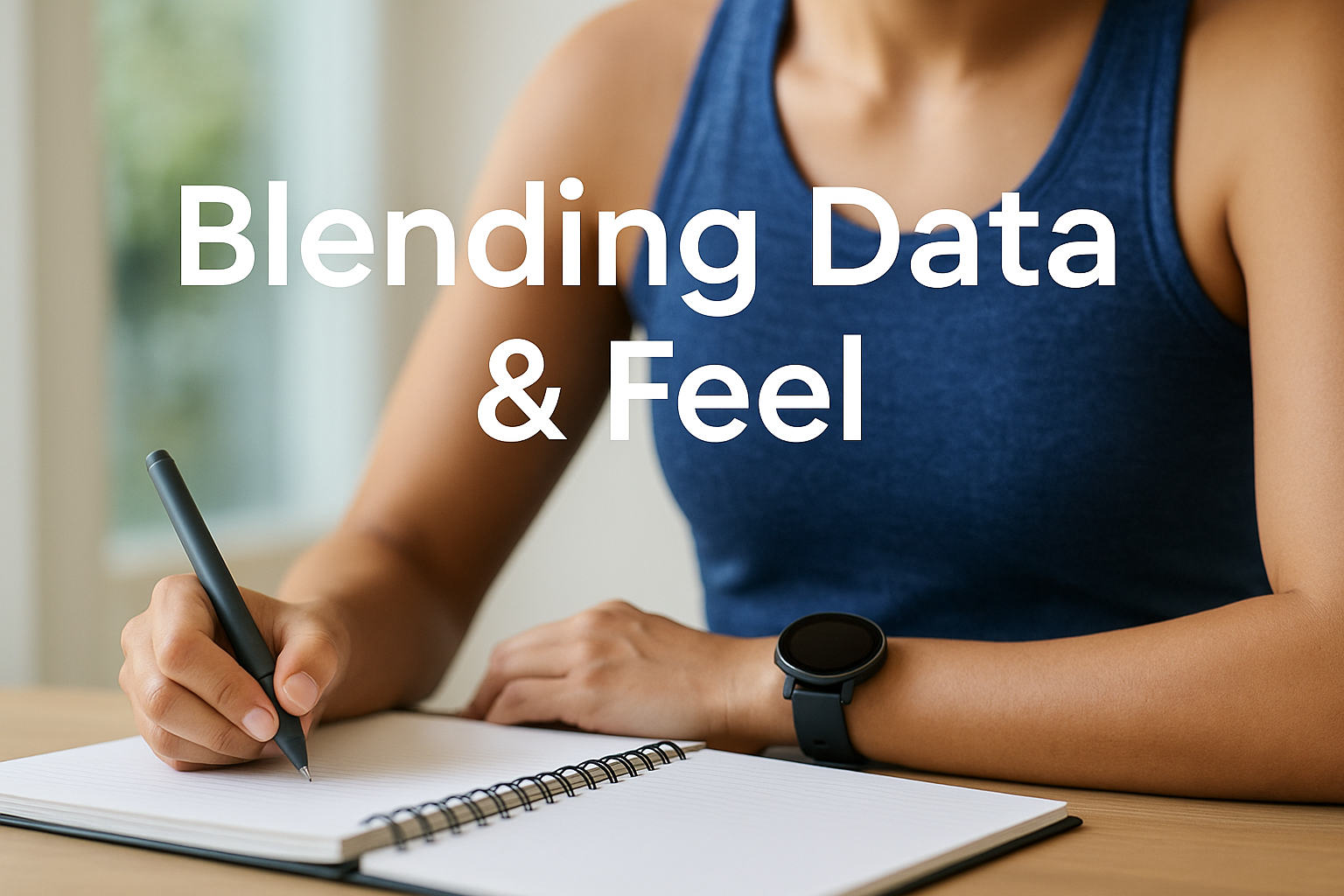
Data-Driven Wellness: When the Numbers Matter — And When They Don’t
Data can guide your training, recovery, and nutrition — but only if you pair it with honest, real-world awareness. Learn how to blend metrics and intuition to make smarter decisions.
High performers use data to make sharper decisions, focus effort, and avoid wasted time.
But over-reliance on numbers without real-world feedback leads to poor choices.
The best results come from blending data with experience, intuition, and honest reflection.
In the world we live in now, everyone has a definition of what "Data" is, so let's start with how I look at "Data" - any piece of information that can be used to make a decision. When we dive a little deeper data typically falls into 2 categories, quantitative and qualitative, and lately in the Health and Wellness space many are leaning entirely on the quantitative side. These are all useful pieces of information, things like Heart Rate Variability (HRV), sleep duration, resting heart rate, calories and macro distribution, body weight, and I could go on but you get the point. The boom of wearables and the continued prevalence of phones has made gathering this information easier than ever and it can be very comforting to look at a single number or metric and make a decision. However the key piece that is missing from all these numbers is CONTEXT which allows you to better understand if that value is in a positive space or towards a more negative direction. Context allows you to better evaluate how your body and mind are responding to the pieces of quantitative data and how they impact you specifically. For example, knowing that you were asleep for 8 hours last night is helpful, but without the feedback of how you felt this morning mentally and physically, it is hard to know if more sleep is needed or if maybe you're a member of the group that doesn't always need 8 hours, if you should push a hard workout or aim to recover.
Let's take a look at another common example of when numbers alone can foster incorrect next steps, tracking calories and macros. For many of my clients (I also do this from time to time) tracking can be a very powerful tool as it helps bring awareness to what exactly and how much food you're consuming. But, when you look to take only this information and make weight management decisions (either losing weight or building muscle) you'll most likely struggle as this problem is way more complex then just a couple of numbers. Our body continues to adapt and without paying attention to the qualitative pieces, consistent progress will be almost impossible to maintain. The great part is that when you become more attuned to the qualitative metrics you can loosen up on your strict adherence to the numbers, which again promotes a more sustainable path. In practice, this looks like keeping track of the following:
how did you feel, including any stomach issues
how was your energy
how was your QUALITY of sleep
how hungry did you feel
what was your activity level
you can add more if you want, but this will be a good start.
As you can imagine, the answers to these questions combined with the calorie and macro numbers allows for a better understanding of not only how well did you fuel your body, but how much fuel your body likely needs.
Now that you're on board with both numbers and context, where do you start? As I've mentioned in other posts the goal is to start small and build momentum. Track a couple metrics of each type for a period, and then look for trends. For example, let's say you want to work on feeling more rested in the morning and believe getting better quality sleep is the place to start. Pick whatever logging tool makes the most sense for you short term (if you like this process you can always change) and pick a couple of each kind of data to start with, something like this:
(Quantitative) Hours of sleep (either from a wearable or an estimation based on when you went to bed and woke up)
(Quantitative) heart rate shortly after you wake up, your resting heart rate is a good data proxy for overall stress levels
(Qualitative) how you feel in the morning
(Qualitative) level of stress (mentally and physically) from your previous day
Starting with these 4 pieces you'll have a great starting point to understand how much sleep you're getting and how much your body needs. Keep this log for a week or two and you'll start to be able to observe some trends and begin to plan better for those days when you're going to NEED more sleep. With a data set small like this, it becomes easier to not only keep track of things but run your own tests to better understand the connections. You can apply a similar methodology across the board to different challenges, but I suggest keeping the amount of things you're varying to a small number such that you can better understand which changes are correlated to which result.
The best decisions come from blending numbers with awareness.
Track what matters. Listen to your body.
Let data inform — not dictate.
🔗 Subscribe to The Wellness Forge for more tools to help you make smarter decisions and build lasting health.