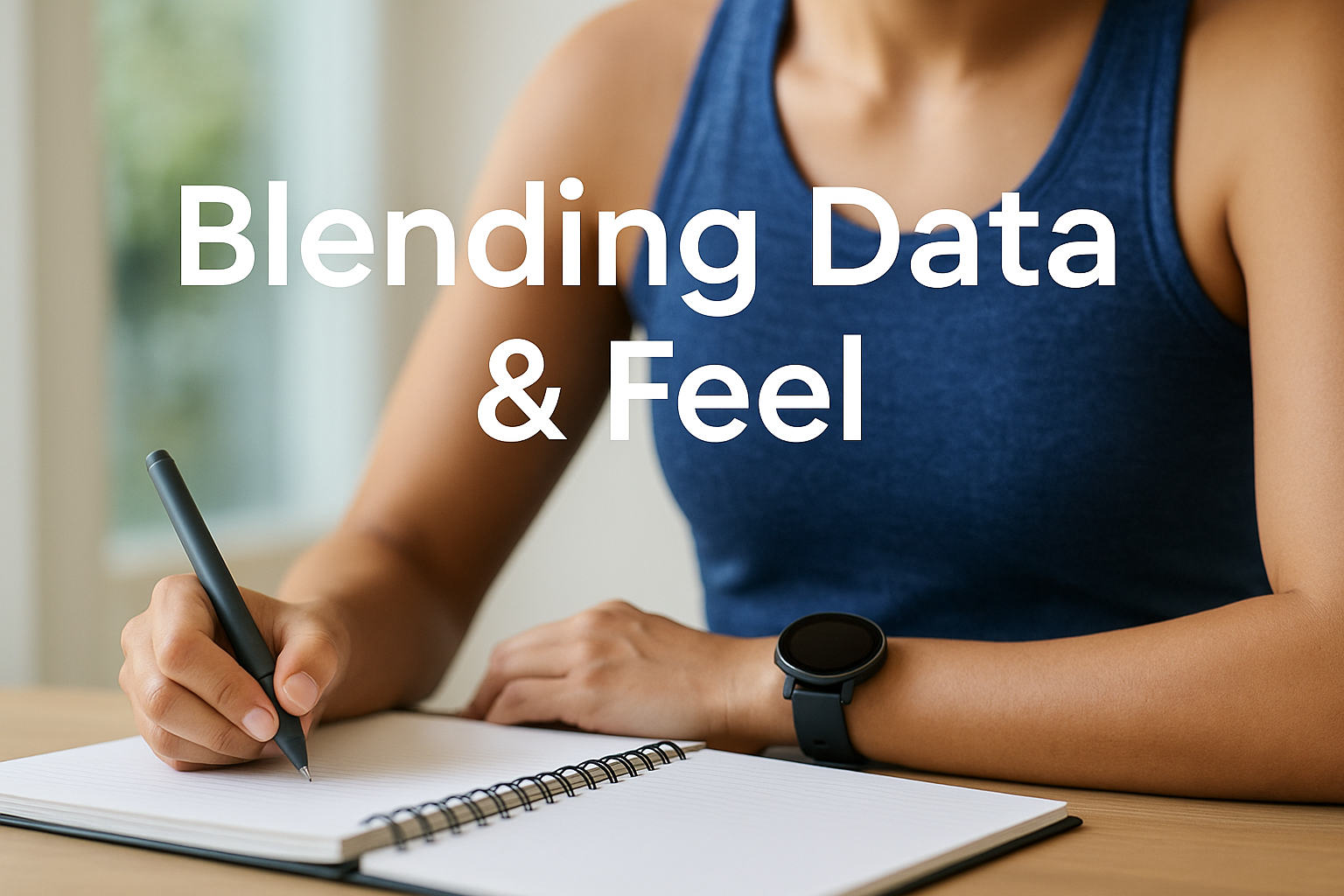
Data-Driven Wellness: When the Numbers Matter — And When They Don’t
Data can guide your training, recovery, and nutrition — but only if you pair it with honest, real-world awareness. Learn how to blend metrics and intuition to make smarter decisions.
High performers use data to make sharper decisions, focus effort, and avoid wasted time.
But over-reliance on numbers without real-world feedback leads to poor choices.
The best results come from blending data with experience, intuition, and honest reflection.
In the world we live in now, everyone has a definition of what "Data" is, so let's start with how I look at "Data" - any piece of information that can be used to make a decision. When we dive a little deeper data typically falls into 2 categories, quantitative and qualitative, and lately in the Health and Wellness space many are leaning entirely on the quantitative side. These are all useful pieces of information, things like Heart Rate Variability (HRV), sleep duration, resting heart rate, calories and macro distribution, body weight, and I could go on but you get the point. The boom of wearables and the continued prevalence of phones has made gathering this information easier than ever and it can be very comforting to look at a single number or metric and make a decision. However the key piece that is missing from all these numbers is CONTEXT which allows you to better understand if that value is in a positive space or towards a more negative direction. Context allows you to better evaluate how your body and mind are responding to the pieces of quantitative data and how they impact you specifically. For example, knowing that you were asleep for 8 hours last night is helpful, but without the feedback of how you felt this morning mentally and physically, it is hard to know if more sleep is needed or if maybe you're a member of the group that doesn't always need 8 hours, if you should push a hard workout or aim to recover.
Let's take a look at another common example of when numbers alone can foster incorrect next steps, tracking calories and macros. For many of my clients (I also do this from time to time) tracking can be a very powerful tool as it helps bring awareness to what exactly and how much food you're consuming. But, when you look to take only this information and make weight management decisions (either losing weight or building muscle) you'll most likely struggle as this problem is way more complex then just a couple of numbers. Our body continues to adapt and without paying attention to the qualitative pieces, consistent progress will be almost impossible to maintain. The great part is that when you become more attuned to the qualitative metrics you can loosen up on your strict adherence to the numbers, which again promotes a more sustainable path. In practice, this looks like keeping track of the following:
how did you feel, including any stomach issues
how was your energy
how was your QUALITY of sleep
how hungry did you feel
what was your activity level
you can add more if you want, but this will be a good start.
As you can imagine, the answers to these questions combined with the calorie and macro numbers allows for a better understanding of not only how well did you fuel your body, but how much fuel your body likely needs.
Now that you're on board with both numbers and context, where do you start? As I've mentioned in other posts the goal is to start small and build momentum. Track a couple metrics of each type for a period, and then look for trends. For example, let's say you want to work on feeling more rested in the morning and believe getting better quality sleep is the place to start. Pick whatever logging tool makes the most sense for you short term (if you like this process you can always change) and pick a couple of each kind of data to start with, something like this:
(Quantitative) Hours of sleep (either from a wearable or an estimation based on when you went to bed and woke up)
(Quantitative) heart rate shortly after you wake up, your resting heart rate is a good data proxy for overall stress levels
(Qualitative) how you feel in the morning
(Qualitative) level of stress (mentally and physically) from your previous day
Starting with these 4 pieces you'll have a great starting point to understand how much sleep you're getting and how much your body needs. Keep this log for a week or two and you'll start to be able to observe some trends and begin to plan better for those days when you're going to NEED more sleep. With a data set small like this, it becomes easier to not only keep track of things but run your own tests to better understand the connections. You can apply a similar methodology across the board to different challenges, but I suggest keeping the amount of things you're varying to a small number such that you can better understand which changes are correlated to which result.
The best decisions come from blending numbers with awareness.
Track what matters. Listen to your body.
Let data inform — not dictate.
🔗 Subscribe to The Wellness Forge for more tools to help you make smarter decisions and build lasting health.
The Most Underrated Performance Tool: Sleep
Sleep isn’t just rest—it’s recovery. From sharper focus to faster training gains, even small improvements in sleep can fuel measurable performance benefits. Here’s how to sleep smarter.
Sleep is the highest ROI habit in health.
One extra hour can boost focus, regulate hormones, and even improve training outcomes.
Here’s how to start improving your sleep tonight — and what happens when you don’t.
Most people I work with have an understanding or a desire to improve either their sleep quality or the amount of sleep they get, but struggle to effectively make a change. Like I mentioned in my previous post on Nutrition, awareness is the key first step. Start a sleep log - paper, electronic, or via an app, doesn't matter at this stage, and start to look for trends to target. But, something you can start tonight that will make a difference and build towards better sleep hygiene - before you try to go to sleep, take 5 minutes for the following:
Put your phone/tablet/laptop down for the night
Focus on your breathing, taking deep controlled breaths
Reflect on your day, focus on the good things of the day to help calm the nervous system and relax
Think about 1 thing you want to do tomorrow. This isn't about creating your to-do list, or run through your calendar, but 1 tangible thing you want to do better tomorrow. Maybe this is walking more during the day, taking the stairs, drinking more water, picking fruit for a snack and not the candy, or whatever small tangible step seems plausible to accomplish. And then check in on your progress with that the next night.
What does this 5 minutes get you? It starts you on the path to establishing a night time ritual that you can build on that doesn't have to be overly complex. It simply needs to be a series of things you do (ideally around the same time each night) that helps you signal your body that it is time to sleep. As you progress on the journey towards better sleep, there are lots of other things you can look to change, but for now, start small and build momentum. Another simple (not necessarily easy though) step to take that you can implement immediately, start reframing sleep from something you need to do to prevent the negative impacts, towards an attitude that embraces the restorative and supercharging benefits more productive sleep provides.
I know many live by the "I'll sleep when I'm dead" mantra, and I lived that way for a while too, but at some point that lack of sleep will come back around. Lack of sleep is one of the biggest stressors you can subject your body to, so it will dramatically limit your ability to perform as well as fight off any illnesses or injuries. The mental impact sometimes is hard to recognize as so often we've gotten used to the feelings and don't really appreciate it until we start getting CONSISTENT good sleep. Also it is hard to compare the impact on our body as there isn't a great way to quantitatively compare what it could be if we were getting better sleep. Some wearables can help address this and provide some insights, I personally have been using Whoop for almost 5 years now and have a pretty good feel how impactful sleep is on my mental and physical performance. However, there are numerous studies that look at exactly that - the dramatic impacts poor sleep has on your mental performance and capacity, as well as your physical performance. Physically it is even more damaging as the lack of sleep not only diminishes your performance but it will also prevent you from absorbing the same amount of your training such that you see reduced gains from your daily (or however frequently you work out) efforts. I could go on talking about the negative aspects, but honestly that list is VERY long!
Not only will you see the opposite of the above problems when you start getting consistently solid sleep, but you will also start to notice long term trends as well. The big health metrics - things like body fat percentage, blood pressure, and metabolism will all trend better as you work on your sleep quality. This is not only due to the short term impacts, but while we sleep the body has the opportunity to recover and repair itself. This recovery and repairing then compounds with your training load to create a very powerful healthy stress, recover, and adapt cycle that allows your brain and body to best leverage the hard work you're doing.
To summarize the last two paragraphs simply - progressing towards healthier sleep is the single best way to supercharge your tomorrow. It is one of the harder changes to make, but the benefits can be life changing.
Sleep is the foundation — not the reward — for your hard work.
You don’t earn it after performing; you build everything from it.
Small changes tonight can create measurable improvements in your energy, focus, and recovery tomorrow.
💡 Subscribe to The Wellness Forge for more practical, evidence-based strategies to perform better, recover faster, and live stronger.
You Can’t Outperform Stress — But You Can Learn to Recover From It
Every athlete, executive, and high performer faces stress — the difference lies in how they recover.
You can’t grind your way out of chronic stress.
Recovery isn’t weakness — it’s the process that makes progress possible.
Here’s how to manage stress better and optimize recovery 👇
Even iron needs time to cool before it can be forged again.
Your body and mind are no different.
Today, we’ll explore the balance between stress and recovery — and how to strengthen both.
Stress is a part of all of our lives and what complicates the challenge is that stress is required for the exact kind of healthy adaptations we all strive for, that's the good stress. Most people think of stress as a bad thing, and in many cases it is, but the majority of stress actually has a positive impact on the body. Where stress becomes a problem is when there is too much of it for the body to handle, the classic too much of a good thing problem. Let's start with something you can implement today that will have an immediate impact on how your body handles stress. Like I've mentioned before, awareness is where I start with all my clients - but I'll admit, that process takes time (a few days) so today take at least one 5 minute break during the day to pause, reset, and get ready to tackle the next task. Maybe even take part of that 5 minutes to practice awareness of your stressors.
Taking a deeper look at stress, it typically can be divided into 6 buckets:
Physical - exercise or injury would be examples.
Mental - think learning tasks or prepping for a meeting.
Environmental - outside noise, pollution, temperature, and allergens fall into this bucket.
Emotional - general mood and happiness
Existential - why are we here and what is our purpose?
Relation - friends, family, and coworkers would fall here.
Inside of these buckets there are good stressors and bad ones, which are usually rather obvious, but there are some good stressors that can become bad if done at the wrong time or at too high of an intensity. For example, strength training when done appropriately is a great form of exercise. However, lifting too hard for what your body can handle that day will most likely lead to soreness and potential injury with long term impacts if consistently overused. This is where that self awareness comes into play, having a feel for your body and knowing when it is a day to push, when to pull back, and understanding that when you have to over-reach because of a deadline or race, you will need extra recovery on the other side. Using wearables can be a help in this area to monitor the body's response to stress and help give some quantitative measurements on things like Heart Rate Variability and Resting Heart Rate which are both good indicators of overall stress and how primed your body is to handle more. The best approach is a mixture of the numbers and the knowledge of your body to form that complete picture.
What does recovery look like then from all these different kind of stressors? As you've probably guessed, that first step in a awareness or audit of your primary stressors and then looking for ways to handle them. Some may have immediate simple solutions, for example an air filter in your office to help remove allergens and other contaminates if that's an area you struggle with. Others are more complicated and 100% might require some outside assistance to help work towards resolving. And some are constant parts of life and need continual work to manage. Inside each of those stress buckets are also recovery techniques that you can apply, here are some examples:
Physical - sleep, stretching, low intensity exercise
Mental - reading, preparation, planning
Environmental - air filters, blankets for warmth, air conditioning
Emotional - honest communication, mental exercises such as reframing
Existential - prayer or meditation
Relation - that supportive friend or family member
This isn't to say that the best way to recover from a stressor in one area is recovery in that same area, sometimes it is, sometimes it isn't. You've probably noticed that you have great ideas when taking a long hot shower - that physical recovery technique can not only relive physical stress, but open you up to recovering from pretty much all the other types of stress too. You will notice over time, what recovery techniques work for you and which ones work best for specific stressors you face. My two most consistent tools I use for recovery are my sauna blanket and reaching out to friends and/or family. These 2 not only hit multiple buckets but also are examples of a daily routine and a more tactical tool to handle the stress spikes we all go through. The way to become adept at managing your stress is to develop a full tool chest of recovery options that you know work for you, can be pulled out when needed, and used as backups when your first choice doesn't yield the results you're looking for.
Stress isn’t the enemy — it’s the signal. Recovery is the response.
You can’t eliminate stress, but you can build systems that help you handle it better and bounce back stronger.
🔗 Subscribe to The Wellness Forge for more actionable tools to help you perform, recover, and thrive — without burning out.
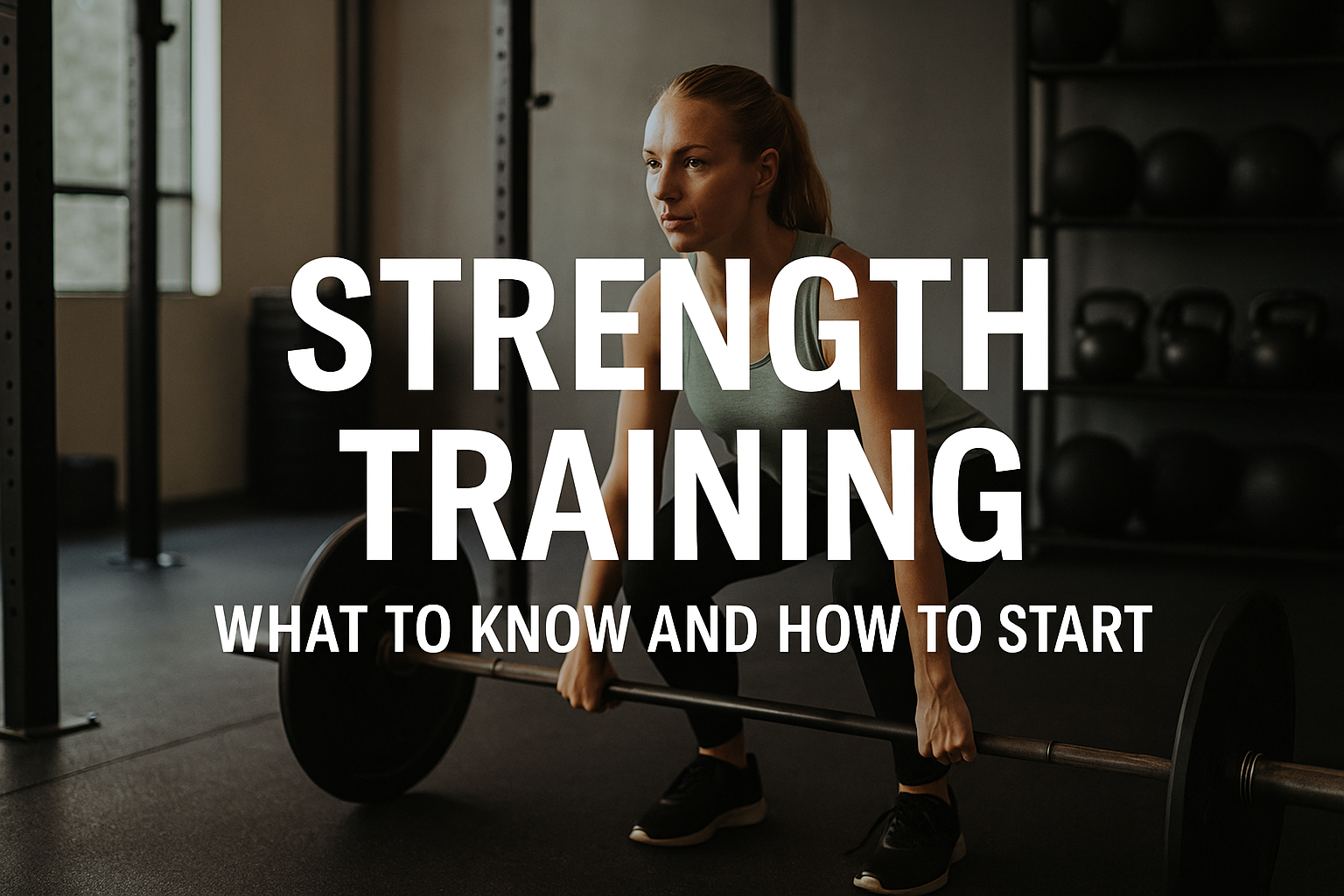
Strength Training 101: A Foundation for Health and Performance
Strength training isn’t just for athletes — it’s one of the most powerful tools for improving health, performance, and longevity. Learn what it is, why it matters, and how to get started with simple, sustainable steps.
Most people chase fitness trends, but few invest in what actually moves the needle: strength.
Whether your goal is longevity, performance, or simply feeling better in your body, strength training is the foundation.
Here’s how to get started — and why it matters more than you think.
When it comes to starting any new routine, you must understand where you're starting from and adjust accordingly. If you're completely new it would be prudent to verify with your health professional that there are no underlying issues you need to be aware of, and consulting with some sort of advisor through this process might help reduce your ramp up time. Assuming you've progressed past that point, whether you're brand new or have lifted for years and have just taken a break, always start with less then what you think is needed. It is way easier and more productive to add more to your routine than struggle because you went too hard that first session and can't move for 3 days because you're too sore. I'll go into more details in future emails, but a good starting point would be a routine you feel 95% certain is maintainable, the goal is consistency, not hammering yourself from the start. Even 1 workout a week can yield results! Another key aspect to consider is where to workout as both gyms and home have advantages and disadvantages. This is one of those honest discussions you need to have with yourself to understand if working out with other people with all the equipment you could ever want helps you, or if you'd be better served by the time flexibility and comfort of working out in your house. Neither is necessarily better than the other, but their effectiveness is highly dependant on the individual. The last suggestion I'll make, at this time, is that if you are going to go the home gym route, start small and incrementally add as you go. Don't go and spend thousands on what could become expensive hangers if you come to find out there are too many distractions at home for a consistent workout.
Let's step back and define what strength training is, and what forms don't provide the same kind of results. By definition, strength training is movement with resistance, which would include using your own body weight, bands, dumbbells, barbells, or anything else you might have lying around. The key to reaping all the benefits is to lift as if you're trying to get stronger which means you'll want to chose a weight that is challenging for you to complete 5-15 repetitions, keeping good form. To continue to see the benefits you also need make sure to progress to higher weight when those reps become too easy. Another key component to strength training, resting in between sets, should range from at least a minute to upwards of 5 minutes depending on what you're doing. Resting allows for your muscles to recover their energy stores and be ready to exert maximal effort again. The exercises themselves are not what provides the benefits, it is the body's reaction (building muscle) to those exercises as it adapts to the increased demands. This means not only do you need rest intervals during your workout, but days off between workouts such that your body has time to recover AND adapt to these stimuli. Each session should provide as different of a stimulus as possible from your normal daily routine to maximize the benefits. Because of this, "lower" repetition amounts with "heavier" weight shows far better results than lots (anything over 30) of repetitions with lighter weights.
I've mentioned the results and benefits of strength training, without any further context. Here are just some of the ways in which strength training has a positive impact on your body:
The obvious one, you get stronger. But that's not just your muscles, your tendons and ligaments which support those muscles and movements get stronger. And all of those pieces attach to your bones that then also getting stronger. Not only will this help with many daily activities and tasks (as well as any sort of performance venture) it can also help reverse or prevent bone issues like Osteoporosis and Osteopenia.
Some of the muscles that will be strengthened are the stabilizing muscles which will in turn help with balance. Not only will this help with performance, but it will dramatically increase your injury resilience. Certainly losing balance could result in falls which are a major health risk as we age, but also the majority of soft tissue injuries (think ligament tears - ACL, MCL, Achilles, etc) result from those tendons filling in the gaps for weak muscles.
Another important aspect of building more muscle is that it is one of the primary locations the body stores glucose (think sugar or carbs) which not only means that there's more energy available for the body but it is actually better at managing the energy levels. This then translates into a better insulin response which helps drive down many of the factors that leads to ailments like diabetes.
Muscle requires more energy to sustain itself than fat does, even at rest, which means that your body will naturally burn more calories because of the additional muscle mass. This allows for an increased level of metabolic flexibility since the body consumes more calories it becomes easier to either increase the amount of food you enable more muscle growth, or reduce calories to lose weight.
These are just a few of the benefits, but are some of the most impactful.
Strength training isn’t just about building muscle — it’s about building capability, confidence, and longevity.
Start small, stay consistent, and give yourself credit for each rep of progress.
Ready to build your foundation? Join The Wellness Forge and get clear, actionable guidance to help you move, perform, and live stronger.
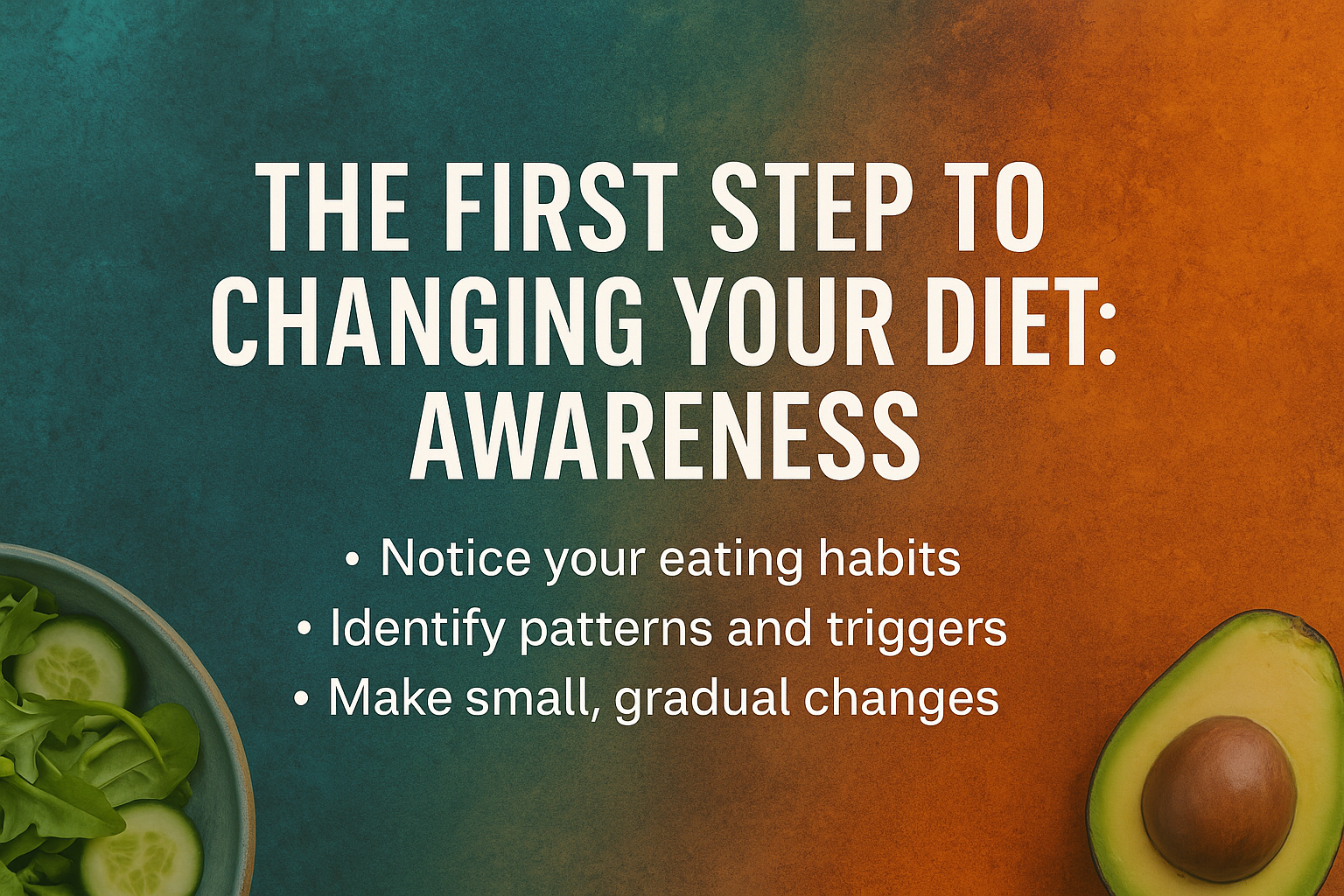
The Smarter Way to Begin Any Nutrition Shift
High performers don’t need more diet plans — they need clarity. Awareness turns mindless habits into intentional choices, setting the stage for sustainable nutrition change.
The most important part of any successful, healthy diet isn't the macro distribution or what foods are added or removed, the magic is in the awareness of what you're trying to accomplish, how you feel about the food you're eating, and how your body responds to those foods. That awareness will allow you to more accurately monitor whatever phase of life you want to shift towards, losing weight for that summer vacation, building muscle to compete with your buddies, or fuel your next endurance event.
To start this process, you'll want to add to your daily routine a few questions around each meal or snack you eat. You don't need to over think these, just a word or two is fine:
What did you eat, don't worry about measuring or weighing (yet). Pictures are fine.
A general idea of the time (or reference the time stamp on your picture)
How you felt before you ate, what you were feeling while you eat, and how you felt afterward. Again, this doesn't need to be a long dissertation, just a sentence or so for each.
Where you ate is also important as well as the other things that may have been present. This would include watching TV, scrolling on your phone, out with friends, at the table with family, or other such locations and events could be applicable here.
Keep up this log for 3-5 days and it is best if you can span a weekend as most people usually have a variance in their weekend and weekday routines. Keep this record in whatever medium makes the most sense for you. This could be a notebook, a blank email, text app, or using one of the many tracking apps available on your phone. At this stage of the process, the specific tracking mechanism isn't as important as the insights you gleam. If you decide to continue this process for a longer period of time, it may make sense to move to something more tailored to your goals.
Based on your observations, there may be some trends you can pull out into some actions. Start with making one change and working to sustain that for a couple of weeks before looking to change anything further. Think about what change you feel 90% confident you'll be able to implement on a daily basis for the next 2 weeks. This is important for 3 reasons:
making a single change is easier in practice and for the brain to accept. It also makes sustaining that change easier going forward.
With only a single change, you can track what works and what doesn't. If you make 10 changes all at once it becomes almost impossible to understand what is helping and what might be making things worse.
Picking something you feel confident in not only will allow you to build momentum, but typically after 2 weeks of doing a specific task, it becomes a habit.
Some examples of actions based on what you observed:
If there's a particular meal you're struggling with, one option is to add some calories to a drink - protein in your coffee might be something to try.
Another suggestion is to think about meal prepping something specific for a meal. This might be some sort of bulk breakfast like overnight oats, casserole, or muffins, or a larger portion of a protein, like chicken, beef, or pork that you could quickly add to a rice bowl or wrap for lunches and/or dinners.
If you notice you have energy dips, pay attention to the meal preceding that dip. You could add in a snack if there's a large time gap, or see if there's something missing from that previous meal. Look to maybe add some carbs for energy to a larger protein meal, or some protein (even some fat) to a pure carb meal.
If you notice that you're hungry late at night, or first thing in the morning then take a look at your dinner. Perhaps adding in some more filling calories like protein or fat or more fiber to boost the satiation of the meal.
This will also give you a idea around your general daily calorie intake as you may notice it is either significantly higher then you expected or lower which could be a factor in either struggles with weight management or energy levels.
Whatever change you end up deciding on, stick with that for at least a week, aware of the same questions you were before, but also pay attention to things like your mood, sleep, and energy levels such that you can better understand if this change helped and in what ways. This process can be repeated as frequently as you feel makes sense for where you are and where you what your goals are. It will also make sense to have a sustaining period where you keep everything the same, this allows you to verify that the changes you've made are showing the results you expect and want.
If you feel like having someone guide you through this process, this is exactly what I do for my clients and the process looks very similar if we decide to tackle something besides nutrition like your strength training, sleep habits, or stress management.
And remember, sustainable change doesn’t start with restriction. It starts with awareness.
See the patterns. Make one shift. Build momentum
If you like what I have to say, follow here, my email newsletter, or reach out and we can chat in more detail.

You Don’t Need Another Fitness Plan — You Need a Coach
Why should you consider a health coach, and what to look for in a coach you hire.
I'm sure you've been under a barrage of emails, ads, reels, threads, and videos all telling you what is lacking in your diet, what you're eating too much of, what one time hack will change your life, how to get that elusive 8 hours of sleep a night, or how this exercise plan is guaranteed to drop 10 pounds in a week. All of that information has value, but it way is too much to handle and the majority of it doesn't apply to your exact lifestyle and situation.
That is why a Health Coach could be the solution to the goal that has been eluding you for longer than you want to admit. A coach will act as a guide, empowering you to change your life not only in an effective way, but in a sustainable way such that it becomes your new normal. Probably the most important benefit is filtering the noise down to what matters and a sounding board for those items that sound interesting.
A few other way a health coach will help you hit new levels:
The accountability of someone else (outside of your family and friends) who can not only keep track of your wins, but also help you gain insight from your struggles.
Your coach will tailor everything based on your unique situation to find not only the productive steps, but the steps you are willing AND able to take.
The ability to combine raw data (calories, heart rate metrics, food intake, etc) with logistical factors (travel, commute, working hours, etc) as well as all the emotional aspects (relationships, passions, goals, etc.) to form a more complete and flexible strategy for success.
A good health coach will look at multiple aspects of your life, and not just focus on a specific thing. How do you need to modify your fueling based on your strength training, how should both of those be shifted during higher stress loads at work or while travelling, or how (and when) to double down on a sleep routine to maximize performance?
Because of the above (and others) working with a health coach will result in consistent success and not the massive fluctuations so many struggle with. Sure there will be ups and downs, but honest communication with your coach will level those out such that they're smaller in magnitude and less frequent.
If this all sounds like something you might be missing, the next question is what to look for in a health coach?
By far the most important aspect is a personality that you feel comfortable with and meshes well with your own. Coaching is only as successful as the communication between the coach and the client. If you don't feel comfortable sharing your struggles, that's not the right coach for you.
That coach needs to meet you where you are:
Technology for communication
in person
some form of video conference
phone calls
text
Meeting frequency and availability
Expectations on you
logging or tracking
communication
commitment
Price
You also will want to understand the experience and credentials of the coach, and you'll want a mix of both. I'm sure you know the booksmart but not street savy people, and the opposite as well - you'll want something in the middle. Someone who understands the details, but has enough experience to be able to tailor it for you specifically.
At the end of the day, lasting change doesn’t come from hacks or quick fixes — it comes from having the right structure, support, and accountability. If you’re ready to build momentum and start feeling your best, working with a coach might be the step that makes it stick.
If you like what I have to say, follow here, my email newsletter, or reach out and we can chat in more detail.